
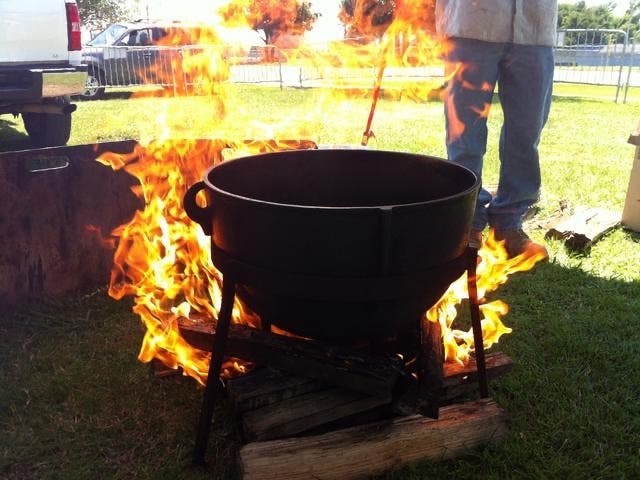

By Doc Lawrence
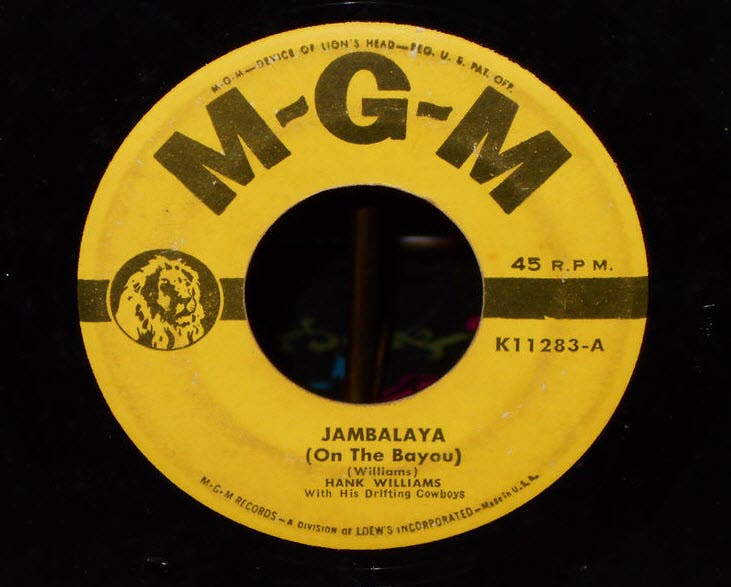
“Jambalaya and a crawfish pie and a fillet gumbo
'Cause tonight, I'm gonna see my ma cher amio
Find out what's happening in Stone Mountain-Lithoniafor free with the latest updates from Patch.
Pick guitar, fill fruit jar and be gay-o
Son of a gun, we'll have big fun on the bayou.”
Find out what's happening in Stone Mountain-Lithoniafor free with the latest updates from Patch.
Hank Williams, 1952
Richard Lewis, now retired from Virginia tourism, grew up in Mississippi and is a proud LSU man. He is a walking, talking encyclopedia of Southern culture, particularly our good food and outstanding music. Enjoy his story about a Deep-South classic, Jambalaya.
It seems that nearly every culinary culture has a signature one-pot rice dish. We can thank Spain for paella. Rice pilaf seems to have originated centuries ago in the Middle East and spread to every corner of the world. Rice and beans is a favored dish in many Latin American countries, especially Brazil. Rice itself is a staple of Asian countries and is often combined with meats and vegetables.
Louisiana gives us jambalaya, a mystical dish with roots running all over the place. Regions as disparate as Provence and West Africa have legitimate claims to its heritage. It is no surprise, then, that South Louisiana, America’s own mixing bowl, is the place where the many varieties of this succulent and hearty dish came together in harmony.
The origin of the name itself is murky as gumbo. Several cultures have sound-alike dishes, the translations of which all generally mean “a mess.” In his book The Encyclopedia of Cajun and Creole Cuisine, Chef John Folse, a longtime archivist of Louisiana food culture, says that the word jambalaya comes from the French word jambon (ham) and the Yoruba word yaya (rice) – and thus jamb a la ya (ham with rice).
Like many great things from our heritage, jambalaya was born of poverty. In the 1700s and 1800s, West Africans taken to America as slaves brought with them their version of the one-pot rice dish. But the dish also has distinct French, Spanish, and Caribbean influences, all brought together in New Orleans and rural South Louisiana by people of several cultures scratching out an existence in the bayou. Everything to make jambalaya, then and now, are locally sourced in the region. Rice has historically been grown in South Louisiana and kitchen gardens always have tomatoes, onions, peppers. Pigs and chickens have for centuries been found on Louisiana farms. Proper seasonings are plentiful. It’s all there.
Being both delicious and inexpensive to make, the dish soared in popularity. With the explosion of Creole/Cajun cuisine in the 1980s, the whole world got a taste of jambalaya. Unlike dishes involving shrimp, oysters and crawfish, the average American can whip up a pot of jambalaya using what can be found at the local grocery. Unlike gumbo, jambalaya is relatively easy to make, or at least does not have a delicate and critical point of ruin. Therefore, most American households can turn out a jambalaya on short notice.
To add further confusion, there is not just one kind of jambalaya, but many versions. One axis of differentiation is the inclusion or exclusion of tomatoes. With vs. without translates into red vs. brown, wet vs. dry, Creole vs. Cajun, New Orleans vs. Acadiana. The line of preference seems to be drawn right down the middle and, depending on where you are and who you talk to, sticky or fluffy jambalaya is simply a matter of taste.
Another axis is meat content. Shrimp jambalaya and chicken/sausage jambalaya seem to be the two most popular, but there are other versions including vegetarian. The best jambalaya this writer ever had was oyster jambalaya made by the long-time cook in Tulane’s Pi Kappa Alpha fraternity house. He also remembers a delicious ham-hock jambalaya at the annual Jambalaya Festival in Gonzales, which features a jambalaya cook-off competition.
This recipe is for wet chicken and sausage jambalaya. Making jambalaya is not at all difficult, but such a dish should be made deliberately and tended with loving care. So set a large, heavy pot on the stove and let’s get started!
Creole-Style Chicken and Sausage Jambalaya
2 cups white, long-grain rice (uncooked)
1 pound each Andouille sausage and chicken meat (white and/or dark)
1/4 cup bacon drippings
1 ¼ cup onions, diced
1 cup bell peppers, diced
1 cup celery, diced
2 cloves garlic, minced
1 14-oz. can of diced tomatoes
3 cups chicken broth
2 ½ tbs of Cajun/Creole seasoning, such as Tony Chacherie’s
¼ tsp cayenne pepper
1 tsp thyme
1 tsp paprika
1 bay leaf
Salt and pepper to taste.
Peparation:
Heat a large pot over medium-high heat. Add bacon drippings, then add celery, bell pepper, and onion to the bacon drippings, and cook until tender.
Add the ham, chicken and sausage to the pot, and pour in the tomatoes, beef broth and chicken broth. Season with thyme and Cajun seasoning. Bring to a boil, and add the rice. Bring to a boil, then turn the heat to low, cover, and simmer for about 20 minutes, until the rice is tender.
Langiappe: Jambalaya always tastes better when prepared alongside good music and dancing. It’s how we celebrate love.
Drinks: Beer, iced tea, fresh-squeezed lemonade or a creative Sangria.