Schools
BOE To Lawmakers: Keep Balanced Calendars, Restore State Funding
The Cherokee County School Board laid out its 2018 legislative priorities with the county's legislative delegation.


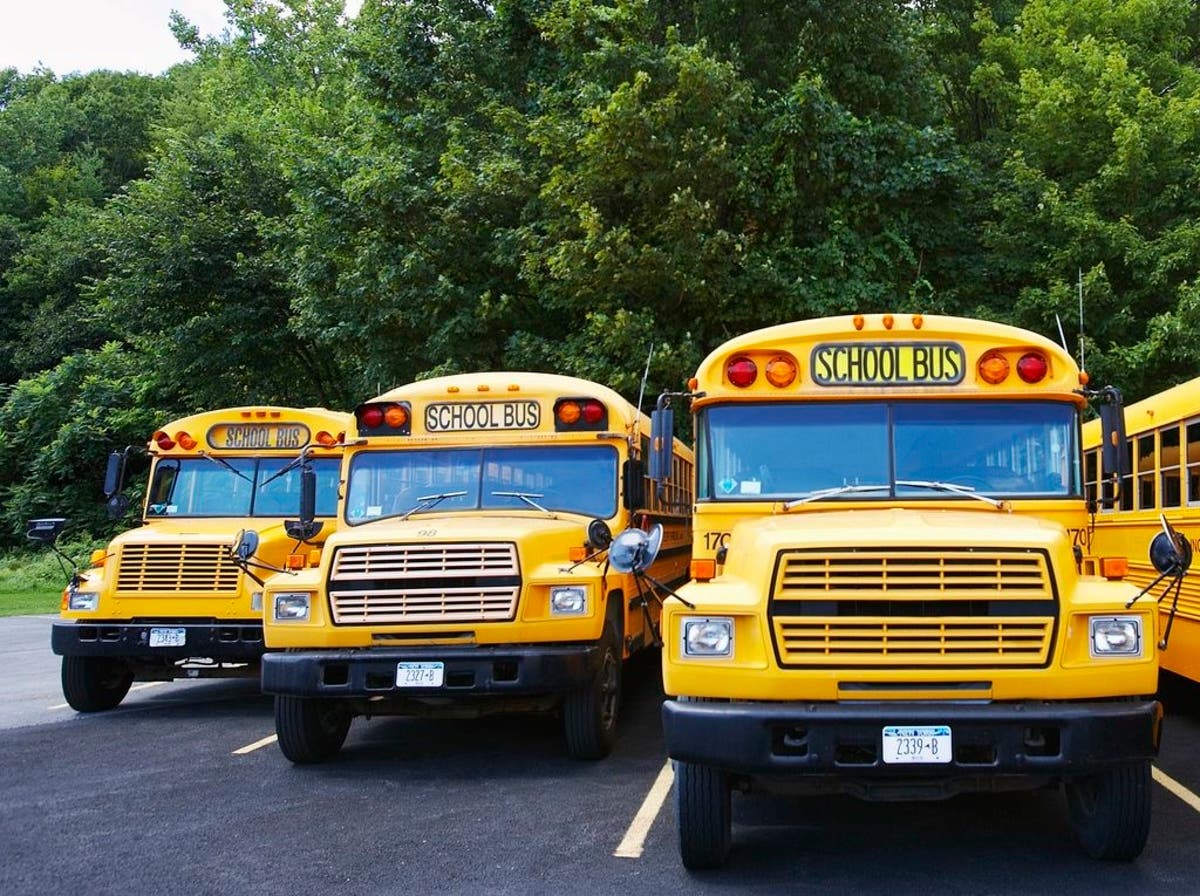
CANTON, GA -- The Cherokee County School Board on Friday, Nov. 17 continued its tradition of sharing its legislative partnership priorities with the local legislative delegation over breakfast. During the breakfast, School Board Chair Kyla Cromer shared an overview of the 2018 Legislative Partnership Priorities unanimously approved by the board at its Nov. 16 meeting.
Cromer and board members John Harmon, Patsy Jordan, Clark Menard and Kelly Poole expressed their opinions and answered questions asked by State Representatives Mandi Ballinger, Michael Caldwell, Wes Cantrell and Scot Turner. The priorities, which are posted on CCSD’s website, include three main areas of concern: funding, local control and governance and educational opportunities.
“It really comes down to these three big topics,” Cromer said. “Over the years, we’ve stayed focused on them.”
Find out what's happening in Woodstock-Towne Lakefor free with the latest updates from Patch.
The school board is asking the delegation to advocate for the restoration of $4 million in state education funding that the district has earned under Georgia's formula, but is being withheld due to "austerity budget cuts."
These cuts, which were implemented as a tool to help the state’s budget recover from the Great Recession, should cease, Superintendent of Schools Dr. Brian Hightower said, given that the state’s reserve fund has ballooned to $2 billion (with another $500 million likely to be added in 2018), while school districts statewide struggle.
Find out what's happening in Woodstock-Towne Lakefor free with the latest updates from Patch.
“We still have a lot of school systems statewide feeling pain,” Dr. Hightower said, noting that in CCSD it means class sizes remain higher than pre-recession levels and less opportunity for innovation. “All we’re asking for are for the austerity cuts to be restored.”
The statewide cuts total $167 million, so they could be restored with hundreds of millions still available for further growing the state’s piggy bank, CCSD contends. This, Dr. Hightower said, would lessen the additional pain school districts are feeling due to the continuous shift of costs from the state to local systems both for the State Health Benefit Plan (which, for tens of thousands of classified employees, now is entirely paid for by local systems and employees with no state contribution) and the Teachers Retirement System of Georgia.
On the topic of funding, board members are also asking local legislators to refrain from "funneling taxpayer dollars to private schools through any means."
Under local control and governance, the school board continues its request for the delegation to support local control in regard to public school systems, with a specific mention of school calendars. Business interests are lobbying to require all schools statewide revert to the old, agrarian calendar that starts school after Labor Day, removes popular “balanced calendar” breaks and reduces holiday breaks. These lobbyists argue tourist attractions need the calendar changed so attractions can pull in more local dollars from families, and so businesses have more opportunities to take advantage of low-cost student labor.
This potential state mandate would overturn the district's balanced calendar model that began 15 years ago, which has strong and continued support from parents and employees and the locally elected school board members.
“We don’t accept one-size-fits-all education for our children, and a statewide calendar that silences local community input is just as damaging a State mandate,” Dr. Hightower added. “Our calendar not only works for our community, but it’s also so successful that surrounding communities have adopted it as well. We need to put our children’s best interests first.”
Under educational opportunities, the board asks the delegation to support a return to the dual-track for high school students, so they can either choose a college prep track or a career readiness track. Without the latter option, students are unable to take as many Career Pathway classes as they’d like and earn industry certification, as they must instead take sometimes unnecessary college preparatory classes.
“We want our kids to graduate,” School Board Member Clark Menard said, referring to a dual-track’s positive impact on graduation rates. “There will be kids who find it more desirable to stay in high school and get trained to go to work. It’s a real push that can help a lot of kids.”
Image via Shutterstock
Get more local news delivered straight to your inbox. Sign up for free Patch newsletters and alerts.