Politics & Government
Hawaii Governor's Race: Personality, Not Policy, To Define Election
"We used to think in Hawaii that incumbents won," said Colin Moore, director of the public policy institute at the University of Hawaii.

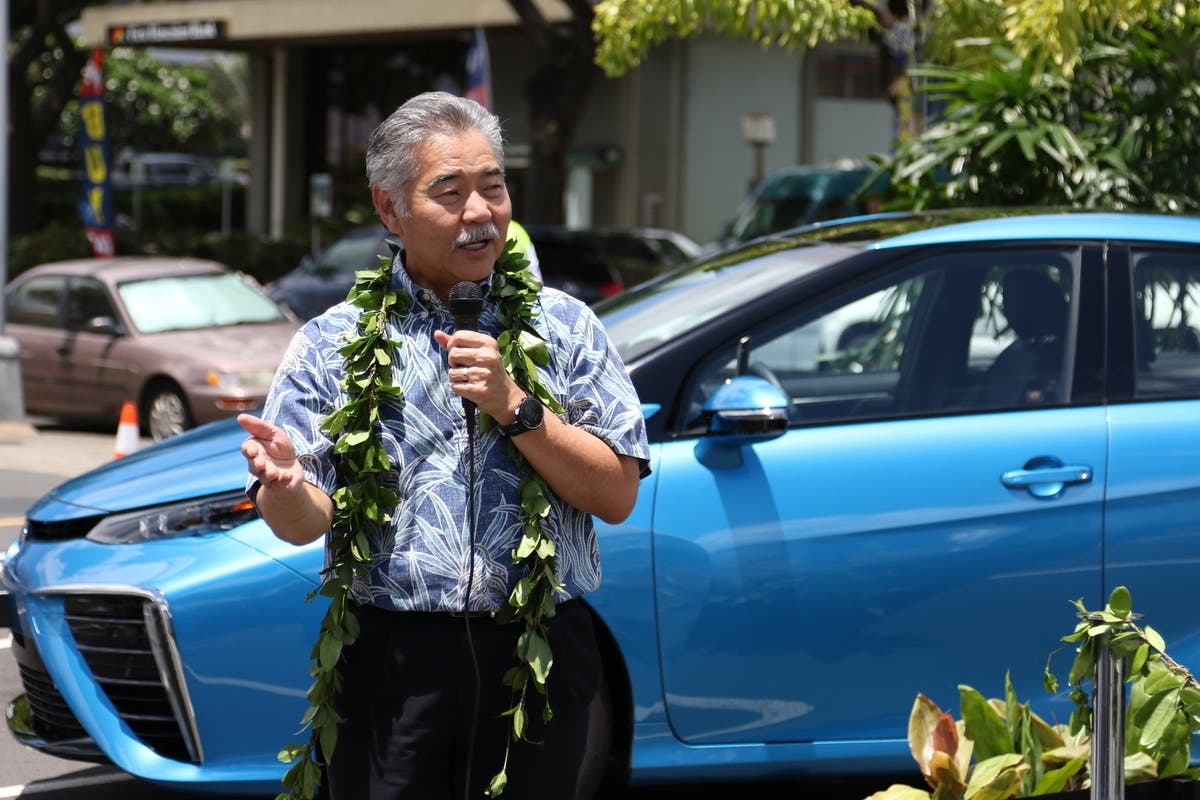

HONOLULU, HI — It used to be said that in Hawaii incumbents were a lock for re-election. But in the 2014 primary election, now-Gov. David Ige unseated a fellow Democrat. Now U.S. Rep. Colleen Hanabusa is attempting to do the same to him.
Her announcement last week that she will file papers to establish a campaign committee sets the stage for infighting in the party. (For more information on the Democratic primary race and other Hawaii stories, subscribe to Patch to receive daily newsletters and breaking news alerts. If you have an iPhone, click here to get the free Patch iPhone app.)
If she runs, the race will be defined by personality differences instead of ideological ones, some political observers said Tuesday.
Find out what's happening in Honolulufor free with the latest updates from Patch.
Ige, an engineer who served as a state senator in the Legislature for 28 years, ran against former Gov. Neil Abercrombie as a more even-keeled candidate.
Abercrombie's defeat made him the first Hawaii governor to lose to a primary challenger and only the second not to win re-election.
Find out what's happening in Honolulufor free with the latest updates from Patch.
"We used to think in Hawaii that incumbents won," said Colin Moore, director of the public policy institute at the University of Hawaii.
Ige's more reserved style is now up against Hanabusa's stronger personality, said political analyst Dan Boylan.
"He doesn't give a good speech," Boylan said. "He doesn't grandstand. ... He's a modest man. He is not a dumb guy. He is, however, boring."
But being boring also means he hasn't committed any major mistakes, Boylan said, even though some criticize him for failing to take a strong stand on the divisive issue of a giant telescope planned for a mountain some Native Hawaiians consider sacred.
There's a perception that Ige isn't effective despite a robust state economy, Moore said.
"Hanabusa enters, who has more name recognition, has been away from state government," he said. "She can run as the change candidate, which is a powerful thing to be able to do. I think there is a sense that (Ige) has not led the state."
Hanabusa, a lawyer, served in the state Senate for 12 years, including four as president. She is in her fifth year in Congress.
Honolulu resident Haunani Dutro believes Hanabusa's "feisty" persona is more effective in Washington, D.C. "I think personally I like where she's at right now," the retired hospice-care worker said.
Dutro said she likes Ige's record on Native Hawaiian issues and his subdued style.
"That's what we need," she said, "someone who is humble and patient."
Ige's approach hasn't improved Hawaii's homelessness crisis and lack of affordable housing, said Big Island resident Jerry Jucha. "He was not as strong as some of the other governors," he said.
Moore said when former U.S. Sen. Daniel Inouye was alive, no Democrat would have dared to challenge a sitting governor from the same party.
"There would have been a time where Sen. Inouye or others would have said 'you don't challenge Democrats and you need to wait your turn,'" Moore said. "But those days are over. There is no kingmaker anymore."
By JENNIFER SINCO KELLEHER, Associated Press
Photo credit: Cathy Bussewitz, Caleb Jones/Associated Press