Politics & Government
Honolulu Bans Texting While Crossing The Street
Don't read this story on your smartphone while crossing a street in Honolulu. It's illegal under the city's new "distracted walking law."


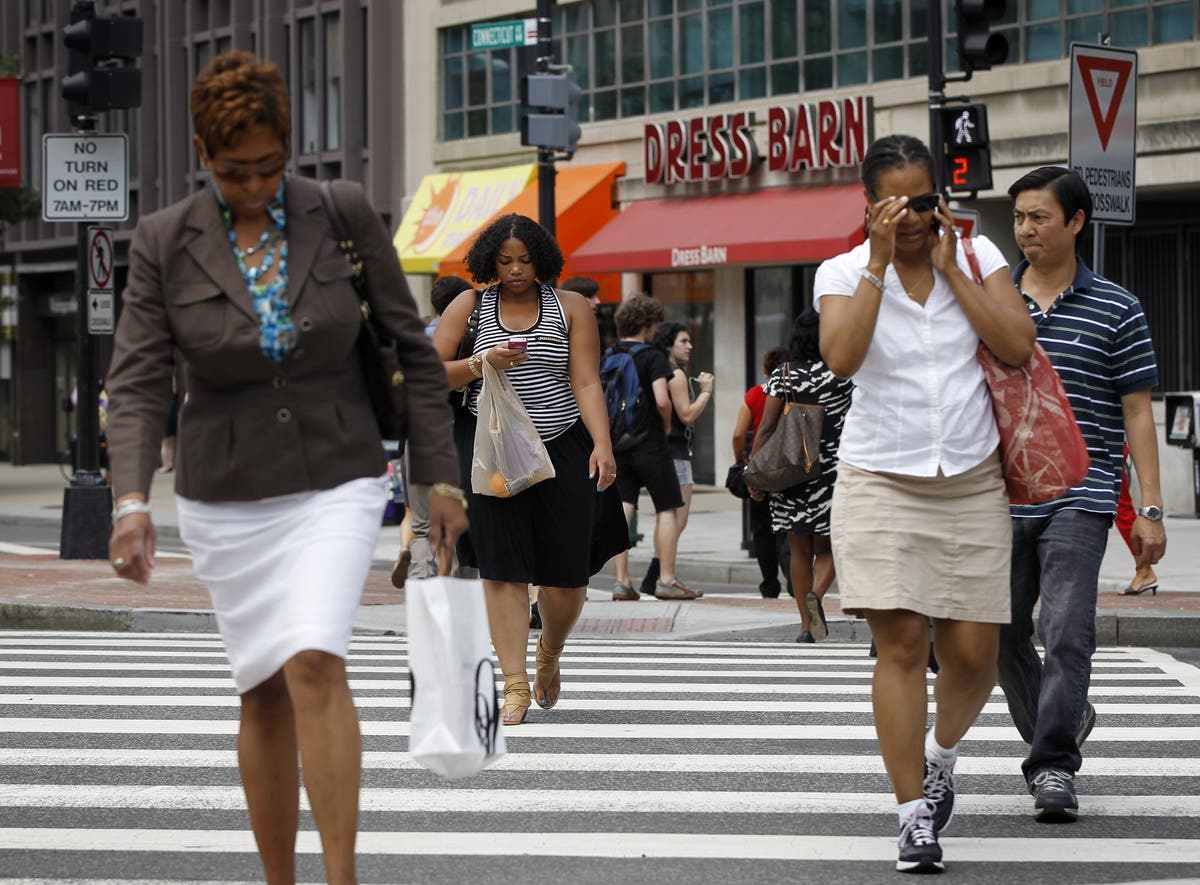
HONOLULU, HI — Say you’re walking across the street texting your friend that you’ll be about five minutes late — or whatever it is that keeps Americans fixated on their smartphones. That may fly on the mainland, and even in the majority of Hawaiian cities. But in Honolulu, texting or looking at a cellphone while crossing the street is now illegal.
The “distracted walking law” — or “zombie law,” as some people are calling it on Twitter — was approved by Honolulu City Council in July, and police began enforcing it Wednesday. The law responds to Honolulu’s pedestrian fatality rate, which is one of the highest in the nation, particularly among senior citizens.
The law aims to snap distracted walkers back to attention with some hefty fines — a fairly modest fine of up to $35 for a first offense, but up to $75 and $99 for second and third offenses, respectively, if they occur within the first year.
Find out what's happening in Honolulufor free with the latest updates from Patch.
The law also makes it illegal to play video games, use laptop computers or digital cameras while walking. Like the distracted driving laws in place in several U.S. states, the law doesn’t prescribe penalties for using cellphone headphones while walking.
Watch: Texting And Walking In Honolulu Could Now Cost You Up To $99
Find out what's happening in Honolulufor free with the latest updates from Patch.
The National Safety Council says it’s “just as important to walk cell free as it is to drive cell free.”
“Pedestrians and drivers using cellphones are both impaired and too mentally distracted to fully focus on their surrounding,” the organization said, according to a Honolulu city website post outlining the new distracted walking law. “For pedestrians, this distraction can cause them to trip, cross roads unsafely or walk into motionless objects such as street signs, doors and walls.”
Between 2000 and 2011, more than 11,100 pedestrians were injured while using their cellphones, according to the National Safety Council, which tracks data on the leading causes of unintentional injuries and deaths.
Pedestrian fatalities spiked nine percent in 2016 from the year prior, according to a report by the Governor’s Highway Safety Association, which said the increase corresponds with increased use of smartphones — “a frequent source of mental and visual distraction” for both drivers and pedestrians.
While there’s data to support the law, that wasn’t what prompted Honolulu Councilman Brandon Elefante to propose it. He told CNN he got the idea from high school students who “were concerned for their peers being distracted while crossing the streets and looking at their phones instead of looking both ways.”
One of two council members who opposed the law when it was proposed last summer, Ernie Martin said the city should worry about bigger problems, including homelessness and a rail project with a $3 billion deficit. He thinks the law is overreaching and the problem of distracted walking could be better addressed through a public awareness campaign.
“Teenagers are most influenced by their peers,” Martin told CNN in July. “A social media campaign would probably be more expansive than any legislation we pass.”
Though Honolulu is the first major city to implement such a law, the police chief in Fort Lee, New Jersey, in 2012 ordered officers to ticket for “dangerous walking,” which could include everything from jaywalking to texting while walking. And several other U.S. jurisdictions are considering distracted walking laws, including San Mateo County, California and Stamford, Connecticut.
A New Jersey assemblywoman failed to get support last year for a proposed state law banning texting while walking.
Jonathan Matus, the CEO of Zendrive, which uses smartphone sensors to track driving, told Bloomberg that distracted walking laws may be misdirected.
“Sure, people can walk into a risky situation, but that implies that pedestrians are often at fault,” he said. “I feel like legislating pedestrian distraction might give aggressive drivers a scapegoat to blame fatalities on the road with, and I’m not excited about that aspect.”
(AP Photo/Pablo Martinez Monsivais: File)
Get more local news delivered straight to your inbox. Sign up for free Patch newsletters and alerts.