Weather
Is Illinois The New Tornado Alley? State Shatters All-Time Twister Record
Illinois has shattered its yearly tornado record halfway through 2026, as severe storms fuel concerns about a shifting Tornado Alley.


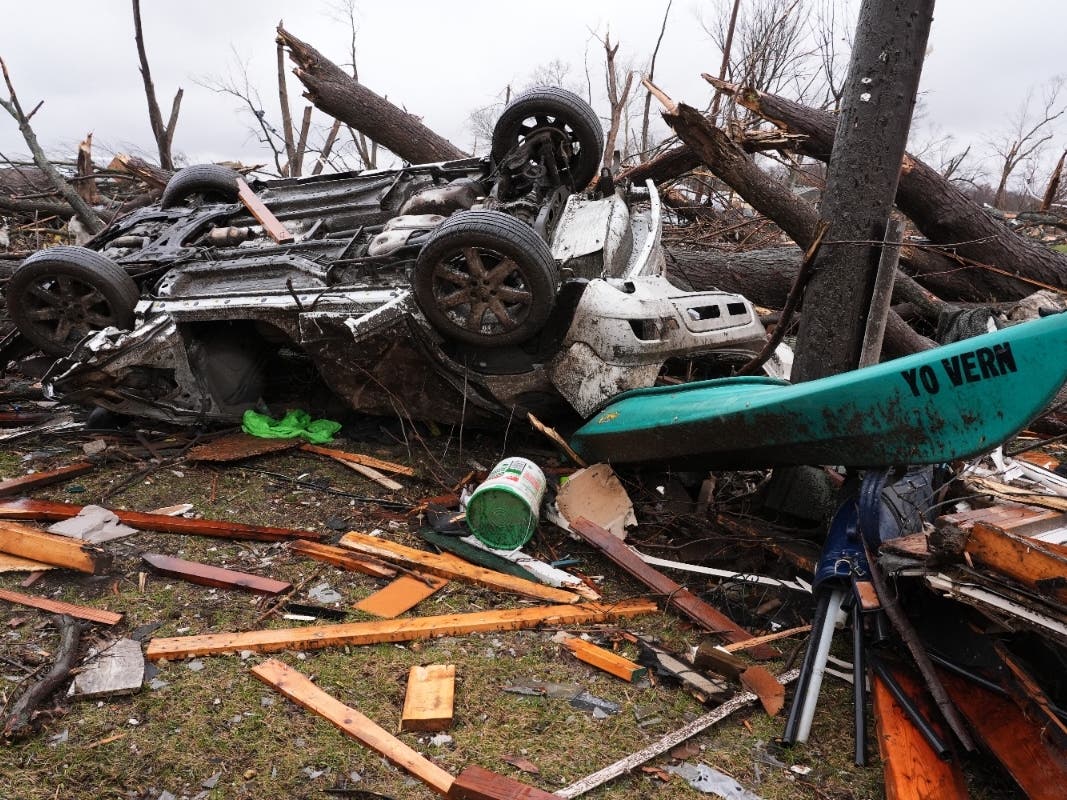
Illinois has broken its all-time record for confirmed tornadoes in a year — and it happened before the year was even halfway over.
As of Tuesday afternoon, Illinois had recorded 161 confirmed tornadoes in 2026, according to AccuWeather. That is the most ever recorded in the state in a single year, surpassing the previous full-year total while severe weather continues to batter communities from the Chicago suburbs to the southern part of the state.
Illinois also shattered its record for tornadoes in the month of June. AccuWeather said 51 tornadoes had been confirmed in Illinois this month, breaking the previous June record of 43 set in 1974.
Find out what's happening in Across Illinoisfor free with the latest updates from Patch.
Indiana Seeing Similar Surge
In Indiana, tornado records are also being broken. AccuWeather said 49 tornadoes have been confirmed in Indiana this month, breaking the state's previous June record of 47 set in 1990. For the year, Indiana has recorded 68 tornadoes, second only to 2011, when the state recorded 72.
The trend is notable because Indiana is often considered on the far northeastern edge of Tornado Alley, according to Purdue University's Indiana State Climate Office. Tornadoes in Indiana are not unusual, especially in spring, but the 2026 pace puts the state close to its all-time yearly mark before July.
Find out what's happening in Across Illinoisfor free with the latest updates from Patch.
The National Weather Service's Indiana severe weather climatology database tracks tornadoes, hail and damaging wind events in the state back to 1950, using Storm Prediction Center data. The sharp June total this year adds to the broader regional picture of tornado activity spreading across Illinois, Indiana and other parts of the Midwest.
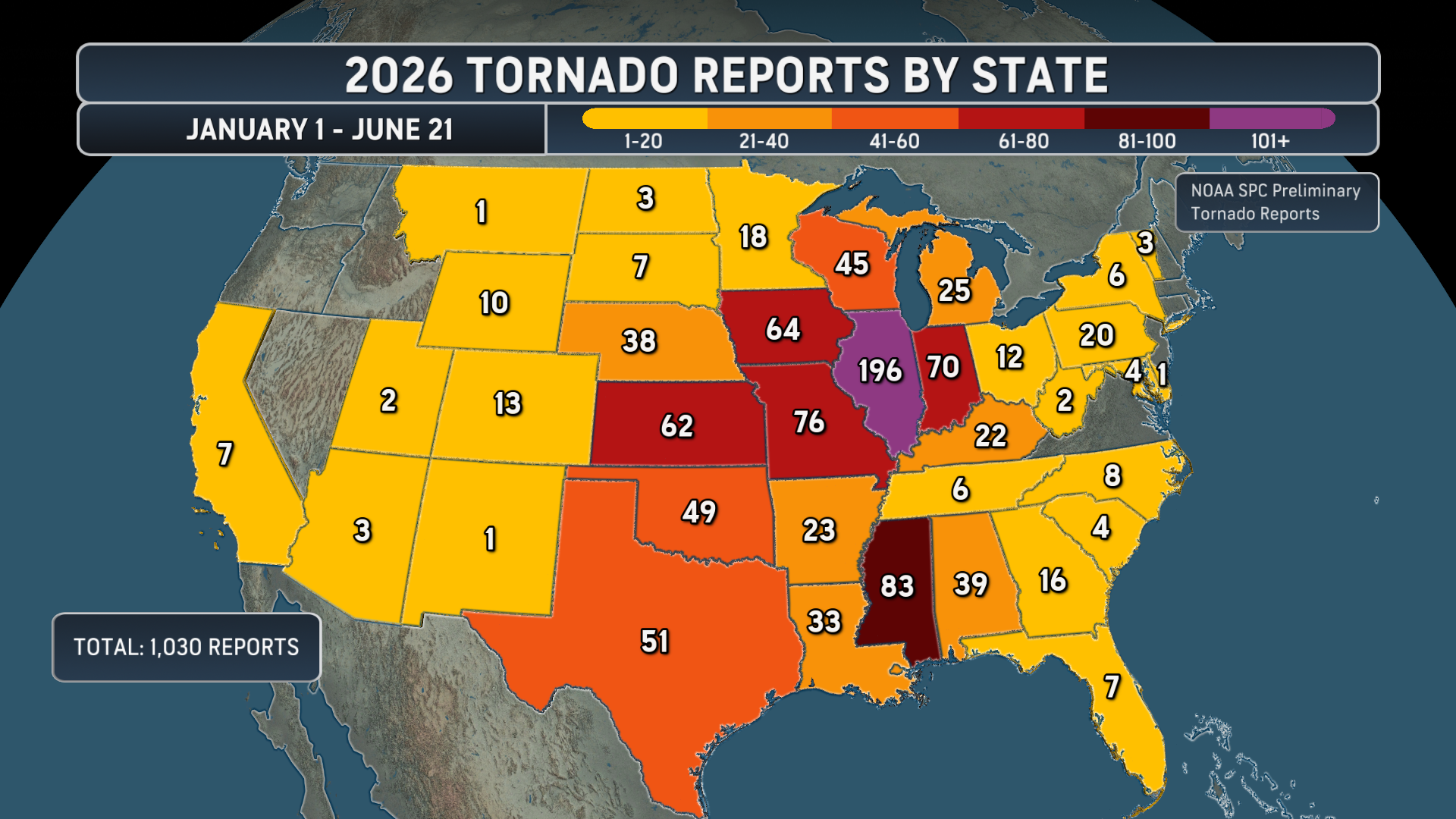
Illinois Leads Nation In Preliminary Reports
A map of preliminary tornado reports from the NOAA Storm Prediction Center, shared by AccuWeather, shows Illinois standing out nationally from Jan. 1 through June 21. The map lists 196 preliminary tornado reports in Illinois, the highest total of any state during that period, followed by Alabama with 83, Missouri with 76, Indiana with 70, Iowa with 64 and Kansas with 62.
The pattern on the map also highlights the broader eastward shift: some of the highest preliminary counts are clustered from the Mississippi Valley into the Midwest and Southeast, rather than being limited to the traditional Plains states. Texas had 51 preliminary reports during that span, while Oklahoma had 49 — high totals, but lower than Illinois, Alabama, Missouri, Indiana, Iowa and Kansas.
AccuWeather Meteorologist Peyton Simmers said this year's storm pattern has favored Illinois while keeping some of the most severe activity away from traditional Tornado Alley states.
"The dynamics this year have favored Illinois, with storms staying to the north of Texas and Oklahoma," Simmers said.
He also said drought in the western United States helped send warm air aloft across Texas and Oklahoma, limiting severe weather farther south.
Is Tornado Alley Moving?
The numbers are raising a broader question across the region: Is Tornado Alley moving into Illinois?
For decades, Tornado Alley was largely associated with South Dakota, Nebraska, Kansas, Oklahoma and Texas. But multiple studies have found tornado activity has gradually shifted farther east over the last several decades, with some of the largest increases showing up closer to the Mississippi Valley, Midwest and parts of the Southeast, including Illinois, Missouri, Arkansas, Mississippi, Tennessee, Kentucky, Indiana and Alabama, AccuWeather reported.
AccuWeather Chief Meteorologist Jonathan Porter said the long-term trend shows more tornadoes occurring outside the area historically known as Tornado Alley.
"When you look at the trends in where tornadoes have occurred in recent years, it's very clear that there have been more tornadoes farther south and farther east," Porter said.
NOAA senior research scientist Harold Brooks also told AccuWeather the increase in the Mid-South region appears to be real.
"I believe it's physically real that we've seen this increase in the mid-South region in the last 40 years," Brooks said.
A 2024 study published in the Journal of Applied Meteorology and Climatology found tornado activity has shifted away from the Great Plains and toward the Midwest and Southeast since 1951. The study, authored by researchers including NOAA and Storm Prediction Center scientists, found the shift holds across tornado events, tornado days and tornado path length.
Researchers said the findings matter because outdated ideas about "Tornado Alley" and "tornado season" can affect public awareness and preparedness.
That does not mean the traditional Plains tornado corridor has disappeared. But the trend underscores that tornado risk is no longer confined to one part of the country — and that Illinois residents need to think about tornado safety as a regular part of severe-weather season.
Illinois Has Long Been Tornado-Prone
Illinois is no stranger to tornadoes, even as 2026's numbers are unusually high.
The Illinois State Climatologist Office says tornadoes "can and do occur at any time of the year," though peak tornado frequency in Illinois is between April and June. About 63 percent of Illinois tornadoes occur during that period, and the state averaged 54 tornadoes per year based on 1991-2020 data.
The office also notes that Illinois tornado numbers are comparable to those in the Great Plains’ traditional Tornado Alley.
Fatalities do not always follow the same seasonal pattern as tornado frequency. A State Climatologist chart of Illinois tornado-related fatalities from 1950 to 2020 shows April as the deadliest month, with 97 deaths, largely because of the 1967 Oak Lawn tornado outbreak. August ranks second with 35 deaths, mostly tied to the 1990 Plainfield tornado.
The office also notes December and February are Illinois' fourth- and fifth-deadliest tornado months, despite having the fourth- and fifth-fewest tornadoes. That history underscores why forecasters warn residents to treat tornado risk as a year-round threat, not just a spring concern.
Pritzker Points To Climate Change
Gov. JB Pritzker said earlier this week that Illinois is already seeing the effects of the increased severe-weather threat.
"We've had 149 tornadoes in just the first half of the year this year, that's more tornadoes than ever before recorded, and it's only halfway through the year," Pritzker said during a press conference. "We had 142 in the whole year of 2024, so we are in the midst of an onslaught of the effects of climate change in all of these tornadoes that have hit."
AccuWeather's updated count later put Illinois at 161 confirmed tornadoes for the year.
Deadly Storms Across Illinois
The record year has already turned deadly.
Two people were killed Sunday after a tornado touched down in northeastern Jefferson County, damaging homes, knocking down trees and power lines, and prompting a large emergency response. Sheriff's officials said three residences were destroyed, many other homes were damaged and five people were taken to hospitals with non-life-threatening injuries.
Earlier this year, one person was found dead inside a damaged home in Aroma Park after an EF-3 tornado tore through Kankakee County and continued into northwest Indiana. That storm had winds up to 150 mph and tracked from near Aroma Park to Lake Village, Indiana, before ending near DeMotte, Indiana.
The same March outbreak turned deadly in northwest Indiana. Authorities identified Edward Kozlowski, 89, and Arlene Kozlowski, 84, as the couple killed in Lake Village, Indiana, after officials said the community “took a direct hit” and multiple homes were destroyed.
Officials said the tornadoes that hit northwest Indiana were believed to have come from the same supercell that tracked from Pontiac, Illinois, through Kankakee County before moving into Indiana.
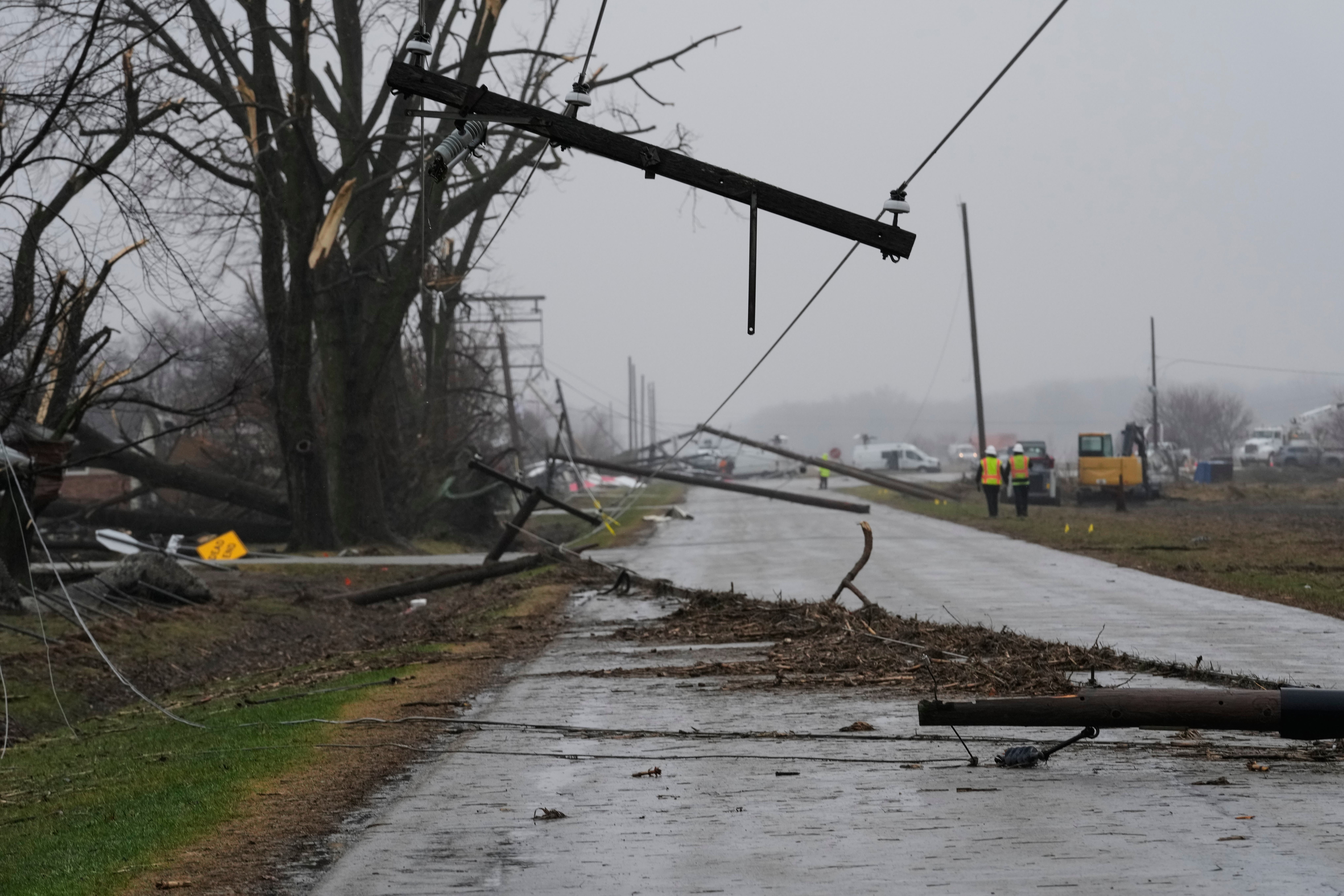
Chicago Area Hit Repeatedly
The Chicago area has also seen repeated tornado activity this month.
The National Weather Service confirmed 17 tornadoes after severe storms hit Illinois and northwest Indiana on June 11, including an EF-3 tornado in Streator and an EF-2 tornado that tracked from Hickory Hills toward Midway Airport. Other confirmed tornadoes included an EF-1 in Bartlett and an EF-0 from Naperville to Lisle.
The Hickory Hills-to-Midway tornado reached peak winds of about 120 mph along an 8.3-mile path, damaging trees, buildings and structures, including roofs torn from apartment buildings in Roberts Park.
In Lake County, the National Weather Service confirmed an EF-0 tornado touched down near Grayslake on June 19, damaging multiple homes and uprooting trees in a subdivision. No injuries were reported.
Another recent outbreak underscored the Illinois-Indiana pattern. The National Weather Service confirmed at least four tornadoes in Illinois and northwest Indiana after storms moved through the region, including touchdowns in Ford County, Livingston County, Iroquois County and Lake County, Indiana.
That Illinois-to-Indiana track has been a recurring theme this year, with multiple storms either crossing the state line or producing confirmed tornadoes on both sides of it.
Purdue's Indiana State Climate Office says Indiana is often considered on the far northeastern edge of Tornado Alley, and the National Weather Service's Indiana severe weather climatology database uses Storm Prediction Center records dating to 1950.
Federal Aid Under Scrutiny
The storms have also renewed scrutiny over federal disaster aid. Pritzker said Illinois communities have faced major damage from storms while federal support has become harder to obtain.
"The President of the United States has withheld FEMA dollars across the country, and yes, in Illinois as well," Pritzker said. "I think that sometimes he does it for political reasons. I think it also has been the policy of the administration to cut back on federal support when there is an emergency."
Pritzker said he will continue pushing for FEMA funding for Illinois disasters.
"We should receive FEMA dollars for the disasters that have occurred in the state of Illinois," he said.
As tornado counts continue to climb, forecasters and emergency officials stress that residents should have a plan before warnings are issued. That includes knowing where to shelter, having multiple ways to receive weather alerts and taking tornado warnings seriously no matter where in Illinois they are issued.
Related Coverage
Get more local news delivered straight to your inbox. Sign up for free Patch newsletters and alerts.