Health & Fitness
The Librarian's Shelf: 'When She Woke' by Hillary Jordan
Librarian Lisa Guidarini reviews author Hillary Jordan's latest novel and provides a few ideas for discussion questions for book groups.

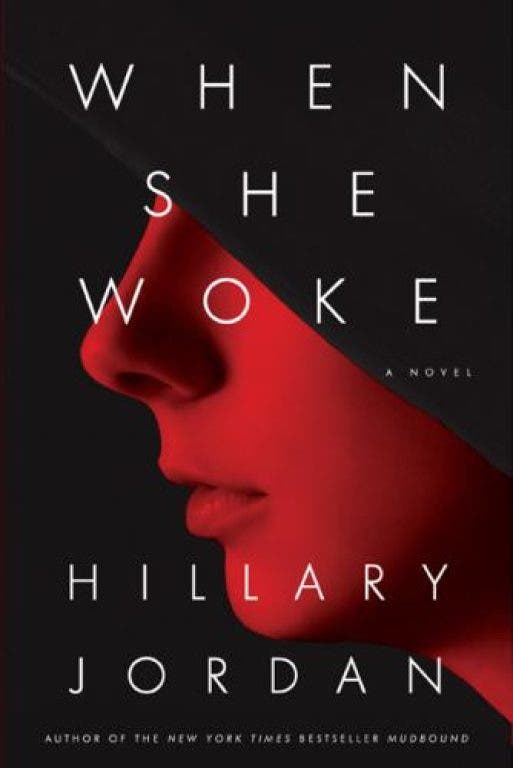

"When she woke, she was red. Not sunburned, but the solid, declarative red of a stop sign."
- from When She Woke by Hillary Jordan
I should have been at Hillary Jordan's recent Chicago appearance. I would have been, had I not torn the meniscus tendon in my right knee, the pain from that far too great to hobble my way from the car into the bookstore.Worse, I'd contacted her beforehand, introducing myself as a blogger/reviewer/librarian who couldn't wait to meet her.
Find out what's happening in Algonquin-Lake In The Hillsfor free with the latest updates from Patch.
Apparently, I could.
If I look at the positive, at least my two knees are even now. I tore the meniscus tendon in my left knee a couple of years ago, leading to surgery that's reduced my pain from knee-stabbing with a sharp knife to that of a butter knife. This is what passes for a silver lining once you hit 40.
Find out what's happening in Algonquin-Lake In The Hillsfor free with the latest updates from Patch.
Fortunately for those who aren't reading this for the purpose of hearing me whine, I still managed to read her latest book, When She Woke, while lying flat on my back with an ice pack on my elevated knee. The novel is a dystopic (definition of genre below), futuristic take on Nathaniel Hawthorne's The Scarlet Letter, crossed with themes from Margaret Atwood's The Handmaid's Tale. It's a story of adultery and abortion in an ultra-religious society, and the price paid by women who've crossed society's arbitrary line between morality and immorality.
In this modern America, those who've broken a law are injected with a virus turning them a specific color, depending on their transgression. For the crime of murder via abortion, main character Hannah Payne's color is bright red. Since she wouldn't name the father of the child, an additional punishment is handed down. For a period of one month she is incarcerated, her cell televised, broadcast for everyone in the country to watch like a twisted reality show, allowing private time only when she's using the bathroom or taking a shower. The only clothing she's allowed is a paper gown, not even a blanket to cover herself.
Her spirit all but crushed, when she's released her one month's imprisonment turns out to have been more easy to take than the treatment of the general public. For the duration of her life as a "Chrome" she will be ridiculed, an outcast marked as someone who has committed murder.
While all this sounds like a complete downer, there is redeeming hope. Hannah is at heart a spirited young woman. Eventually she decides to fight back against an unjust, warped system, the reader cheering her on every step of the way.
When She Woke is dramatically different than her award-winning first novel, Mudbound, a powerful, tragic novel set in 1940s Mississippi. Of the two, Jordan illustrates finer writing prowess in her first novel, her second illustrating what's known as the "sophomore slump" experienced by so many writers whose first novels have shown such fine talent.
However, the themes in her latest would make for excellent book club discussion, as well as much food for thought. One of the main issues concerns evangelical Christianity and issues raised when religion overcomes a formerly secular government. Some groups may find discussions become quite heated, depending on their make up. Be aware of this when contemplating it as a book group read.
A few book group discussion questions (WARNING: Potential Spoilers):
1). Is this futuristic imagining of the direction of reality television believable?
2). What elements within this futuristic society have lead to the acceptability of the cruel treatment of those who've committed crimes?
3). Was Hannah's decision not to reveal the identity of either her baby's father or the abortionist justified? What does this say about her character?
4). How do you feel about the baby's father and his decisions regarding not coming forward?
5). Discuss how the concept of religion is portrayed through the major characters: Hannah, her mother, her father, her sister Becca, the Henleys, Aidan and Cole.
6). Does Hannah change within the course of the novel? How?
7). What are your thoughts on Hannah's friend Kayla? In what ways is she different from Hannah?
8). How would you describe the halfway house run by the Henleys? Did it serve its intended purpose?
9). What aspects of Hannah and Kayla's flight struck you most? What experiences stood out for you?
10). Was the ending believable?
- Lisa Guidarini
Similar reads:
The Scarlet Letter by Nathaniel Hawthorne
The Handmaid's Tale by Margaret Atwood
1984 by George Orwell
The Hunger Games by Suzanne Collins
Dystopia, from Wikipedia.org:
"Dystopian societies feature different kinds of repressive social control systems, various forms of active and passive coercion. Ideas and works about dystopian societies often explore the concept of humans abusing technology and humans individually and collectively coping, or not being able to properly cope with technology that has progressed far more rapidly than humanity's spiritual evolution."