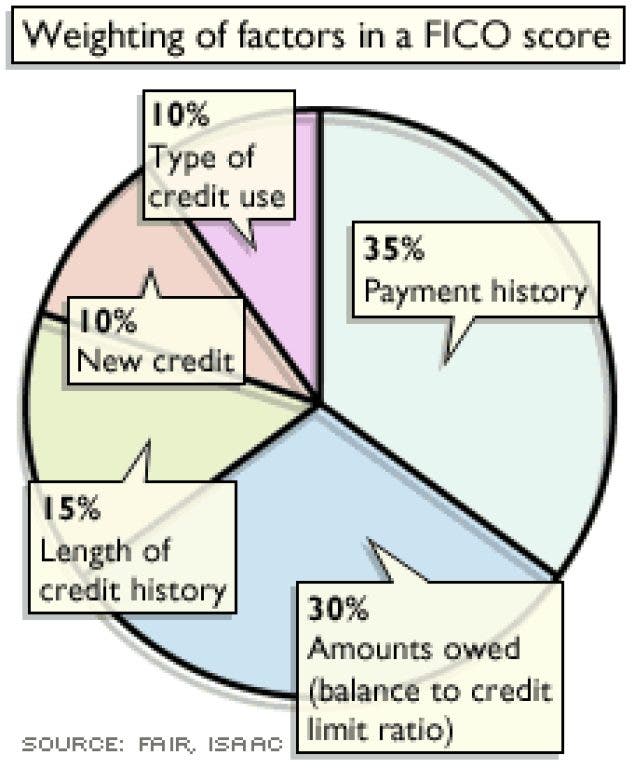
Now that we understand how to manage debt and plan for our financial health, let’s look at understanding the credit score. A person or small Business builds their credit score one step at a time, weather one realizes it or not. The first step is establishing the identity and insuring that your identity is protected. Your credit report is a repository of your financial activity synthesizing your
- Payment History: This is the highest weighted factor of your credit score (35%) because lenders want to know if you make your payments on time. It looks if you make your credit card and loan payments on time. When payments have been late, late by how many days and how many late payment fees were made. In addition, the payment history looks for charge offs like bankruptcies, debt settlement, or foreclosures.
Loan Amounts Owed: This is the second highest (30%) factor in your credit score. It is prudent to remain with 25% of your approved aggregated credit limit when all your credit cards are aggregated. Length of Credit History: Being the third largest factor (15%) this rounds-off a total of 80% of your credit score along with the first 2 factors. The purpose of this factor is to ascertain how long you have been using credit because it is assumed that an experienced credit user is more responsible. While this may not necessarily be a statement of fact in all cases, it is the general trend hence assumed to be as such. However, a short credit history with good credit management could lead to higher credit score. New Credit: When a credit check is run for a new credit it affects your credit rating. So, please do not be talked into every store credit promotion and jeopardize your credit. 1 full 10% of your credit score is liked to new credit activities. Types of Credit Use: what types of credits do you use and how you use it carries a 10% factor on your credit score. A good rule of thumb is to make sure you do your homework and ask advise from your financial advisor or banker before entering into any cr3dit arrangement. Your credit score impacts every aspect of your life in the modern economy starting from where you live, what you drive, what job you get, and so on. Yes, employers check your credit score as part of the overall background check because an employee with bad credit could be a financial risk for fraud and theft thus exposing the employer to various dilemmas.