Politics & Government
Fight Against Emerald Ash Borer Continues for Area Communities
The arrival of spring signals the start of another year where area communities must spend more money and manpower to combat ash tree damage caused by the emerald ash borer.

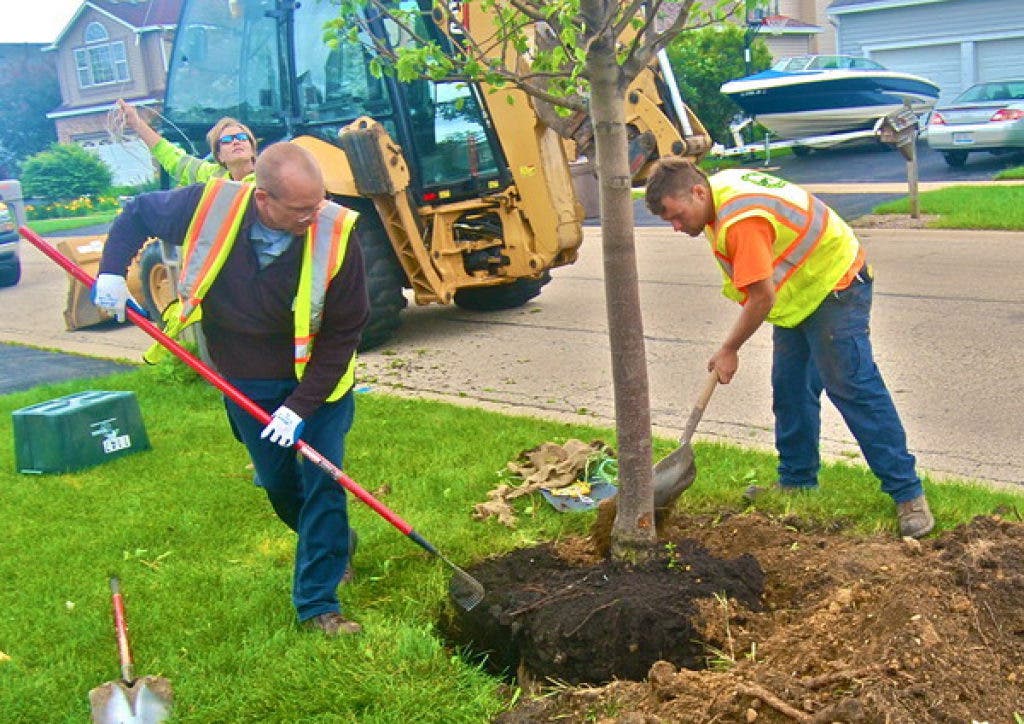


Lake in the Hills residents may soon notice small index cards hanging from some parkway trees.
The cards, which will be be tagged to sick ash trees, are meant to inform residents about the tree’s current condition, said Scott Parchutz, superintendent of public properties for the village of Lake in the Hills.
“There are about one thousand ash trees that are dead or declining in the village,” Parchutz said. “Basically, all the ash trees in the village will have to be replaced. The whole state is under siege by the emerald ash borer.”
Find out what's happening in Algonquin-Lake In The Hillsfor free with the latest updates from Patch.
The emerald ash borer was first detected in Algonquin in 2008 and Lake in the Hills in 2009. The beetle — referred to as the “green menace” by the United States Department of Agriculture — is native to Asia and somehow found its way into the United States.
The bug — and eventually its lavrae — work its way under the bark and eat away at the wood, eventually starving the tree of nutrients until it’s stressed and dies. The beetle prefers ash trees above all others.
Find out what's happening in Algonquin-Lake In The Hillsfor free with the latest updates from Patch.
Parchutz recently addressed the Lake in the Hills Village Board about the state of emereald ash borer in the community.
- In 2009, there were about 3,328 ash trees in Lake in the Hills. Back then, only 18 trees were identified as EAB positive and were cut down, he said.
- The village treated another 200 ash trees in 2009 by injecting them with TreeAge. Those trees need to be treated every three years, and are due for treatment this year, Parchutz told village trustees.
- In 2010, the village received an EAB grant, and replaced 165 ash trees. That same year, another 34 trees were found to be infected by the bug.
Unfortunately, the numbers jumped considerably the next year, he said.
“In 2011, our inspections revealed a considerable jump in EAB positive trees by identifying 966 EAB-positive trees within the village,” Parchutz said. “The insect has now been identified all over the village as well as in all of our neighboring communities…”
To date, LITH public works employees and arborists have replaced about 400 ash trees, bringing the current ash tree population to 2,924. The plan now, Parchutz explained, is to remove ash trees as they decline and die.
But the task of removing and replacing almost one thousand trees in one year will be difficult and costly, he said. The trees will be replaced based on budget allocations in manpower and tree replacements.
Years ago, when many of Lake in the Hills subdivisions were built, ash tree supplies were plentiful and affordable. Now, the species is not even sold in the area, Parchutz said.
Planting Varied Tree Species to Combat EAB
The Lake in the Hills Public Works Department is now tasked with figuring out how to remove the dying trees and plant new trees that will help in combating the continued spread of the emerald ash borer.
“Ash is a good wood, it’s a good tree,” Parchutz said. “The problem is that we have entire blocks in the village where there are 40 ash trees planted. We want to get away from the mono-culture approach, and are trying to stagger the species of trees so if another threat comes in, it won’t wipe out all the trees.”
Last year, Algonquin spent $90,000 to replace 800 ash trees ravaged by the bug, according to a Algonquin-Lake in the Hills .
The infestation is increasing so dramatically that Parks Superintendent Steve Ludwig believes that it won’t be long until all 3,500 of Algonquin’s ash trees fall prey to the beetle.
“This is really a natural disaster,” Ludwig said in the .
When the emerald ash borer arrived in 2008, there were 70 ash trees replaced. Since then, the Parks Department has replaced 1,200 ash trees.
The village will remove only parkway and village-owned trees. To read more about the emerald ash borer, the public Works department has created a FAQ guide to provide more information on the problem and related policies.
Get more local news delivered straight to your inbox. Sign up for free Patch newsletters and alerts.