Neighbor News
Alphawood Gallery opens a thought-provoking and timely exhibition
Alphawood Gallery, Chicago art exhibits, Chicago photographs, Japanese internment camps
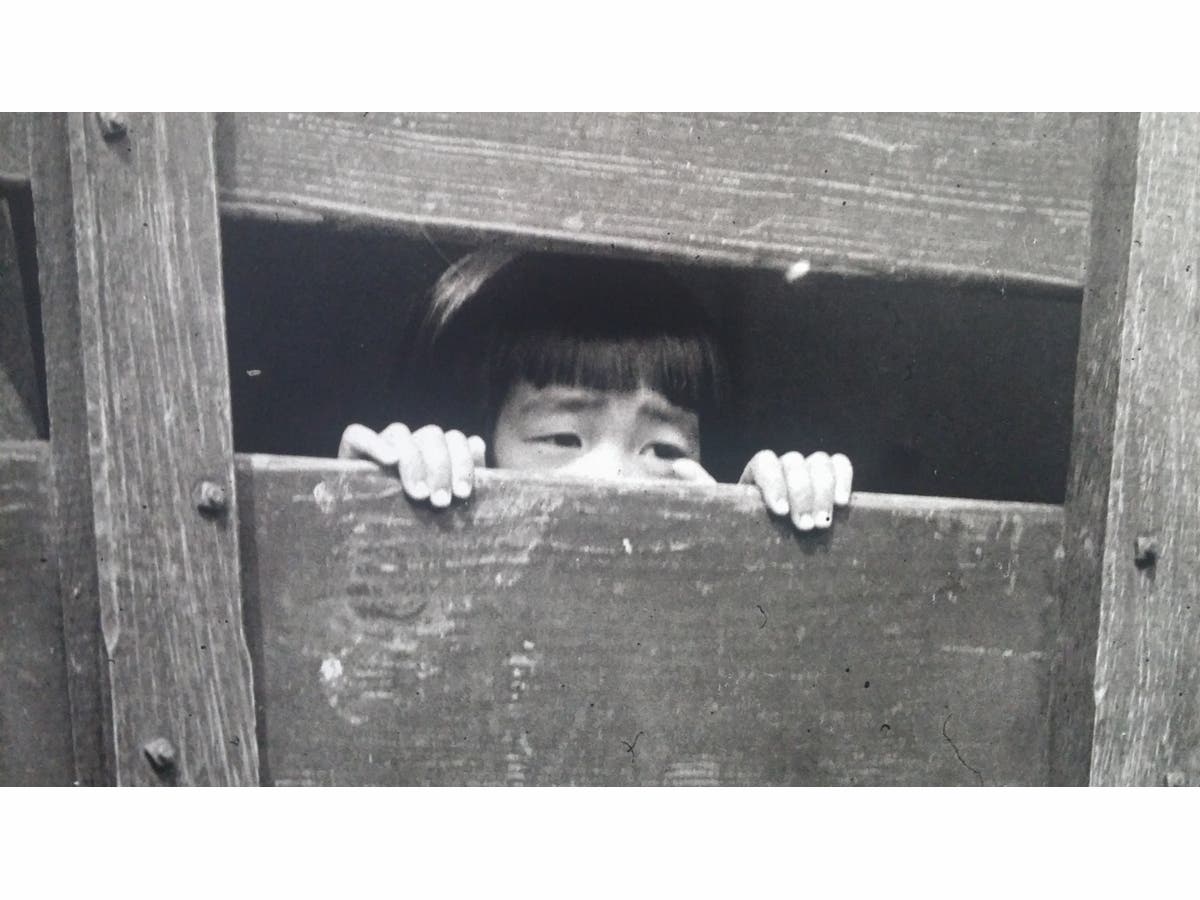
Alphawood Gallery in Chicago has a new exhibition that tells a powerful story about a period of time in the United States that will strongly resonate with anyone aware of the current political environment in this country.
Titled Then They Came for Me: Incarceration of Japanese Americans during WWII and the Demise of Civil Liberties, this very moving exhibition examines the personal stories behind the headlines during World War II for one segment of the American population. After Japanese planes attacked the U.S. Naval Base at Pearl Harbor on December 7, 1941, another significant action took place two months later. On February 19, 1942, President Franklin D. Roosevelt signed Executive Order 9066, and subsequently 120,000 American citizens and legal residents on and near the West Coast were forcibly removed from their homes and incarcerated in makeshift camps simply because they were of Japanese descent, and the country was fearful of anyone who looked like the enemy. This was done without due process or other constitutional protections to which they were entitled. The Order remained in effect for almost two years, until Roosevelt rescinded the Order upon hearing that the Supreme Court was about to intervene. It took another year, however, to fully shut down the camps. In this 75th anniversary year of the signing of the Executive Order, Alphawood Gallery’s exhibition plays an important role in preventing an important part of U.S. history from being hidden in the shadows.
In the exhibition, there are suitcases on display that carried the only personal belongings people were allowed to bring with them to the camps. There are WWII propaganda postcards and posters with derisive ethnic stereotypes. Several official governmental notices are posted indicating the little amount of time people had (sometimes only days) to sell their homes, their businesses, their cars, and their furnishings before reporting to their assigned camps. Included among the numerous objects on display are I.D. cards and tags that each of the 120,000 people were required to carry and wear. The gallery is also filled with dozens of large-format photographs (including some by Ansel Adams and Dorothea Lange) that are featured in a new book, Un-American: The Incarceration of Japanese Americans during World War II, by Chicagoans Richard Cahan and Michael Williams. Each oversized photograph (with accompanying narrative) draws the viewer into the scene and, along with the other items, invites one to ponder what it means to be an American, what it means to be patriotic, what it means to be safe, and to consider the consequences of a country creating policies that are rooted in fear without sufficient reasoning.
Find out what's happening in Chicagofor free with the latest updates from Patch.
It is possible to walk through the exhibition in an hour, but do yourself a favor and allow a couple of hours to immerse yourself in the experience and attempt to ‘walk in their shoes’ for a brief time. Try to imagine the fear that would accompany such an upheaval of one’s life and the confusion and upset circling the question that would never have a satisfactory answer for those most impacted: Why?
The gallery offers free one-hour tours three times a week, which would be a very useful lead-in to your personal time interacting with the exhibition. The tours are offered on Wednesdays and Saturdays at 1 p.m. and Thursdays at 6:30 p.m.
Find out what's happening in Chicagofor free with the latest updates from Patch.
Then They Came for Me: Incarceration of Japanese Americans during WWII and the Demise of Civil Liberties continues through November 19, 2017, and admission is free.
Alphawood Gallery is located at 2401 N. Halsted Street in Chicago. It is near the CTA Fullerton ‘L’ stop and several CTA bus routes. Limited free parking is available in an adjacent parking lot, and metered street parking and nearby garage parking is also available (Spot Hero has reservations available in a parking garage less than one block from the gallery).
In addition to the exhibition, Alphawood Gallery is presenting numerous summer programs that support social justice issues raised by Then They Came for Me. Some are one-time-only events, and other are ongoing programming. All the programs are free of charge and take place at Alphawood Gallery unless otherwise noted. The following is an initial list of the programming; for an updated calendar, go to www.alphawoodgallery.org.
Full Spectrum Features Presents Hidden Histories (film)
Wednesday, July 19, 6-8 p.m.
Hidden Histories is a touring program of five short narrative films about Japanese American incarceration during WWII. Each film tells a personal story dramatizing a different period of this history, starting from Executive Order 9066 (which authorized the confinement sites) to the present-day legacy for younger generations. Hidden Histories commemorates an important chapter in our nation's history, and pays tribute to the 120,000 Americans who suffered the indignity and untold losses of this unjustified incarceration. A post-screening discussion will follow.
Victory Gardens Theater Presents Behind the Fence, a two-play series:
Question 27, Question 28
Wednesday, August 2, 7:30 p.m.
NOTE LOCATION: Victory Gardens Theater, 2433 N. Lincoln Avenue, Chicago
Question 27, Question 28 by playwright and Victory Gardens Theater Artistic Director Chay Yew tells the story of the forced removal and incarceration of Japanese Americans from the West Coast and its aftermath through the voices of a variety of Japanese American and non-Japanese American women. All of the play's lines come from "interviews, transcripts and testimonials" by women who lived through that experience. The cast includes four characters, three Asian and one Caucasian, who read the lines, with the real-life figure from whose testimony they come from first identified. Among the many women whose words are used are Yuri Kochiyama, Monica Sone, Mary Tsukamoto, Yoshiko Uchida, and many others, including some non-Japanese Americans such as teacher Eleanor Gerard Sekerak and Eleanor Roosevelt. The cast includes Kirsten Fitzgerald, Emily Kuroda, Jeanne Sakata, and Tamlyn Tomita. A special exhibition tour will take place at 6 p.m. will take place at Alphawood Gallery prior to the performance.
Hold These Truths
Thursday, August 3, 6 p.m.
Playwright and actor Jeanne Sakata will perform and read from her play Hold These Truths, a biographical play about Gordon Hirabayashi, a Japanese American resistor. During WWII in Seattle, University of Washington student Gordon Hirabayashi fights the U.S. government’s orders to forcibly remove and mass incarcerate all people of Japanese ancestry on the West Coast. As he struggles to reconcile his country’s betrayal with his passionate belief in the U.S. Constitution, Hirabayashi begins a 50-year journey toward a greater understanding of America’s triumphs---and a confrontation with its failures. In May 2012, President Barack Obama posthumously awarded Gordon Hirabayashi the Presidential Medal of Freedom, the nation’s highest civilian honor. The performance will be followed by a Q&A with the artists and directors of both Behind the Fence productions.
Larycia Hawkins Public Talk + Panel Discussion
Wednesday, August 16, 6 p.m.
Former Wheaton College professor Larycia Hawkins, subject of The New York Times Magazine story, “The Professor Wore a Hijab in Solidarity - Then Lost Her Job,” offers a public talk and panel discussion on solidarity and resistance with Muslim Americans.
Janice Tanaka’s Who’s Gonna Pay For These Donuts, Anyways? with presentation by Dr. Donna Nagata (film)
Wednesday, August 30, 6 p.m.
This experimental documentary chronicles Janice Tanaka’s 50-year personal search for a father she has not seen since she was three years old. As a young man, the FBI arrested him for opposing the incarceration and diagnosed him as schizophrenic with paranoid tendencies. Tanaka finally finds him in a halfway house for the chronically mentally ill in Los Angeles’s skid row. Dr. Donna Nagata (Professor at the University of Michigan-Ann Arbor and author of Legacy of Injustice: Exploring the Cross-Generational Impact of the Japanese American Internment) offers a post-screening conversation on the long-term psychosocial consequences of the World War II incarceration among Japanese Americans.
Daily screening of AND THEN THEY CAME FOR US, 2 p.m.
And Then They Came For Us, a new documentary by co-directors Ken Schneider and Abby Ginzberg, will be screened daily at 2 p.m. in the Alphawood Gallery second floor screening room. The film portrays the human face of ethnic roundups, registries, incarceration and deportation through a moving historical look at the forced incarceration of Japanese Americans during WWII. Schneider and Ginzberg utilize a wealth of photographs by Dorothea Lange and Ansel Adams, including many on display at the Gallery, to reveal the heartbreaking reality of this time in history, and makes explicit connections between the Japanese American incarceration story and current concerns regarding the treatment of Muslims and Muslim Americans. Interviews include actor George Takei (Star Trek), who was incarcerated along with his family.
Take Action Room
The Take Action space at Alphawood Gallery is dedicated to advocacy. Resources and materials are available to encourage visitors to reflect and TAKE ACTION toward creating change. Alphawood Gallery will provide information and services related to legal aid, refugee and immigration services, voting rights, healthcare access, employment rights and more. Featured partner organizations will offer an ongoing schedule of activities including “Know Your Rights” trainings, educational workshops and organizing toolkits. Organizations include For The People Artist Collective, Illinois Coalition for Immigrant and Refugee Rights and Community Activism Law Alliance among others.
Weekly Public Tours
Wednesdays and Saturdays at 1 p.m., Thursdays at 6:30 p.m.
Guided public tours are free and no advance reservation is required. Tours will depart from the front desk and last approximately one hour.
Oral History Project – Tell Your Story!
The Oral History Studio is a private space within the gallery where visitors are invited to record their personal stories or reflections. An Alphawood Gallery staff member is available to interview visitors who are willing to share their histories and thoughts related to the themes and questions posed by Then They Came for Me. Equipped with state-of-the-art audio and video recording equipment, the studio is available by walk-in (during scheduled hours) or by appointment. Advance appointments are encouraged, by contacting Anna Takada at atakada@alphawood.org. Sessions may vary in length. Once recordings are processed, they will be archived and, if individual permission is granted, potentially made public on the Alphawood Gallery website.
Sharing Stories
Saturdays, 3-4 p.m.
SHARING STORIES creates a space within the exhibition for dialogue and community. Visitors are invited to come to the 2nd floor lounge area to listen to personal stories, and to ask questions, share their own experiences or just join the group to learn more about the Japanese American Incarceration camps.
Bold Disobedience
Now through September 2
NOTE LOCATION: Weinberg/Newton Gallery, 300 W. Superior Street, Chicago
Weinberg/Newton Gallery presents a group exhibition in collaboration with Mikva Challenge. Selected by a council of twelve student curators, this collection of works will communicate myriad ways youths participate in civic action today in America.
States of Incarceration
Now through August 12
NOTE LOCATION: Jane Addams Hull House Museum, 800 S. Halsted Street, Chicago
Jane Addams Hull-House Museum, in collaboration with DePaul University and a New School-led coalition of 500 university students and formerly incarcerated individuals from 20 cities, create the first national traveling multi-media exhibition and coordinated public dialogue to explore the history and future of mass incarceration in the United States
Virtue of the Vicious
July 16 – October 22
NOTE LOCATION: Hyde Park Art Center, 5020 S. Cornell Avenue, Chicago
An examination of the current political climate from the perspective of eight contemporary American artists. Curated by Hyde Park Art Center’s Director of Exhibitions & Residency Programs Allison Peters Quinn, the exhibition presents photography, sculpture, painting and video by Paul Stephen Benjamin, Kevin Blake, Jasmine Clark, Eric J. Garcia in collaboration with Luis Mayorga, Michelle Hartney, Jay Turner Frey Seawell, and El Coyote Cojo (Emilio Rojas and Adela Goldbard). Patriotism manifests itself in the American landscape and culture in obvious and covert ways. Artists participating in the exhibition examine the pride, loyalty, ownership, discrimination and fierceness that simultaneously characterize this conflicted allegiance in the current political climate through their artwork.
Photo Credit: Clem Albers. Taken in San Pedro, California, April 5, 1942. A little girl in the back of a truck, part of a convoy of trucks leaving San Pedro for the internment camps.