Politics & Government
Meet Justin Ford: Congressional Candidate In IL-09
Candidate Justin Ford tells Patch why they should be elected to Congress in Illinois' 9th District on March 17.


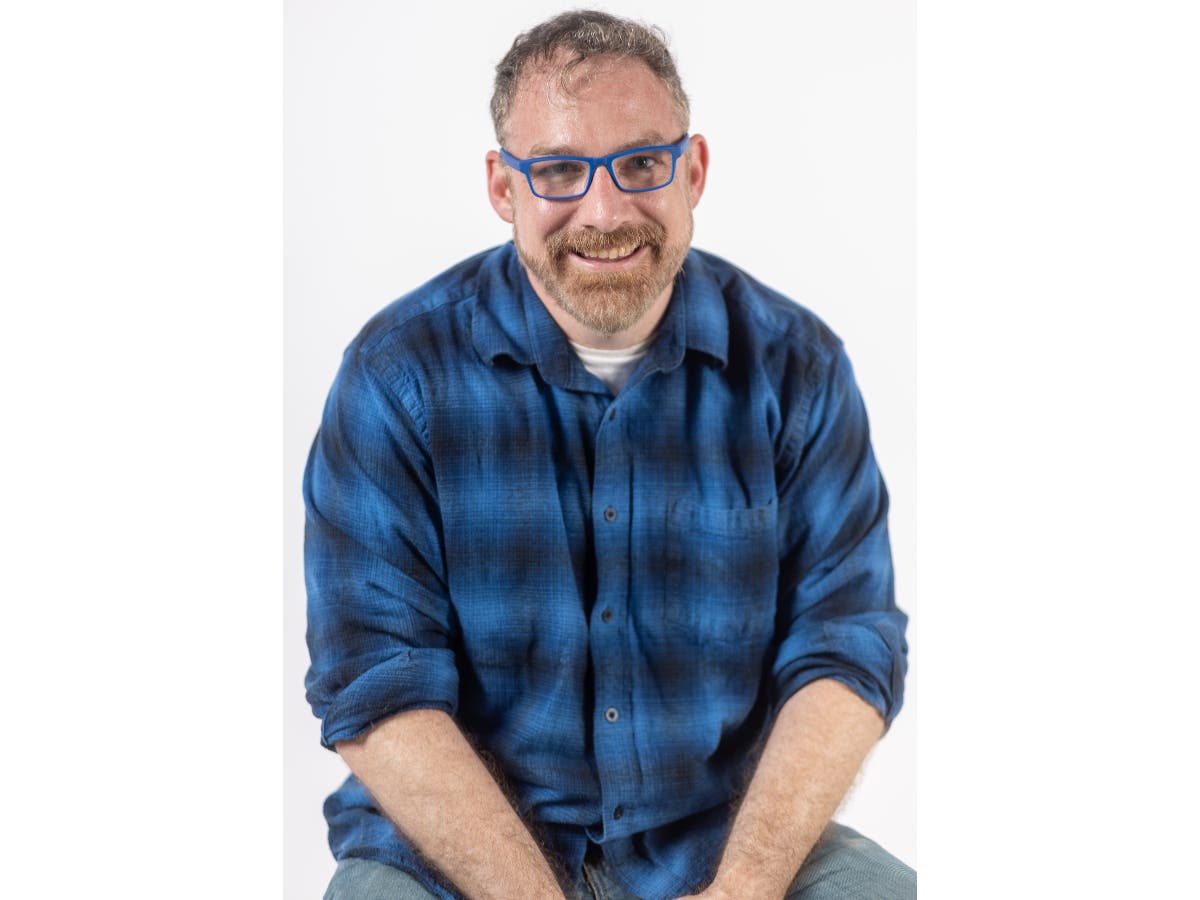
CHICAGO, IL — Environmental Health Safety and Sustainability Engineer Justin Ford is running for the U.S. House of Representatives, IL-09.
This is Ford's first time running for public office
Learn more about Ford:
Find out what's happening in Chicagofor free with the latest updates from Patch.
Campaign website
www.votejustinford.com
Find out what's happening in Chicagofor free with the latest updates from Patch.
Education
Undergraduate at Michigan State University, Graduate degree at the UIC School of Public Health in Environmental and Occupational Health
The single most pressing issue facing our district or state is ___________, and this is what I intend to do about it.
The single most pressing issue facing our district is that working families are stretched thin while the system rewards concentrated wealth and corporate power.
Across the 9th District, people are working hard and still falling behind. Housing costs are rising. Groceries cost more. Healthcare feels unstable. Many families are giving more of their time just to stay afloat.
I intend to tackle this at its root.
First, I will fight for a 32-hour, four-day workweek with no loss in pay. Productivity has increased for decades, and working people deserve to share in those gains. Companies here and abroad have shown it works for workers and for business.
Second, I will rebuild worker power. When unions were strong, wages were more equal and the middle class thrived. The most durable way to raise pay is to give workers a real voice.
As a public health professional, I focus on fixing systems, not just symptoms. That’s the work I’ll bring to Congress.
What are the critical differences between you and the other candidates seeking this post?
The critical difference between me and the other candidates is this: I am running to change the system, not to become part of it.
I do not want the title of Congressman for its own sake. I want the position because it is a tool, and I intend to use it. Our economy is structured to reward concentrated wealth while working families trade more of their time just to get by. Managing that system is not enough. It needs structural reform.
I am also the only candidate in this race who currently works a full-time job outside of politics. I commute, I report to supervisors, I deal with budgets, deadlines, and real-world consequences. I represent working people because I am one.
I have organized workers, challenged corporate decisions, and pushed for safer workplaces. I am running to fight for a four-day workweek, rebuild worker power, and repair a system that is out of balance.
This campaign is not about status. It is about repair.
Do you believe an inequity exists between funding for wealthy and poor schools? If so, what would you do to address the disparity?
Yes, inequities absolutely exist between wealthy and low-income schools, both between states and within them.
In Illinois, property taxes play an outsized role in school funding. That means communities with higher property values can generate more local revenue, while lower-income communities often struggle to provide the same level of resources, facilities, and programming. At the federal level, Title I funding was designed to help address this gap, but it has never been fully funded at levels that would truly equalize opportunity.
As a member of Congress, I would push to increase and fully fund Title I, expand support for IDEA so districts are not forced to backfill special education costs from general funds, and invest in school infrastructure through federal grants. I also support strengthening community school models that integrate health, nutrition, and social services directly into schools, particularly in under-resourced areas.
Education funding should not depend on a child’s ZIP code. Equal opportunity requires more than rhetoric, it requires sustained federal investment and accountability to ensure resources reach the students who need them most.
If you support tax cuts in Illinois, what spending should be eliminated to offset those cuts?
As a candidate for federal office, I do not set Illinois tax policy. Those decisions are made in Springfield. However, members of Congress absolutely have a responsibility to strengthen their districts financially.
My approach is simple: bring federal resources home.
Illinois sends billions of dollars to Washington every year. A strong member of Congress should work aggressively to secure federal infrastructure funding, climate resilience grants, public health investment, transportation dollars, and economic development resources for the 9th District. When we invest federally in transit, housing, workforce development, and clean energy, that relieves pressure on state and local budgets.
I do not support irresponsible tax cuts at any level that undermine essential services. But I do believe federal leadership can help stabilize state finances by ensuring our district receives its fair share of national investment.
My job in Congress would be to fight for Illinois taxpayers, not leave them carrying more of the load.
What would you do to help constituents struggling with the ever-increasing cost of living, housing and healthcare?
This is one of the most urgent issues facing families in the 9th District.
First, we have to give people their time back. I support a 32-hour, four-day workweek with no loss in pay. Productivity has risen for decades, but wages and free time have not kept pace. Returning time to workers is effectively a 20 percent raise in the one resource families never get back, their lives.
Second, we must rebuild worker power. The strongest and most durable way we have ever raised wages in this country is through unions and fair labor standards. When workers have a voice, pay rises and inequality falls.
On housing, I support federal investment in affordable housing construction, zoning reform incentives, and expanding tax credits to increase supply while protecting tenants from predatory practices.
On healthcare, I support a strong public option to increase competition and lower costs, expanded ACA subsidies, and allowing Medicare to negotiate more drug prices.
As a public health professional, I focus on structural fixes. We do not need temporary relief, we need an economy designed to let working families breathe again.
Do you support redistricting in a non-census year?
I do not support mid-decade redistricting in Illinois, but given that Republicans in states like Texas initiated off-cycle map changes for partisan gain, I understand why some Democratic-led states feel compelled to respond to protect national fairness, and while I regret that it has come to this, my focus in Congress would be establishing clear federal standards so voters choose their representatives, not the other way around.
Do you support the full release of the Epstein files with the victims' names redacted? What should Congress do to pressure the DOJ into following the law with the full release of the Epstein files?
Yes, I support the full release of the Epstein files with all victims’ names and identifying information properly redacted. Survivors must be protected, but transparency and accountability for anyone who enabled abuse are essential. No one, regardless of wealth or status, should be shielded from scrutiny.
This is about the rule of law and institutional accountability, not political theater. If Congress believes the Department of Justice is not complying with statutory disclosure requirements, it should use its oversight authority: request formal briefings, demand clear timelines, hold public hearings if necessary, and ensure compliance with the law. Oversight must be serious, fact-driven, and survivor-centered.
Transparency strengthens trust in government. Protecting victims and enforcing the law can and must happen at the same time.
Do you support the Trump administration’s immigration enforcement in the Chicago area and beyond? Why or why not? If not, what changes do you think should be made?
I do not support the Trump administration’s hard-line immigration enforcement in Chicago, Minneapolis, and beyond, especially given the wrongful deaths of Americans during federal immigration operations in Minneapolis, which have sparked widespread outrage and protests and raised serious concerns about the use of deadly force by federal agents.
Because enforcement under ICE has expanded aggressively and, in too many cases, without adequate accountability or transparency, I believe ICE as it currently exists should be dissolved and immigration enforcement restructured —focused on targeted investigations, respect for civil liberties, and clear oversight—while Congress works toward comprehensive reform that secures the border, respects due process, and protects families and communities.
Do you support the repeal of the SAFE-T Act, which eliminated cash bail? Why or why not, and do you think wealthier defendants should have an easier route to release?
I do not support a repeal of the SAFE-T Act’s elimination of cash bail as it was implemented in Illinois, because the pretrial fairness system it created replaces an arbitrary, wealth-based bail system with one in which judges assess risk and public safety rather than a person’s bank account — a reform that removes income as a barrier to justice and helps ensure that poor defendants are not jailed simply because they cannot pay.
Under the old cash bail system, wealthier defendants were often able to buy their freedom while poorer people remained in jail awaiting trial; the SAFE-T Act’s pretrial reforms move away from that inequity by having judges consider individualized risk rather than money.
That said, reasonable oversight and implementation improvements should always be part of reform, including ensuring courts have the tools they need to assess risk accurately and protect public safety while upholding fairness and constitutional rights.
Would you push to repeal the TRUST Act, which bars local police cooperation with federal immigration enforcement? Why or why not?
I would not push to repeal the TRUST Act, which bars local police in Illinois from cooperating with federal immigration enforcement without a judicial warrant, because that law helps build trust between immigrant communities and local law enforcement, encourages people to report crimes and cooperate with police without fear of deportation, and protects civil liberties. The Illinois TRUST Act generally prohibits local law enforcement from detaining people on federal immigration detainers or enforcing federal civil immigration laws, because those matters fall under federal jurisdiction and not local police authority.
Repealing it would risk undermining community safety by deterring victims and witnesses from engaging with police, and by making local officers de facto immigration agents, which many law enforcement leaders and civil rights advocates have argued weakens public trust. Instead of repeal, I would support clarifying and improving implementation, ensuring clear communication between federal and local authorities, and maintaining community safety while protecting individual rights.
Where do you agree and disagree with President Donald Trump on policy?
I disagree with President Trump on several core issues, particularly his reliance on unilateral executive actions, broad corporate tax cuts, aggressive immigration tactics, and environmental deregulation. Durable policy should move through Congress, not be reshaped by executive order depending on who occupies the White House. Stability matters for markets, families, and our institutions.
I also believe tariffs imposed without a comprehensive industrial strategy raise costs for consumers without delivering the long-term benefit of rebuilding American manufacturing. Trade policy should protect workers, but it must be paired with investment in domestic production, workforce development, and supply chain resilience.
Where I may agree in principle is that government can become unresponsive and that trade and border management should prioritize American workers. But enforcement must respect due process, and economic policy must strengthen the middle class, not concentrate wealth.
My approach is consistent: protect constitutional balance, rebuild worker power, invest in domestic industry, and pursue reform through accountable, legislative action.
What else would you like voters to know about yourself and your positions?
I want voters to know that I am not running out of ambition; I am running out of responsibility.
I have spent my career protecting workers’ health and safety, organizing for fair treatment, and pushing institutions to make difficult but necessary changes. I work a full-time job outside of politics. I live with the pressures that many families in this district face. I am not insulated from the consequences of policy decisions.
My positions are rooted in experience, not ideology. As a public health professional and Certified Industrial Hygienist, I am trained to look at systems, identify root causes, and fix what is structurally broken. That is how I approach the economy, labor policy, healthcare, and climate resilience.
I believe in rebuilding worker power, advancing a four-day workweek, investing in domestic manufacturing, and strengthening democracy itself.
Most of all, I believe representation should mean something. I am not running to hold office. I am running to repair what is not working.
Editor's note: The same questionnaire was sent to every candidate who has filed to run in this election. The Q&A's are run verbatim from their responses and are not modified by Patch staff.
Get more local news delivered straight to your inbox. Sign up for free Patch newsletters and alerts.