Politics & Government
Meet Paul Friedman: Congressional Candidate In IL-09
Candidate Paul Friedman tells Patch why he should be elected to Congress in Illinois' 9th District on March 17.


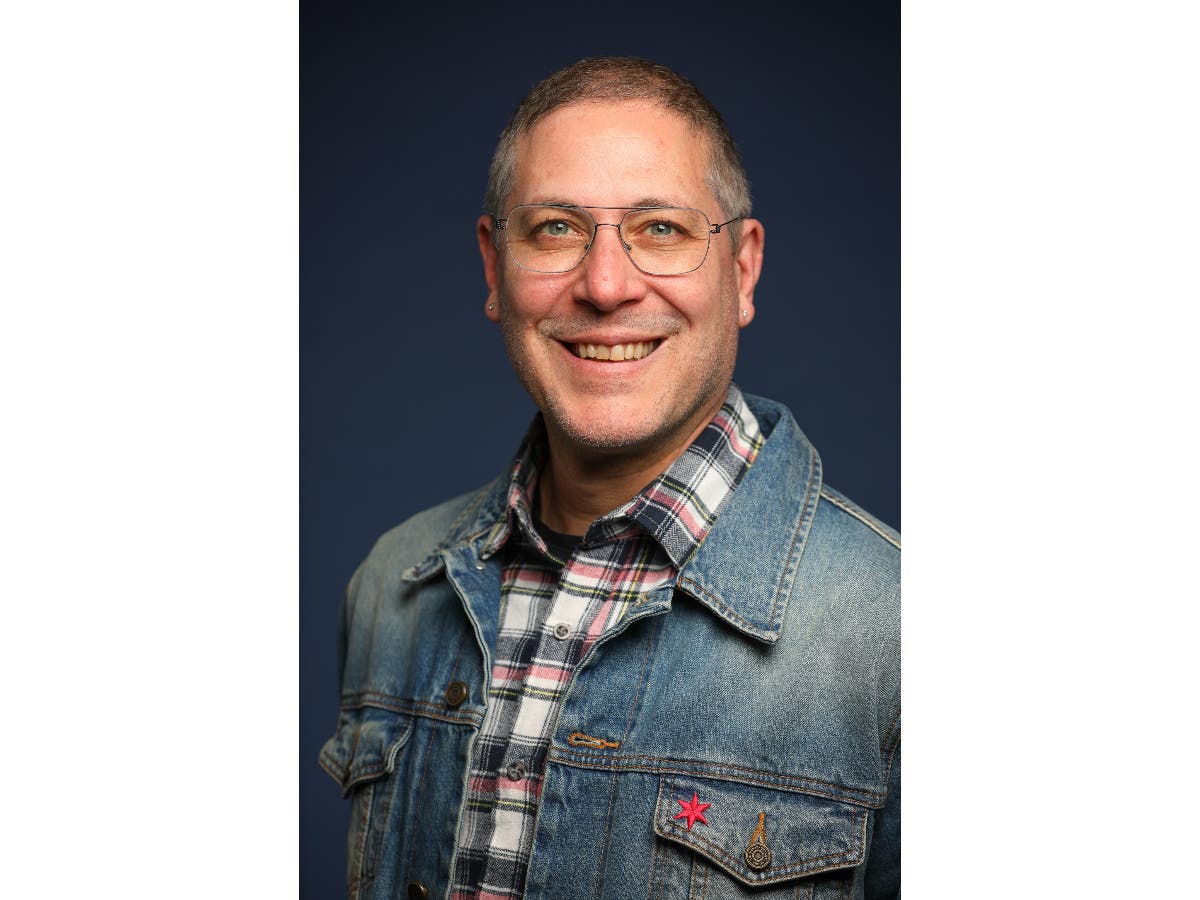
CHICAGO, IL — Paul Friedman, a 25-year software writer, is running for the U.S. House of Representatives, IL-09.
Friedman is a Republican who is running for public office for the first time.
Learn more about Friedman:
Find out what's happening in Chicagofor free with the latest updates from Patch.
Campaign website
Find out what's happening in Chicagofor free with the latest updates from Patch.
Education
B.A. University of Michigan 1992
The single most pressing issue facing our district or state is ___________, and this is what I intend to do about it.
Our district has some of the greatest wealth in Illinois alongside some of the deepest economic insecurity, with the Illinois Ninth (9th) Congressional District (IL-09) having the largest income disparity in the state, which shows up most in housing and schools. Families are being pushed out by rising rents and property taxes and the quality of a child’s education is still too tied to their zip code. When you add in healthcare costs and debt, people feel like they’re doing everything right and still falling behind.
The single most pressing issue facing our district is the affordability crisis that touches housing, healthcare, and education for working and middle-class families. IL-09 has the largest income disparity in Illinois, and you can see it in who can afford to stay in their homes, which schools get resources, and who can pay for college or medical care without going into debt. In Congress, I intend to fight for federal investments that expand truly affordable housing, protect renters, and ease the property tax burden; to lower healthcare costs through stronger public coverage options and caps on out-of-pocket expenses; and to make higher education and job training far more affordable. I will prioritize funding formulas that send more resources to underfunded schools, protect and modernize public transit that tens of thousands in our district rely on, and use the tax code to reward work, not just wealth. My goal is simple: if you work hard in IL-09, you should be able to afford to live here, raise a family here, and retire here with dignity.
What are the critical differences between you and the other candidates seeking this post?
With the upcoming Primary being foremost on my mind, I will respond focusing on the other Republican Primary candidates - Rocio Cleveland, John Elleson, and Mark Su - and let the Democrats decide who they think is best for the position.
Frankly, I am the only serious Republican candidate. With no disrespect to Mark and John, I am the better candidate. Their hearts are in the right place, but no other Republican candidate has put forth an original argument to address the issues affecting the citizens of the Ninth Congressional District. They put forth platitudes that suggest they will simply follow orthodoxy and not represent the people of the district. I am promoting specific pro-worker, anti-financialization economic policies that come out of places like American Compass and the Hewlett Foundation - policies that are shaping a new "common sense" economy focusing on worker welfare and community stability.
In addition, I have a specific set of changes to restructure Congress to better represent the citizens of the United States. My slogan - and the reason I am running - is to "Fix Congress."
- Set Term Limits
- End Gerrymandering
- Establish Age Restrictions
- Restrict Campaign Spending
Do you believe an inequity exists between funding for wealthy and poor schools? If so, what would you do to address the disparity?
I would use the office to protect and increase federal aid, insist it be targeted where kids need it most, push states to move away from property-tax-driven inequity, and shine a spotlight on any policy that quietly takes the most from the poorest schools.
Illinois has some of the largest gaps in resources between its wealthiest and poorest school districts, driven mainly by reliance on local property taxes and decades of underfunding at the state level.
Illinois’ evidence-based funding (EBF) formula is a good framework, but it has been under-funded.
I would push Congress to increase and stabilize federal Title I and related funding, targeted to districts furthest from adequacy, so state formulas like Illinois’ can close gaps faster instead of stretching inadequate dollars. Also I would press Springfield to appropriate closer to what’s really needed by the schools.
Because Illinois leans heavily on property taxes, low-wealth communities must tax themselves more just to get less, locking in inequality. At the federal level, I would advocate a “property-wealth equalization” grant that sends extra federal dollars to districts with low property wealth per pupil, conditioned on the state maintaining or increasing its own support. I would also create incentives for states to shift a larger share of school funding to statewide revenue sources, not just local property taxes, rewarding states that reduce the spread between their best- and worst-funded districts.
Finally, I would support more transparency. Communities in places like the Ninth District should be able to see exactly how their schools compare in funding and adequacy to wealthier districts. I would promote federal support for public, user-friendly tools that show per-pupil funding, adequacy levels, and demographics by school district and congressional district, so voters can hold all levels of government accountable. I would also require clear reporting on how new state and federal dollars move the lowest-funded districts toward adequacy over time, not simply use system-wide averages.
If you support tax cuts in Illinois, what spending should be eliminated to offset those cuts?
No, I do not support tax cuts. I support a restructuring of tax policy so that we reduce the taxes on the middle and working class so that the people struggling get some economic relief. Working paycheck to paycheck and being unable to get ahead is not helping the individual families nor the economy writ large.
Tax policies should increase the amount on those who abuse the system, should be better funded to track monies so that we identify fraud quickly, should remove the burden on those working and middle class families so that they can save a little and build for the future.
What would you do to help constituents struggling with the ever-increasing cost of living, housing and healthcare?
Affordability is a problem - many are struggling from paycheck to paycheck (if they are lucky enough to have a secure monthly income, which is becoming increasinly rare).
As a system free-market capitalism, as Thomas Piketty pointed out in his book Capital in the Twenty-First Century, is prone to inequalities. There are possible systemic changes to ensure that this inequality is mitigated in the long-term (e.g. investments in education and healthcare), but those long-term changes are no solace to the day-to-day struggles we experience.
The housing market is unfortunately subject to all markets - whittled down to supply and demand. Chicagoland, in particular, has the scourge of investment companies purchasing properties and artificially setting rents and housing prices (the value upon which tax rates are set). Companies do not cook or sleep or reside in these buildings - they are here to collect rent.
Not only can we build new affordable housing, but also leverage taxes to ensure that existing buildings are more affordable to those who need the housing for it's intended purpose - to provide shelter to American families.
On healthcare, I have a proposal to have competing liberal and conservative policies be enacted so that we replace the unsustainable Affordable Care Act (a.k.a. ACA, Obamacare) with the progressive "Medicare for All" and the conservative "Medicare Advantage for All" and let the free-market decide. Personally I don't see a difference between subsidies and taxes as the means for Government intervention into healthcare.
Much of the U.S. Government's expenditures are rightly centered around Medicare, Medicaid, and Social Security. Adding in interest and defense, this is a great percentage of the United States budget. The healthcare market is unique in it's place in a free market. I believe that a citizen's government ensures adequate healthcare to provide peace of mind to that person so that they can add value to society.
As I hinted at earlier, government investment into healthcare is a foundational piece to help ensure upward mobility in a free-market capitalistic society.
Do you support redistricting in a non-census year?
Absolutely not. Redistricting and gerrymandering are a central focus of my campaign. Just look at a map of the Illinois Congressional Districts. My district, the Ninth (9th) might be one of the most diverse and unequal districts in the nation. The Illinois Eighth (8th), Fifth (5th), Seventh (7th), Third (3rd), Fourth (4th), Sixth (6th), First (1st), and Second (2nd) are not understandable districts in terms of interest - they are created so that one party wins the seat after the primary, not the general, election. I believe that all Congressional Districts should be constructed in a manner according to a handful of measurable metrics to ensure that they are as fair and democratic as possible, so that that districts unique interests are represented in Congress.
Do you support the full release of the Epstein files with the victims' names redacted? What should Congress do to pressure the DOJ into following the law with the full release of the Epstein files?
Yes, release them all. Redact any information about the victims, but please expose this heinous crime. I would follow in the footsteps of Thomas Massie and Nancy Mace and read the files aloud on the floor of the House of Representatives until all the files are released to the public (redacted to expose the perpetrators and protect the victims and the innocent as much as possible).
Do you support the Trump administration’s immigration enforcement in the Chicago area and beyond? Why or why not? If not, what changes do you think should be made?
I believe that immigration was a significant reason the Trump administration was elected. The unprecendented influx of immigrants during the prior administration tested the economic infrastructure and social guardrails we have in place, particularly in sanctuary cities like Chicago. We need to enforce the immigration laws we have in place.
That said, local authorities have precendent over federal involvement. I agree with Ronald Reagan when he said on William Buckley's Firing Line during his presidential run in 1980, "One of the things that has been happening too much is the federal government is interfering where they have not been invited in". When the Federal government rightfully intevenes with citizens, they must co-ordinate and work in concert with local authorities.
Do you support the repeal of the SAFE-T Act, which eliminated cash bail? Why or why not, and do you think wealthier defendants should have an easier route to release?
I do not support the repeal of the SAFE-T Act. I believe that the penal system is in dire need of reform and the SAFE-T Act, however flawed, was an honest attempt to address the problem of inequalities in the penal system.
There are significant issues with the SAFE-T Act, e.g. larger loads on the courts, that need to be addressed through changes to the Act, but I do not support repeal.
Would you push to repeal the TRUST Act, which bars local police cooperation with federal immigration enforcement? Why or why not?
I believe that federal authorities must work with local police and local representatives. The places where Immigration Enforcement worked with the local authorities we had fewer issues than in the cities where they were not co-operative.
Where do you agree and disagree with President Donald Trump on policy?
I strongly believe in the modern conservative economic agenda - promoting "common sense" economy policies focusing on worker welfare and community stability. Immigration is part of this economic policy, using tariffs as a tool to restructure global trade is part of this economic policy.
The ideas that are being implemented have a strong basis. However the implementation is misguided. I am running to be the Representative in Congress for the Illinois Ninth District. I want to create solid, long-lasting policies that will help families now and into the future. The House of Representatives have abandonded their responsibilities in governing and have deferred to the executive branch for any policy implementation.
The House of Representatives should be doing thier job, passing legislation for the President to sign.
What else would you like voters to know about yourself and your positions?
I would suggest that voters educate themselves before voting. Please take a look at my website (https://pfriedman.github.io/IL-09/) or read the entries of my campaign diary on Substack (https://psfriedman.substack.com/).
Editor's note: The same questionnaire was sent to every candidate who has filed to run in this election. The Q&A's are run verbatim from their responses and are not modified by Patch staff.
Get more local news delivered straight to your inbox. Sign up for free Patch newsletters and alerts.