Arts & Entertainment
'We're Here to Bring Smiles': Professional Clowns Fight Scary Clown Craze
A national outbreak of "creepy clown" sightings hasn't helped the public's frightening perception of these performers.


Get Maureen Draganowski on the subject of clowning, a field that she's been a part of for more than 25 years as MoMo the Clown, and she'll enthusiastically discuss its long history as popular entertainment and how clowns were the "original jokesters." She'll talk about a professional community that feels like "a big family," even among clowns who have never met one another. And she'll warmly mention growing up at a time when clowns like Bozo and Ronald McDonald were about having fun and making kids laugh.
But change the subject to the image the public has of clowns in the 21st century — especially in the wake of the recent reports of "creepy clowns" across the country threatening people — and the Elmhurst resident's tone changes to sound the way Emmett Kelly's wistful hobo clown looked.
"It is sad," Draganowski said about the negative and sometimes scary reputation clowns have nowadays. "There's a fear factor for all sorts of things. Anything can be made into being scary. Especially in the last few decades, there's been a huge influx of negativity, on negative showings of clowns. But there really haven't been any books or movies where clowns are portrayed in a happy manner. It's overshadowed by the scary stuff to such a degree that it's a lot harder to find. … I'm sure if I dig I could find stuff, but it's not mainstream."
Find out what's happening in Chicagofor free with the latest updates from Patch.
Some people are trying to change that perception, though. Nikki Sinn, an Arizona woman, is planning a "Clown Lives Matter" march later this month in Tuscon as a response to the creepy clown epidemic and to show "that clowns are not psycho killers." (The name of the "peaceful walk," however, has drawn criticism for being insensitive and trivializing the Black Lives Matter campaign.)
Unfortunately, the mainstream images of clowns that have dominated pop culture since the early 1990s depict them as monsters; either fictional ones, such as Pennywise, the clown creature in Stephen King's "It," or — as almost every Chicagoan will point to — real-life ones, like serial killer John Wayne Gacy, who performed as a clown at parties and children's hospitals.
Find out what's happening in Chicagofor free with the latest updates from Patch.
National news reports and social media updates of menacing clowns only add to the unfair portrayal of the profession. In the Chicago area, creepy clown sightings have been reported in Arlington Heights, Worth, Waukegan and other suburbs. A school district in Chicago Heights took extra security precautions because of a clown-based threat on social media.
In Chicago, police handcuffed and took into custody a clown who was walking around the University of Illinois-Chicago campus. He was released, and no charges were filed when it was discovered that he was a student participating in a performance art project.
RELATED: From Laughing to Screaming: The History of Clowns and Terror
"The entire country is ridiculous as far as our attitudes toward clowns," said Steven Finnegan, a Chicago native who has been a professional clown for 35 years. "So they made some movies with some scary clowns? Young kids, when they see a clown, don't quite understand what it is. So instantly, adults tell them they're afraid of it, and suddenly they perpetuate all this silliness around the country."
Finnegan, 68, believes the best way to change people's attitudes about clowns is through education. That's why he has a show, "Don't Be Afraid of Clowns," designed specifically to demonstrate to children ages 2 to 12 that there's nothing frightening about clowns.
The inspiration for the act came before Finnegan began working as a clown and was entertaining young patients at the University of Chicago's Comer Children's Hospital. During that time, he noticed many of the clowns who were performing for kids didn't know how to work with a young audience.
"They come in looking weird and start acting silly and wonder why children are afraid," he said. "Children have to understand what's going on before you entertain them."
In his show, Finnegan walks the audience through a clown's makeup and costume by dressing up one of the children. Then he puts on his own clown outfit as part of a comedy act.
"In my years of doing shows, I've literally taught thousands of children not to be afraid of clowns who were afraid of clowns before. That's what my show does," said Finnegan, who is semi-retired but was performing 600 to 700 clown and puppet shows annually from the late '90s to the early '00s.
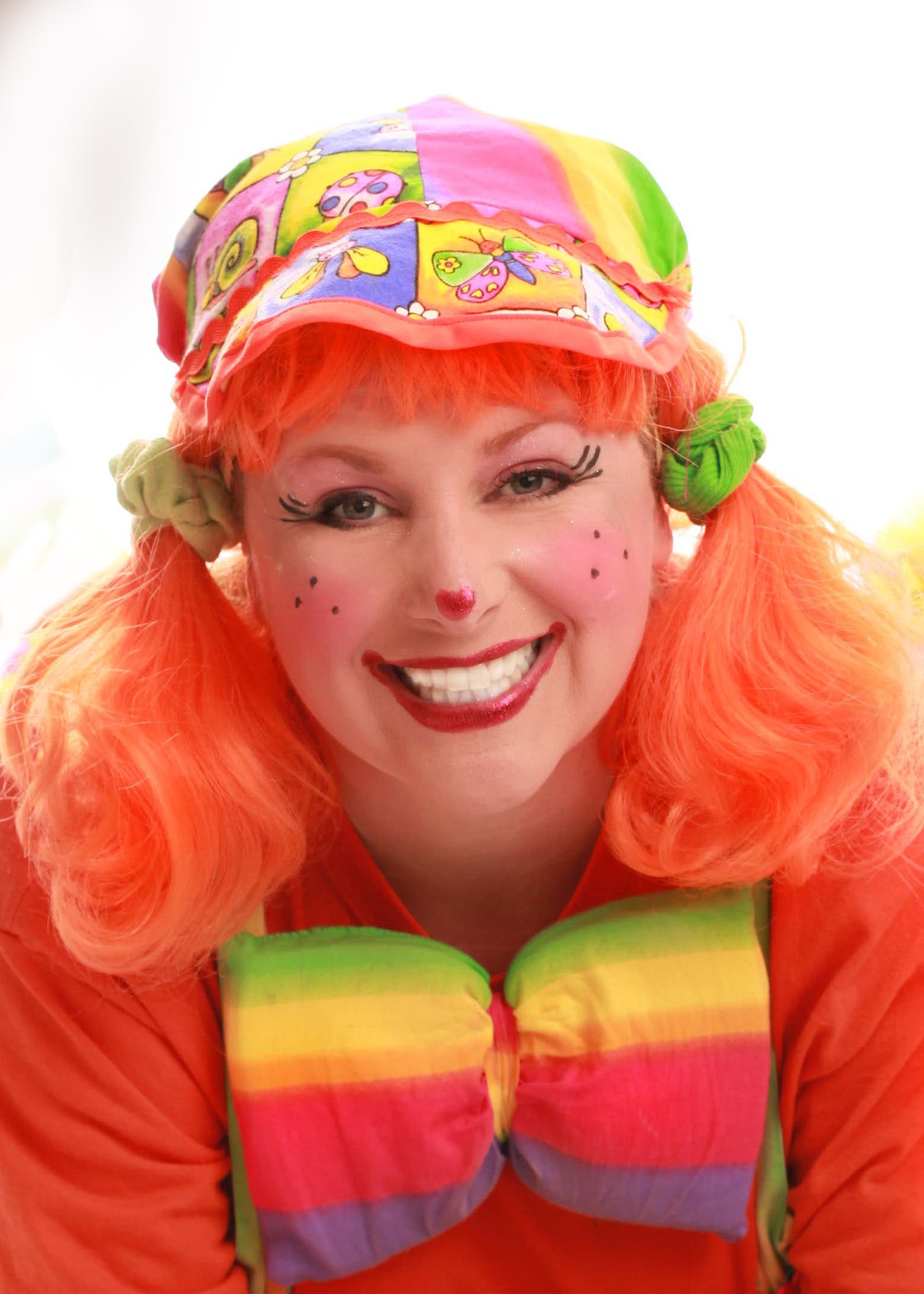
Although she doesn't have an act aimed at helping kids overcome a fear of clowns, Draganowski has her own techniques to make kids feel at ease when she's dressed as MoMo the Clown or another character she might perform as at parties and events.
"I don't go right up to a child who's shy or hesitant and get in their face. … Nobody likes that," she said. "I go a little bit at a time, and break the ice a little, and let them know that I'm here for their enjoyment and to make them laugh and smile."
Interestingly, it's the grown-ups who are sometimes the biggest scaredy cats when it comes to clowns, according to Finnegan and Draganowski.
"I have adults who stand on the other side of the room and go, 'I don't like clowns'," Draganowski said. "I'm about as least frightening as you can get."
"They have all these crazy misconceptions of clowns," Finnegan added. "Clowns are people dressed up in makeup. Everyone who goes on TV puts on makeup. People are just insane."
Finnegan and Draganowski also make an important distinction between what they do as a profession and what others are doing for mean-spirited kicks.
"These are not professional clowns. Professional clowns do not do this. This is just somebody dressing up as a clown," Draganowski said, concerning creepy clowns. "That would be like me dressing up in a tutu and saying, 'I'm a prima ballerina. I'm going to go perform at the Met!' Not going to happen."
RELATED: What’s With All This Clown Nonsense?
But that doesn't mean that the professional clowning community is filled with saints.
"Not saying there might not be some creepy professional clowns out there. Clowns are just people," Finnegan said. "But chances are most of this stuff going on is not professional clowns."
Fortunately, the creepy clown paranoia hasn't affected business for either Finnegan or Draganowski. They're still getting calls for jobs. But Draganowski admits she hasn't seen anything quite like the current rash of clown reports.
"Traditionally, I haven't seen a decline, but we haven't seen a mass outbreak like this, maybe ever?" she said.
Draganowski is hopeful that the public perception of clowns swings back to how it was when she was a kid, and clowns were associated with balloon animals and Bozo, not horror novels and serial killers.
"It's very sad, but the nice part is you still have the younger kids who haven't been exposed to all the scary stuff," she said. "We still see kids who are younger who aren't afraid of clowns at all, who see people like me and their faces light up, because they know we're the fun people. … We're here to bring smiles and make them laugh."
Steven Finnegan (photo via Finnegan)
Like What You're Reading? Stay Patched In!
Get more local news delivered straight to your inbox. Sign up for free Patch newsletters and alerts.