Weather
When Will Snow Hit Illinois, And How Much Will We Get?
Five to 11 inches of snow are possible, and "dangerous travel" is expected.


ILLINOIS — Widespread travel disruptions are possible as a winter storm approaches the Chicago area Tuesday evening, according to the National Weather Service. The heaviest snow will likely hit after 8 p.m. and continue through Wednesday morning, forecasters said.
Winter storm warnings have been issued for La Salle, Grundy, central and southern Cook, and Will counties, in effect from 8 p.m. Tuesday to 6 p.m. Wednesday.
20 Inches Of Snow In IL? Not Likely, Despite Models, NWS Says
Find out what's happening in Chicagofor free with the latest updates from Patch.
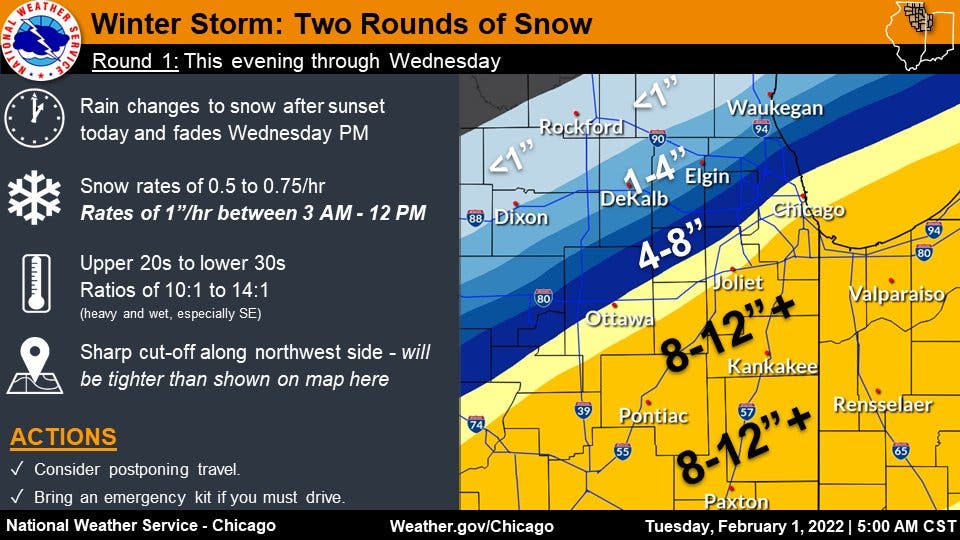
According to the weather service, heavy snow and "dangerous travel" are expected. Total snow accumulations of 5 to 11 inches are expected.
Find out what's happening in Chicagofor free with the latest updates from Patch.
A sharp snowfall gradient is expected across the Chicago metro area, the weather service said.
The Joliet area could see up to a foot of snow, with accumulation tapering off to less than an inch of snow for the north suburbs, according to the weather service.
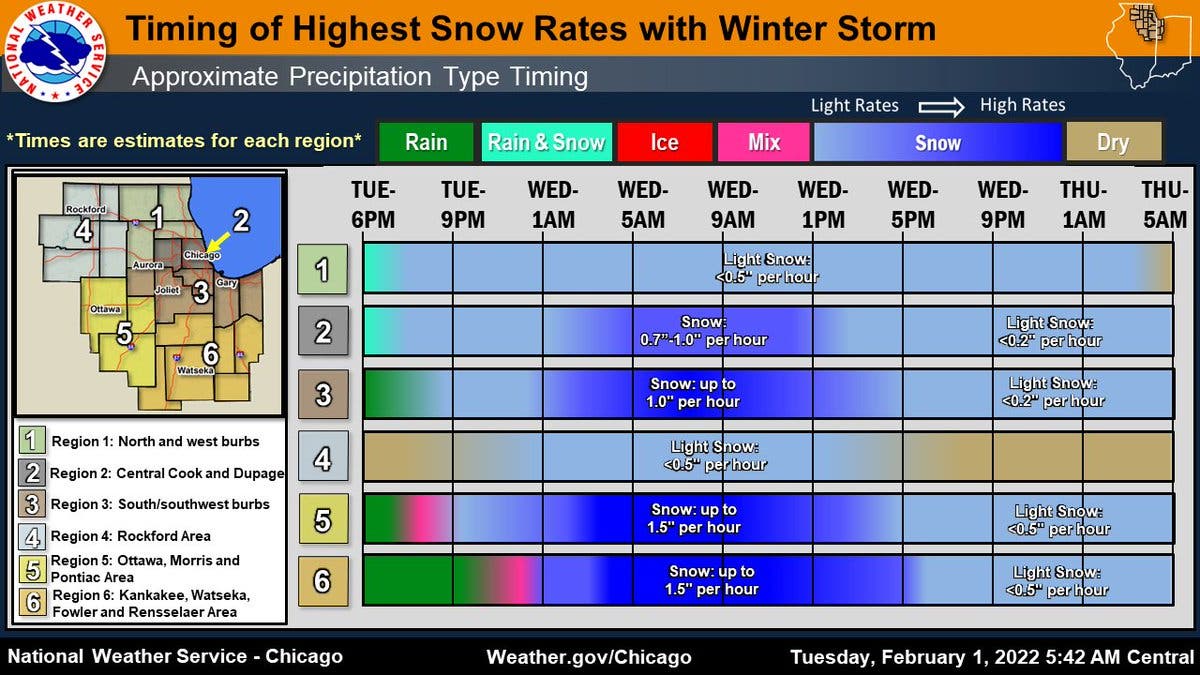
The highest snowfall rates, up to an inch per hour, will be possible after midnight through early Wednesday afternoon.
The snow will impact both the morning and evening commutes on Wednesday, the weather service said.
A second round of snow is possible through midafternoon on Thursday, but the majority of snow will occur with the first round of snow Wednesday, according to the weather service.
People who must travel Tuesday night through Wednesday should be aware of the forecast and check road conditions. Both Interstate 55 and Interstate 80 will be affected by the winter weather, the weather service said.
Shoveling safety
Heavy snowfall can mean increased heart attack risk as residents dig out. According to the American Heart Association, before you pick up that shovel, you should:
- Avoid eating a heavy meal.
- Avoid alcohol.
- Use a small shovel, as lifting heavy snow can increase blood pressure.
- Learn the dangers of hypothermia and dress in layers.
- Know the signs of a heart attack: chest discomfort; pain in the arm, neck or jaw; cold sweat; nausea; and shortness of breath. Stop immediately and seek medical help if you notice any of these symptoms.
Police also reminded residents to help firefighters by clearing a 3-foot radius around fire hydrants.
Get more local news delivered straight to your inbox. Sign up for free Patch newsletters and alerts.