Neighbor News
Hofmann Tower
Built in 1908, it is named after local brewer George Hofmann Jr., who built the tower and a neighboring dam as part of a park

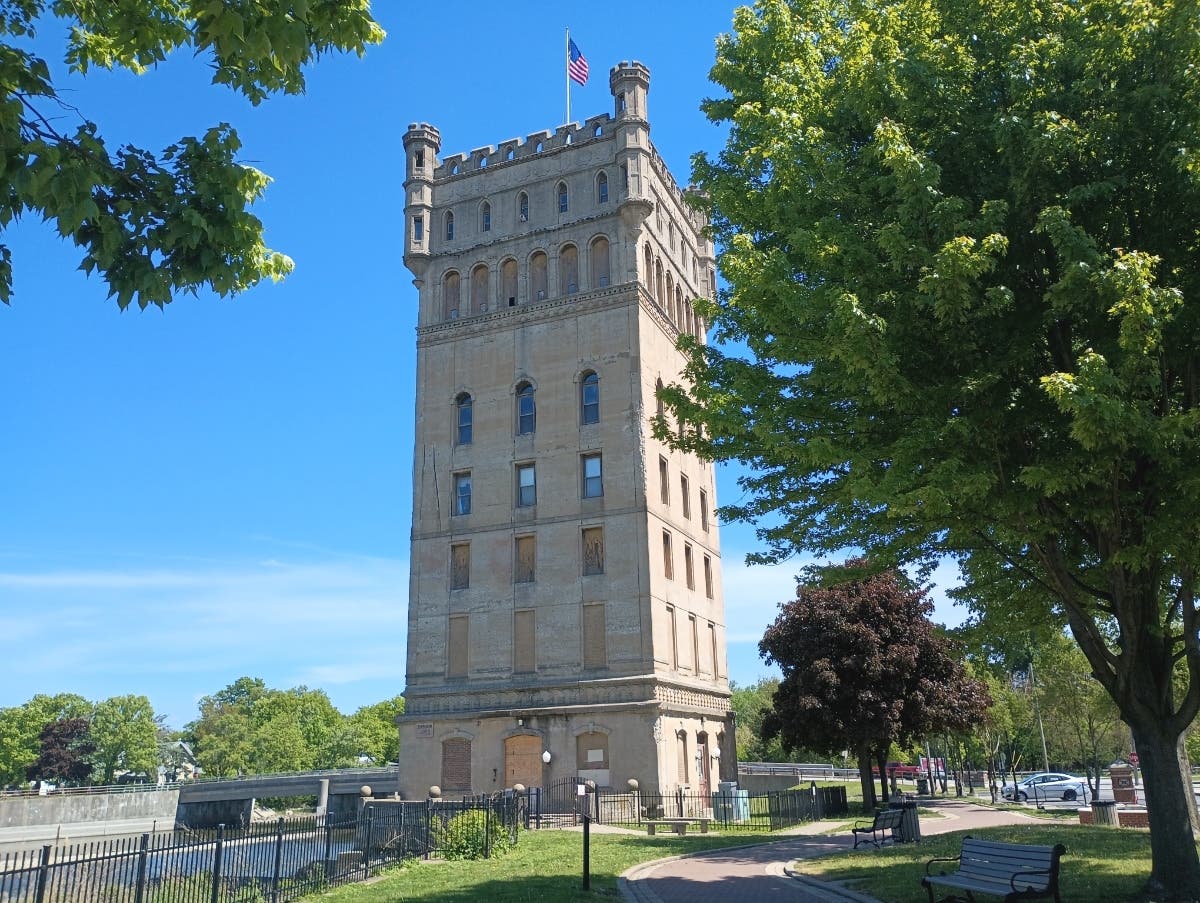

I traveled to Hofmann Tower in Lyons. The tower was added to the National Register of Historic Places on December 22, 1978.It is an 8-story steel fortress, complete with castle like battlements and a flag flying from the top.
Hofmann's heirs sold the tower to the Forest Preserve District of Cook County in 1946. In the 1970s, Rose Marie Benedetti and Maureen S. Kiener worked closely with the Village of Lyons Historical Commission to have Hofmann Tower designated a village and state landmark.
It is closed to the public due to deterioration indoors but there is a path that you can enjoy.
Find out what's happening in Downers Grovefor free with the latest updates from Patch.
Developed over 150 years ago, the site of the Hofmann dam has contributed to the development of Chicago and its surrounding suburbs. Before Chicago was incorporated, a small village named Lyons developed just 12 miles west. The Hofmann dam site was a natural dam known as the Riverside Ford but was altered by construction of a man-made dam as early as the late 1820s. Historically, the dam provided power for the Riverside Milling Company.
In 1907, brewer George Hofmann, Jr., acquired the dam and surrounding property. Hofmann began improving the dam and developing the adjacent grounds to create an amusement complex called Niagara Park. Hofmann replaced the earlier mill dam with a horseshoe-shaped dam of concrete.
Find out what's happening in Downers Grovefor free with the latest updates from Patch.
Niagara Park included the dam, the Hofmann tower, paths, and boat slips, all on the south bank of the river west of the tower; the park offered everything to visitors including picnicking and outdoor entertainment. Business at Niagara Park was extensive until Prohibition and pollution caused problems for customers. The Hofmann dam had created a continuous sewage and sanitation problems since about 1908 by constricting the river's flow and catching sewage and sediment.
A by-pass was added to the north bank of the river in 1928 and a Works Progress Administration project sought to strengthen the dam in 1936. Finally in 1950, due to continuing sanitation and pollution concerns, Hofmann's dam was replaced with a new one. In 2012, that 1950 dam was removed, revealing a portion of the 1908 dam, which was also removed later that year.