Politics & Government
Evanston Aldermen Divided On Request For Harley Clarke Proposals
The City Council voted 5-4 Monday to draft a request for proposals for what to do with the city-owned lakefront landmark.


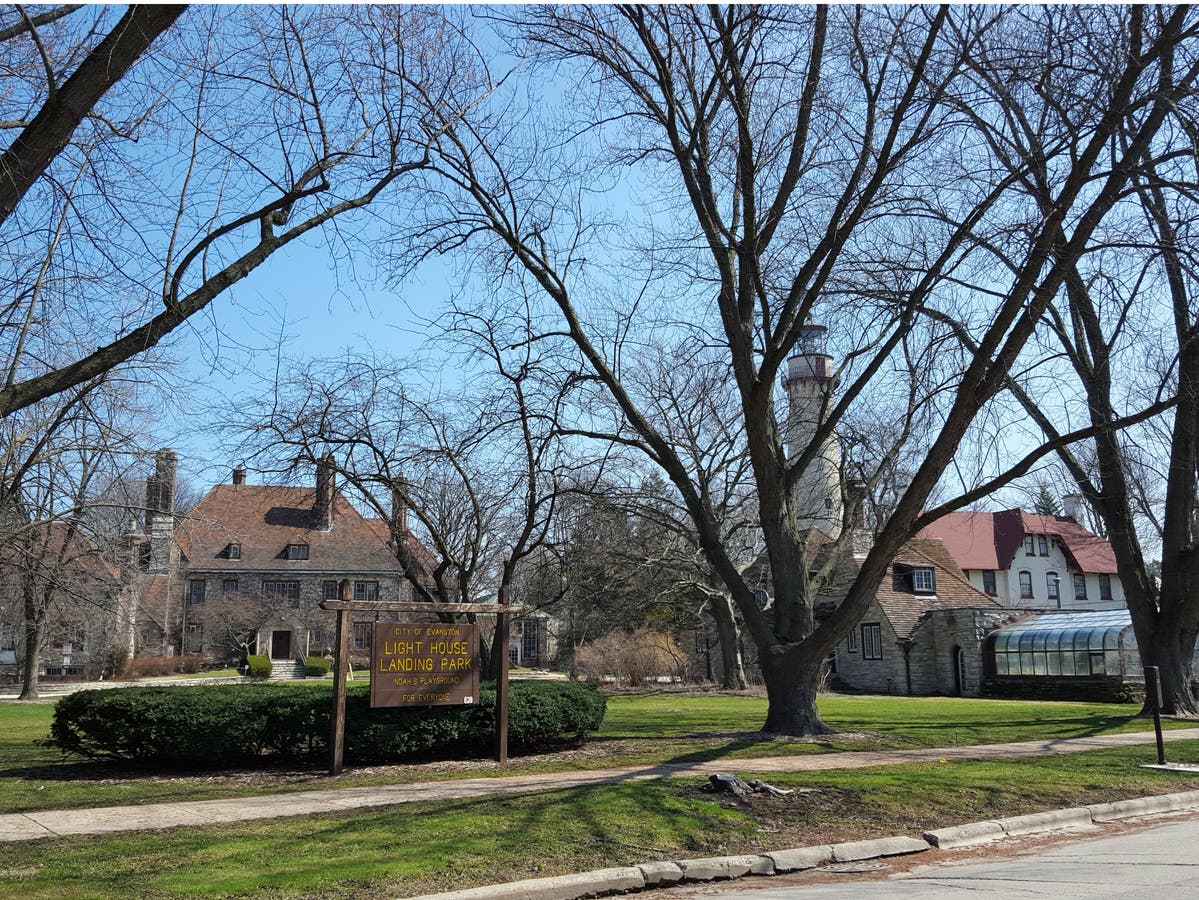
EVANSTON, IL — A divided City Council Monday directed staff to develop a request for proposals for the future of the Harley Clarke mansion and coach house, the city-owned lakefront local landmark. Alderman voted 5-4 to prepare a draft RFP that would be "generally conforming to prior requests. " Responses will be accepted for nine months, but while the city will make sure it retains ownership, proposals will not be limited to just nonprofit groups.
Mayor Steve Hagerty, who chaired the Harley Clarke Citizens Committee prior to running for mayor, recommended the city accept proposals over the next 18 months during a presentation before discussion at the March 11 meeting. He said the mansion presented an opportunity for the city but that it would require "smart planning and a thoughtful process" given the distinct lack of consensus in the community about how the mansion should be used.
"There's been a tremendous amount of distrust, sort of an incivility that has built up over time in regards to Harley Clarke," Hagerty said. "I think it's making it challenging for us to move forward when there's a lack of trust, when things have been said, very sort of unkind things about lots and lots of people, whether elected officials or other people that create a more challenging environment for us."
Find out what's happening in Evanstonfor free with the latest updates from Patch.
Hagerty recommended the RFP be used to pitch potential uses of the property in the manner of a real estate marketing package. He pointed out restrictions on commercial uses or the lack of long-term lease of the building would mean restricted revenue, fewer interested investors and limited future uses. The mayor initially suggested the initial request be limited to nonprofits and foundations, but aldermen decided to open it up to responses from any type of organization.
In December, Evanston aldermen decided to drop a controversial plan to demolish the building when they accepted a decision from the city's Historical Preservation Commission to deny a permit to raze the 91-year-old structure. The vote followed a citizen-led advisory referendum on the November 2018 ballot where over 80 percent of voters favored preserving the building "for use and access as public property, consistent with the Evanston Lakefront Master Plan, at minimal or no cost to Evanston taxpayers."
Find out what's happening in Evanstonfor free with the latest updates from Patch.
Demolition was one of four proposals for the future of the property to have failed over the past six years. In July 2013, a plan from billionaire real estate investor Jennifer Pritzker to turn the site into a boutique hotel was rejected by a 6-3 vote. The next year the Illinois Department of Natural Resources dropped an idea to use the site for its offices due to state budget shortages.
Last year, aldermen rejected the one plan it received in response to its last RFP, which was limited to nonprofits, voting 5-4 to end discussions over a draft lease with a group called Evanston Lakehouse & Gardens. A couple months later, a group of citizens proposed donating about $500,000 on the condition the city commit to demolishing the building. Aldermen accepted the offer with a 5-3 vote but later decided against appealing the historic preservation commission decision not to issue a certificate required for the demolition of a local landmark.
Voting in favor of preparing an RFP with nine months to respond were Ald. Melissa Wynne, Ald. Don Wilson, Ald. Tom Suffredin, Ald. Eleanor Revelle and Ald. Cicely Fleming.
The votes against drafting a new RFP came from Ald. Judy Fiske, Ald. Peter Braithwaite, Ald. Robin Rue Simmons and Ald. Ann Rainey.
The vote nearly mirrors last summer's vote on entering into an agreement to pursue the demolition of the property. All four aldermen who voted against issuing the RFP voted in favor of entering into an agreement with the group Evanston Lighthouse & Dunes. Only Fleming voted in favor of entering that agreement and composing a new RFP.
Fiske, who represents the 1st Ward, said the city should consider selling the property and converting it to a single-family home. She said it was too early to issue an RFP and the city should know more about how much it will cost to repair the building for public use before doing so. She said a lot of people voted in favor of preserving the house because they liked driving by it or looking at it but did not want to go inside. Eliminating the possibility of re-zoning it to allow a private owner to purchase the property for personal use was a unfair and unwise as it limited the flexibility of the City Council, according to Fiske.
"I just have not seen anything that says to me that there is a way to have a public use for this building that's actually going to pay for it," Fiske said. "It needs to be demonstrated that there is a source for that funding somewhere, because otherwise we're all just heading down the road of wishful thinking. And that's, I think, what's sort of eating us alive."
Braithwaite, who represents the 2nd Ward, did not comment during the discussion.
Wynne, who represents the 3rd Ward, said it was important to distinguish what is meant by public use, as well as the difference between public use and public access.
"We've heard a lot from the public that there is the money there, and I'd like to believe them, that there is the money there to restore the mansion and come up with a use that does have some ability for the public to access the building, because I think that's a critical element that's been part of our discussion," Wynne said. "It doesn't necessarily mean to me that the entire house has to be open every single day for the public, but I do think in my mind that at periods during the day, or during the year, or regularly, at least the first floor is open to the public."
Wilson, who represents the 4th Ward and made the motion for a new RFP, initially suggested accepting proposals over a six-month period and recommended building in more community involvement earlier in the process to more thoroughly vet proposals.
"It's super-frustrating for everybody. Every single person in the room," he said. "But, from what I've seen and the conversations I continue to have, there's a lot of vision. And if we could turn the vision into the collaboration that we talked about and if we can get that collaboration into action I kind of feel like this little timeline I put together would facilitate that."
Rue Simmons, who represents the 5th Ward, called in to the council meeting from the National League of Cities but did not comment during the discussion.
Suffredin, who represents the 6th Ward, said nine months was enough time to prepare a proposal.
"You can make a person in nine months, you should be able to come up with proposals," said Suffredin, recommending the city set a deadline around the end of the year, after the budget process, to discuss offers received and narrow them down. Past proposals had failed, he said, because the Council had too narrow of a focus, considering only one thing at a time.
"Obviously we are all aware of the community preference for something in conformance with the referendum, but I don't know why we would limit ourselves, when that seems to be one of the mistakes that's been repeated in every failed proposal is that we're just looking at one thing," Suffredin said.
Revelle, who represents the 8th Ward, agreed that 18 months was too long to leave the RFP open for responses but agreed with the mayor's idea for more informal conversations with members of the community. She also supported Wilson's suggestion to allow for separate proposals for the mansion's main house and coach house. Regardless of what kind of group proposes a possible future use, Revelle said Harley Clarke, which is in her ward, should service a public good.
"As long as the RFP specifies that it needs to be some kind of a community use then that takes care of it," Revelle said. "Whether its being proposed by a not-for-profit or some other kind of entity."
Fleming, who represents the 9th Ward, said 18 months was too long to wait to make a decision. It would be irresponsible, she said, to wait until new aldermen are seated after the next municipal elections. She recalled being asked to vote on the last request for Harley Clarke proposal soon after taking office.
"I did not enjoy sitting in this seat and responding to some very frustrated people who were frustrated about things" that had been determined before she was even in office, Fleming said. She said she had asked staff how much the city had paid to maintain the property over the past year and had not gotten any answer.
"The longer we have the building sitting there — that we are responsible for the maintenance — the more money that we are potentially spending on the building," Fleming said. "And we continue to say we don't want to spend any money on the building."
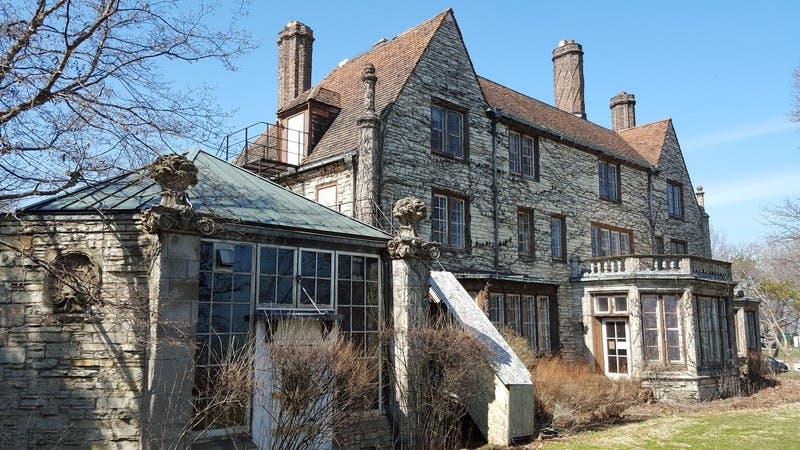
Every member of the Evanston City Council member who spoke Monday expressed opposition to spending any taxpayer money on the property. There appeared to be little support for efforts to transfer the property to the government of Illinois for use as a state park system, floated as an idea to eliminate any costs or potential future burden on Evanston taxpayers.
Another suggestion that may develop into a proposal was introduced in January by Audrey Niffenegger, author of the best-selling novel "The Time Traveler's Wife," who has described fond memories of classes at the mansion when it was the site of the Evanston Arts Center. Last year, she opposed the efforts to fund the demolition of the building by the Lighthouse Dunes group, whose list of donors was disclosed by the city, though staff refused to say how much each had contributed. She has publicly offered $500,000 to support the conversion of the Harley Clarke mansion to a community arts center.
During public comment, a statement from Rev. Michael Nabors, president of the Evanston/North Shore NAACP, was read on behalf of the organization in support of efforts to ensure Evanston's minority communities have easy access and regular use of the public lakefront property.
"While the city will receive any number of proposals for how the mansion should be utilized, we want to be assured that its future programs and events will keep in mind the African American community, as well as the Latino, Belize, Haitian, Jamaican and other minority communities in our town," it said. "We fully anticipate that we will have a permanent presence in the mansion so that future generations will know that we strived for beloved community, in the truest sense of the word."
City Manager Wally Bobkiewicz said staff would prepare a draft RFP for aldermen to review at the April 15 City Council meeting.
Related:
- Aldermen Decide To Drop Harley Clarke Demolition Plan
- Evanston Sets Turnout Record While Approving Referendums
- Preservation Commission Rejects Harley Clarke Demolition Request
- State Partnership Could Spare Harley Clarke Mansion: State Reps
- Harley Clarke Mansion Demolition Donation Deal Signed
Get more local news delivered straight to your inbox. Sign up for free Patch newsletters and alerts.


