Health & Fitness
Evanston CEO Beats Coronavirus During 6 Weeks In Self-Isolation
After surviving "the worst thing ever" during the height of his symptoms, Sonny Sultani says he values his time with family more than ever.


EVANSTON, IL — For local COVID-19 survivor Sonny Sultani, February was an eventful month. He launched a new business. His father fainted and needed hip surgery. His grandmother died.
It was on a crowded late night flight back from the funeral in Dallas that Sultani suspects he contracted the new coronavirus, since he had no other close contacts with people outside his immediate family.
The symptoms began almost exactly 14 days later, Sultani said, and they continued to evolve over the next six weeks spent in isolation in his Evanston condo, where he confined himself to a bedroom to avoid exposing his wife and two children to the virus.
Find out what's happening in Evanstonfor free with the latest updates from Patch.
"It really played out in three different parts, very distinct parts," he recalled. "They had a hard stop and new start almost."
The first phase began on March 9, with unusual feelings of fatigue and a notable shortness of breath. Sultani, 40, noticed himself getting winded while eating and climbing stairs.
Find out what's happening in Evanstonfor free with the latest updates from Patch.
"Obviously, they're not really major symptoms, they're not indicative of a flu or a cold at this point, but they were weird," he said. "So then I started developing a cough, and the cough got pretty bad so I went into the immediate care and I said I have this weird cough."
Tests were negative for influenza and strep throat, and Sultani was sent on his way following his first trip to a doctor. A week later, his cough worsened and it became difficult to breathe, Sultani said, but he still had no sign of a fever.
"But I knew something was wrong. And at this point, I kind of had an inkling I had COVID because of what the news kept saying — shortness of breath, a primary symptom," he said. So he headed back into the urgent care center. "They did a chest X-ray, they came back with, 'Hey, you have viral bronchitis, here's what you need to take for the cough, it sounds pretty bad."
No coronavirus testing was available for Sultani during either of his first two visits to immediate care clinics, and at no point was he treated as if he might be contagious.
"The first time I went they were asking if I had flown internationally, and the second time I had went they asked me if I knew someone who had COVID or if I had flown to a few other places. They had increased the pool. I wasn't a candidate in either of those moments," he said.
"As a matter of fact, on my second immediate care visit, I asked, 'Are you sure I don't have COVID? Should I get tested? and the nurse practitioner said, 'You don't have COVID. At this point, you haven't been tested, but you surely don't have COVID,'" Sultani recalled. "I think it was just a lack of knowledge of what to look for at this point."
Despite a lack of an official diagnosis until April 2, Sultani said he began isolating himself from his family as soon as the symptoms began. His wife of 19 years, Nusrat, would leave food outside the bedroom door, and he would only communicate with his 5- and 2-year-old sons via video chat or text.
During the final week of March, the second — and worst — phase of symptoms kicked in, Sultani said, describing it as the sickest he had ever been. He developed a fever, lost his sense of smell, felt headaches and was too tired to turn on the TV. His eyeballs hurt.
"It got to a point in the third week that I knew this was going to be bad. This was just the worst thing ever. I even called my banker up, and I said, 'Hey can you make sure my beneficiaries are set, something just seems godawful wrong,'" he said.
There were several moments, Sultani said, when he and Nusrat questioned whether he should be going to the hospital.
"I didn't know what to do," he said. "I kept thinking, 'Well, what if I go into the E.R. and then I get worse because there's so many more patients?' 'Am I taking up a bed?' 'I'm young, should I just fight this out at home?' There was a lot of things to consider. You hear on the news that they don't have enough beds, you don't want to be the one taking up one for someone who really, really needs it at this point, but my chest was tight and my breathing was really, really bad."
During his body's battle with the coronavirus, Sultani received support from a strong support network. Though not particularly religious, he said he came to better understand the value of a religious community after his COVID-19 diagnosis. Members of the local Ismaili Muslim community sent a care package, offered to bring groceries and check in every day to get updates about Sultani's condition and symptoms.
"They were there to listen, and I think that matters. It really does. Especially when you're going through something that's ambiguous and you don't really know what to expect," he said.
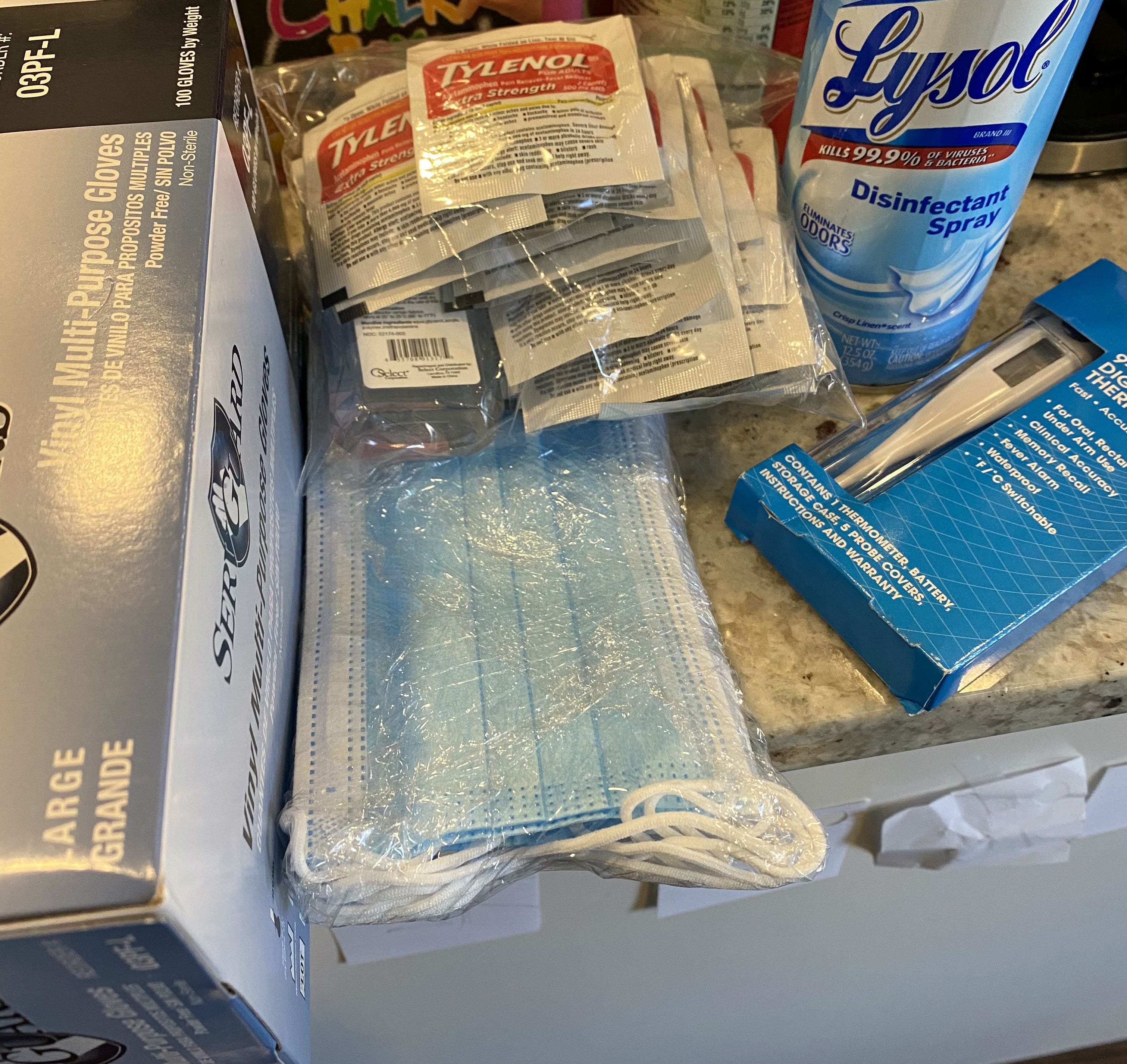
In the end, Sultani was able to stick it out at home. The worst of the symptoms began to recede. But his priorities had shifted from the start of February.
"Now my value, in terms of money, has shifted completely. Money is important, for sure, but all my values have changed into time. It's who I give it to, when I give it and how I give it that's really the most important thing right now. I want to spend more time with the family, I really do. Six weeks I didn't get to hang out with the boys, and prior to that, when I worked, they weren't really my single, number one priority," he said. "I didn't always give them the time, but now it's all I want to do. All I want to do is play with the boys and spend time with the family."
Sultani described the third and final phase of symptoms as two weeks of gradually mending, with a residual cough, breakouts of hives, some sweating, as well as stabbing pain in his lungs.
According to the city of Evanston, 397 residents had tested positive for coronavirus and 11 had died as of Tuesday. No information on the number of those cases who have recovered, like Sultani, has been released by the city's health department.
Sultani has since been able to rejoin his wife and children. He recognized how fortunate he was to have more than one bathroom to be able to effectively self-quarantine in his condo. In the home where he grew up off Peterson Avenue in West Rogers Park five people to one bathroom, he supposed it would have been impossible to prevent the entire household from contracting the coronavirus.
The digital marketing business he launched just before contracting the virus, 120/80, has grown to 11 clients across the United States, including the company he co-founded in 2006 and sold last year, Sonny + Ash. While financial motivations may have guided his past entrepreneurship, Sultani said, his focus has changed.
"Time is the currency right now," he said. "That's all it is."
Get more local news delivered straight to your inbox. Sign up for free Patch newsletters and alerts.