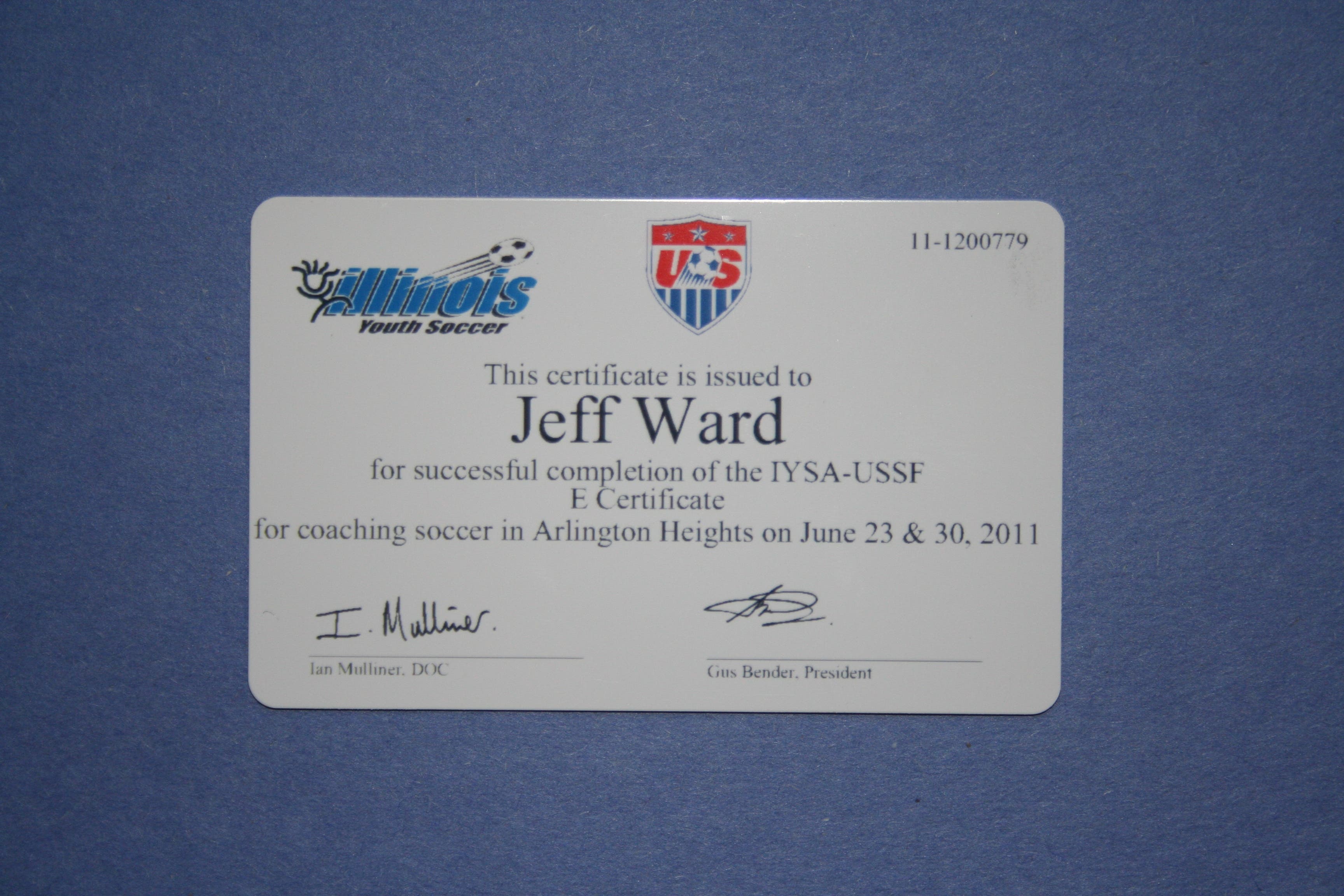

While you all were sipping mint juleps in your backyard hammocks, I spent the last two Saturdays sweating in soccer school. And I enjoyed every minute of it! The way the Chicago Fire is playing, I figure they always can use a good striker.
Actually, if you want to coach Tri-Cities Soccer Association travel soccer, you must obtain a coaching certificate first! An “E license” involves a 20-hour course typically offered on a weekend or two consecutive Saturdays.
Since my younger son wanted to move up and he was injured for the tryouts, after two-and-a-half years of coaching rec soccer, I threw my name in the travel coaching hat and, when a last-minute team appeared, I got the call!
Find out what's happening in Genevafor free with the latest updates from Patch.
So it was off to Illinois Youth Soccer Association headquarters in Arlington Heights, where it was heartening to see 60 generally (but not always) middle-aged male and female classmates who were willing to learn the finer points of soccer coaching.
The primary instructor was Nick Markulin, the head soccer coach at Chicago’s Brother Rice High School since 1972 and quite the colorful character. His anecdotes and ruminations on the state of U.S. soccer were well worth the $160 tuition alone. Coach Nick, with his semi-thick Croation accent, has been involved in quite a few worldwide soccer programs.
Find out what's happening in Genevafor free with the latest updates from Patch.
Then it was on to the task at hand, and I have to say I learned more in those two days than in those two-plus years of running rec practices and standing on those Saturday Breen Park sidelines.
Of course, never having participated in the sport as a player, I’ve been learning on the fly. You see I’ve played, refereed and coached men’s football. I’ve played and refereed in men’s basketball leagues and even made it a far as semiprofessional player. But what sport does my son want to play? You guessed it! Soccer!
Thankfully, a rec team consisting of 12-year-olds doesn’t require a vast knowledge of tactics—if you can get ‘em to play their positions and pass the ball every once in awhile you’re gonna win. And thanks to some savvy assistant coaches, I’ve managed to reasonably catch up on the sport.
But after soccer school, even I’m ready to take it to the next level!
We learned how to better instruct young athletes and that the pitch is the best teacher. We talked about the components of coaching, including technique, tactics and the psychological aspects of the game.
What I found fascinating is there is an internationally accepted progression for running a practice. Then, following the tenet of "economical training,” in every “activity” (we don’t call 'em drills) you want as many of the kids touching the ball as often as possible while employing as many soccer techniques as you can.
In other words, soccer coaches want to avoid the three practice L’s—laps, long player lines and long lectures.
After covering team management and administration, which baffles so many new coaches, all 60 of us headed out to the soccer field. Any kind of class that gets you up and moving is my kind of class. Not even the 90-degree heat (and having practiced with the GHS football team the day before) could stop me from participating.
When you’re the coach, you’re so busy coaching that you rarely get to play the game. So it was a real treat to get to play some soccer both Saturdays. When you participate in the demonstrations like that, you really start to learn the game.
We moved on to the principles of attack and defense and, for this non-soccer player, it was enlightening to learn that, even in a sport as fluid and complex as soccer, there are offensive and defensive doctrines that hold true in any game situation.
Don’t tell anyone, but I think I’m actually developing an appreciation for the world’s most popular sport.
The care and preventions of injuries was another major topic (RICE!) and as a runner and cyclist, I was thrilled when we went over recovery nutrition and hydration. I don’t think many coaches understand just how important that topic really is.
At the end of the second day, we all received a card officially making us licensed soccer coaches. I really have to give the various U.S. youth soccer organizations credit for insisting on this kind of educational requirement. No other youth sport requires coaches to obtain even a minimum of training.
I’m sure most Geneva parents have had to muddle through a sad team season with coaches trying to relive their glory days or live down the lack of them. While this basic license won’t necessarily prevent that, it does make the odds of a good experience a bit better.
The mantra throughout all 20 hours of instruction was “make it fun!” And if the coach is enjoying himself, then the team will too.
With the fall TCSA season fast approaching, I’m guessing there are plenty of terrified moms and dads out there who will be coaching a rec team for the very first time. I know this because I was one of them. The TCSA will be offering an E license class in this neck of the woods soon (you can call them at 630-377-1101), so why not give it a shot? You won’t regret it.
You know! Instead of playing striker, perhaps I should apply for that Fire head coaching position. Even I could do better than 2-6-12.