Crime & Safety
Suspects Arrested in "Cracking Cards" Scheme
Massive bust of 29 Northern IL and IN defendants allegedly used elaborate ATM banking scheme that stole from at least five area banks.


From U.S. Attorney Office, Chicago, Northern District of Illinois
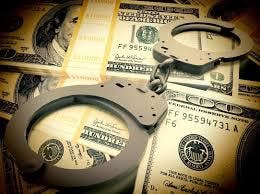
Twenty-nine northern Illinois and Indiana defendants are facing state or federal charges following a coordinated investigation of “cracking cards,” a scheme that costs banks millions of dollars and has its roots on Chicago’s south side and is spreading to other cities through rap music and social media.
Six Indiana defendants include four men who are part of a group that has posted Internet rap videos referring to the cracking cards scheme and displaying large amounts of cash and expensive items, according to the charges announced today.
Find out what's happening in Glenviewfor free with the latest updates from Patch.
Federal agents and local law enforcement officers from the U.S. Postal Inspection Service, FBI, IRS Criminal Investigation Division, FDIC and U.S. Department of Labor Offices of Inspector General, the Chicago Police Department, and the Sheriff’s Offices of Cook and DeKalb counties began arresting the defendants yesterday.
Sixteen are facing federal bank fraud charges in Federal Court in Chicago; six are facing federal charges in U.S. District Court in Hammond, Ind., and seven are facing state charges brought by the Cook County State’s Attorney’s Office. S
Find out what's happening in Glenviewfor free with the latest updates from Patch.
ince at least 2011, the defendants and other individuals allegedly deposited counterfeit checks into banking accounts belonging to third parties who willingly or unwillingly surrendered their debit cards and PINs for use in the cracking cards schemes.
The defendants then allegedly used automated teller machines or point of sale terminals at currency exchanges and retail stores to withdraw or spend funds that the banks advanced to the third-party accounts before learning that the deposited checks were bogus.
The banks lost money they advanced to the account holders when the customers denied responsibility for the withdrawals and purchases. Cracking cards schemes have become a popular method of obtaining illicit funds in Chicago and surrounding areas.
The schemes often involve numerous participants, including some individuals affiliated with Chicago street gangs, the charges allege. Schemers use various methods to recruit bank customers to give up their debit cards and PINs, including approaching individuals at parties, schools, or on the street, and using social media outlets, such as Instagram and Facebook, to advertise opportunities for making fast cash by sharing a portion of the fraud proceeds.
“Our purpose today is to warn bank customers that fast cash schemes are usually too good to be true and they should always safeguard their account information, and, at the same time, we are putting those persons who engage in this type of illegal activity on notice that debit card fraud can result in serious state or federal charges, which carry severe penalties and consequences,” said Zachary T. Fardon, United States Attorney for the Northern District of Illinois.
“Over the last three years, the United States Postal Inspection Service and other federal, state, and local law enforcement agencies, have conducted this major bank fraud investigation involving ‘cracking cards.’ The charges allege that defendants knowingly deposited fraudulent checks intending to defraud banks and their customers. The Postal Inspection Service is committed to working together with the banking industry to protect the public and preserve its trust in the U.S. mail and banking system,” said Antonio Gómez, Inspector-in-Charge of the U.S. Postal Inspection Service in Chicago.
According to the federal charging documents, after schemers obtained a debit card and PIN for a bank customer’s account, they manufactured or purchased one or more counterfeit checks to deposit into the account.
The bogus checks often contained legitimate bank account and routing numbers that belonged to the accounts of actual businesses. Certain individuals developed a reputation for “making paper,” that is, making, printing, and selling counterfeit checks.
The schemers then deposited, or recruited someone else to deposit, the counterfeit checks into the third party’s bank account, typically via an ATM transaction. The schemers then waited for the bank to credit the purported funds from the counterfeit check, usually within hours of the deposit, after which they often attempted a small ATM withdrawal of $100 or more to determine whether an account was credited with the advanced funds.
If the transaction succeeded, schemers went to an ATM, a currency exchange, or point-of-sale terminal at a retail store to withdraw or spend the remaining funds that the bank advanced to the third-party account. One defendant, MATTHEW MOSLEY, 26, of Chicago, allegedly “made paper,” that is, he manufactured counterfeit checks, which he used and sold to others in cracking cards schemes.
Mosley was arrested yesterday and charged with bank fraud for allegedly causing banks to lose more than $32,000 in funds he withdrew after depositing counterfeit checks. Mosley was one of 16 defendants charged with bank fraud in separate criminal complaints filed in U.S. District Court in Chicago.
These 16 defendants allegedly caused bank losses totaling more than $1.7 million, with individual defendants responsible for amounts ranging from $26,000 to $260,000. Five of these defendants were arrested yesterday, one was already in custody, and arrest warrants were issued for 10 others. Six other defendants were charged with conspiracy to commit bank fraud in a criminal complaint filed in U.S. District Court in Hammond.
These defendants allegedly caused thousands of dollars in bank losses. Five of the six were arrested yesterday and remain in custody while the sixth was already in state custody. All six are scheduled to appear tomorrow morning in Federal Court in Hammond.
Four of these defendants ― KEVIN FORD, 26, of Chicago; CORTEZ STEVENS, 24, of Griffith, Ind.; STEPHEN GARNER, 23,of Portage, Ind.; and MIKCALE SMALLY, 21, of Chicago ― are identified in the complaint as part of a group that called themselves “R.A.C.K. Boyz,” “Rack Boyz,” or “TheRackBoyz.” The other two defendants, MERCEDES HATCHER, 21, of Danville, Ill., and BRITTANY SIMS, 24, of Portage, Ind., were identified as Ford’s and Garner’s girlfriends, respectively.
The public is reminded that complaints contain only charges and are not evidence of guilt. The defendants are presumed innocent and are entitled to a fair trial at which the government has the burden of proving guilt beyond a reasonable doubt.
Get more local news delivered straight to your inbox. Sign up for free Patch newsletters and alerts.