Business & Tech
Zillow Class Action Brought By Glenview Homeowner
A Glenview real estate lawyer who says the company's "Zestimates" blocked the sale of her house has filed a class action lawsuit.


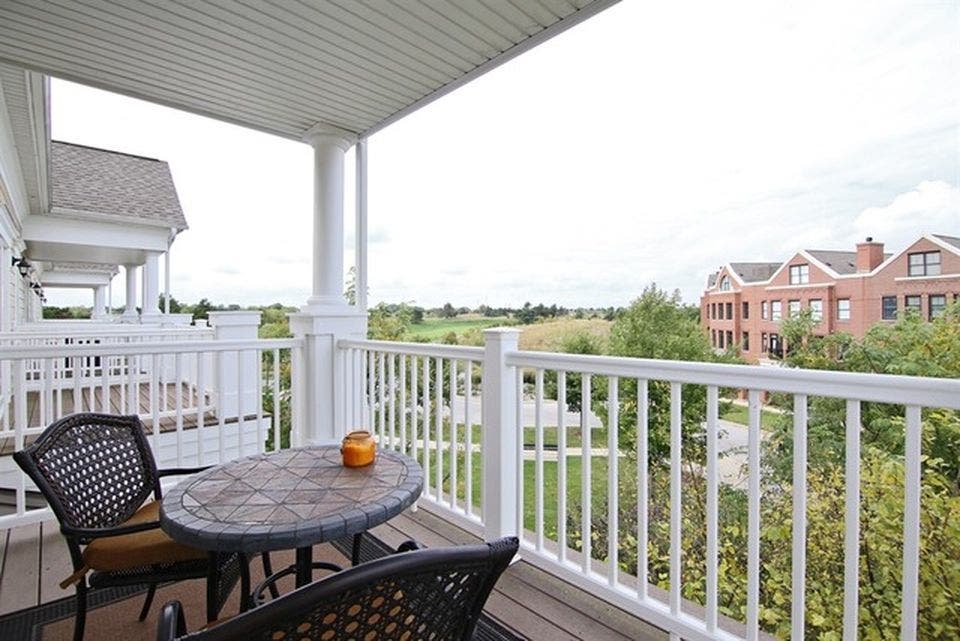
GLENVIEW, IL — The Glenview homeowner who sued Zillow last month, accusing it of blocking the sale of her home by offering an undervalued online estimate, dismissed her case Friday and filed a new class action suit against the real estate website.
Barbara Anderson, a real estate lawyer, filed a complaint April 27 alleging Zillow's "Zestimate" was an illegal appraisal under Illinois law. Her suit described it as a "sloppy computer-driven appraisal" and said it was damaging the market value of her house. (Anderson's property, located near the Glen, is currently listed for $626,000 with a "Zestimate" of $537,788.)
On Friday, Andrew filed a new complaint in Cook County Circuit Court and withdrew the suit filed in her name that simply asked the company to remove its valuation estimate for her property. This time, she is one of two lead attorneys rather than the named plaintiff, and her lawsuit is a class action seeking to represent everyone whose home is listed on the Zillow website.
Find out what's happening in Glenviewfor free with the latest updates from Patch.
The named plaintiffs are Vipul and Jyotsna Patel of Shaumberg and CastleBldrs.com, and in addition to alleging that Zillow is in violation of the law governing appraisers in Illinois, the new class action asks for damages to compensate for Zillow's "unfair and deceptive trade practices" and for violating homeowners' "right to seclusion."
The company answered by describing "Zestimates" as just a "starting point to determine a home's value" and not an "official appraisal." Taking public information and statistics to generate an estimated value is "a well-accepted practice," a Zillow spokesperson said.
Find out what's happening in Glenviewfor free with the latest updates from Patch.
Zillow provides data on the accuracy of its algorithm, which relies entirely on public information. It also offers a disclaimer on its website about its "Zestimate"-generating "proprietary automated valuation models." It said the numbers are not an appraisals, and its data sources may be "incomplete or incorrect."
"There's no such thing as a proprietary formula. First of all, it's your asset, they don't get to keep secrets," Anderson said. "Second, what business is it of theirs to go make opinions about your asset? Third, every person has the right to see what their 'comps' are and to challenge the process of the appraiser." Anderson also noted that regulations on appraisers also oblige confidentiality, and Zillow's publication of a valuation estimate violated that obligation.
Zillow pointed out the Illinois law in question, the Real Estate Appraiser Licencing Act of 2002, makes specific mention of an exemption for "the procurement of an 'automated valuation model'." The company said this shows that the law recognizes the difference between a statistical estimate and an appraisal.
Anderson says it does not apply, since Zillow is not a credit or financial institution, and the tool is not being used for internal underwriting. She said the company would still be bound by the same rules about spreading nonpublic personal information and the ethical and legal regulations governing financial institutions.
Zillow said if Anderson wants to have a higher "Zestimate," she could provide more complete and up-to-date information to the model, such as square-foot measurements. And if people do not want the value of their homes assessed, they would have to start by blocking the public information from county assessors' offices, according to the company.
"We just think its an important data point for everyone to have and we don't see any reason why it shouldn't be out there," Zillow's spokesperson said.
As for the additional plaintiffs in the class action, Zillow said they are really only one plaintiff: Castle Builders, and without tax data or other vital information about its newly built properties it is difficult to produce an accurate "Zestimate."
"Many of us appraisers were very displeased that they included the word 'value' in their 'Zestimates' because it implies market value," said California-based appraiser Karen Mann, who is active with the American Society of Appraisers.
"Appraisers are bound under an incredible number of regulations because we are licensed, but even before we were licensed we held a high code of ethics that we held ourselves accountable to," according to Mann. She said Zillow needs to make it more clear to consumers that its numbers are not a reflection of actual market value, which requires comprehensively incorporating all the particularities of each property.
Parent company Zillow Group, a Seattle-based publicly traded corporation with more than $7.62 billion in market capitalization, includes the brands Trulia, DotLoop, HotPads and StreetEasy.
On a conference call in February, Zillow executives said the company now has three-quarters of the audience share of the real estate market and expects to bring in more than $1 billion in 2017. According to an investor presentation from the first quarter of 2017, it facilitated an estimated $4.4 billion in sales in 2016. Its spokesperson said it makes its money by selling ads to real estate agents and describes itself as a media company.
Anderson said Zillow wants its estimates to be confusing for consumers in order to benefit agents. She pointed to a tweet from the company's CEO from a 2014 conference address. 
Anderson also alleged that in 2016, when she was working with a realtor to sell her home, Zillow had been willing to raise its estimate of the value of her home when she called to complain. Then, when she re-listed it for sale by owner, the price plummeted and Zillow staff was unwilling to adjust it.
Over the past year, Zillow has announced several multi-million-dollar legal settlements. The company paid $6 million to settle a class action suit claiming it illegally schemed to violate federal and state labor law by making employees skip breaks and work overtime without compensation. Also in 2016, it said it would pay Move, which operates Realtor.com, $130 million to drop accusations Zillow stole trade secrets.
Plus, it settled four lawsuits for undisclosed amounts that alleged the company fired a woman for being in the hospital, engaged in a pattern of sexual harassment, engaged in discrimination on the basis of age and race and retaliated against whistleblowers. The company did not admit to any wrongdoing in any of the settlements. At the time, it said one of its highest priorities was to maintain a corporate culture "where people work hard and treat each other with dignity and respect."
Top photo | An image from Barbara Anderson's Glenview home | Courtesy Barbara Anderson
Get more local news delivered straight to your inbox. Sign up for free Patch newsletters and alerts.