Politics & Government
Council Rejects Request To Remove Restrictions From Ex-Church
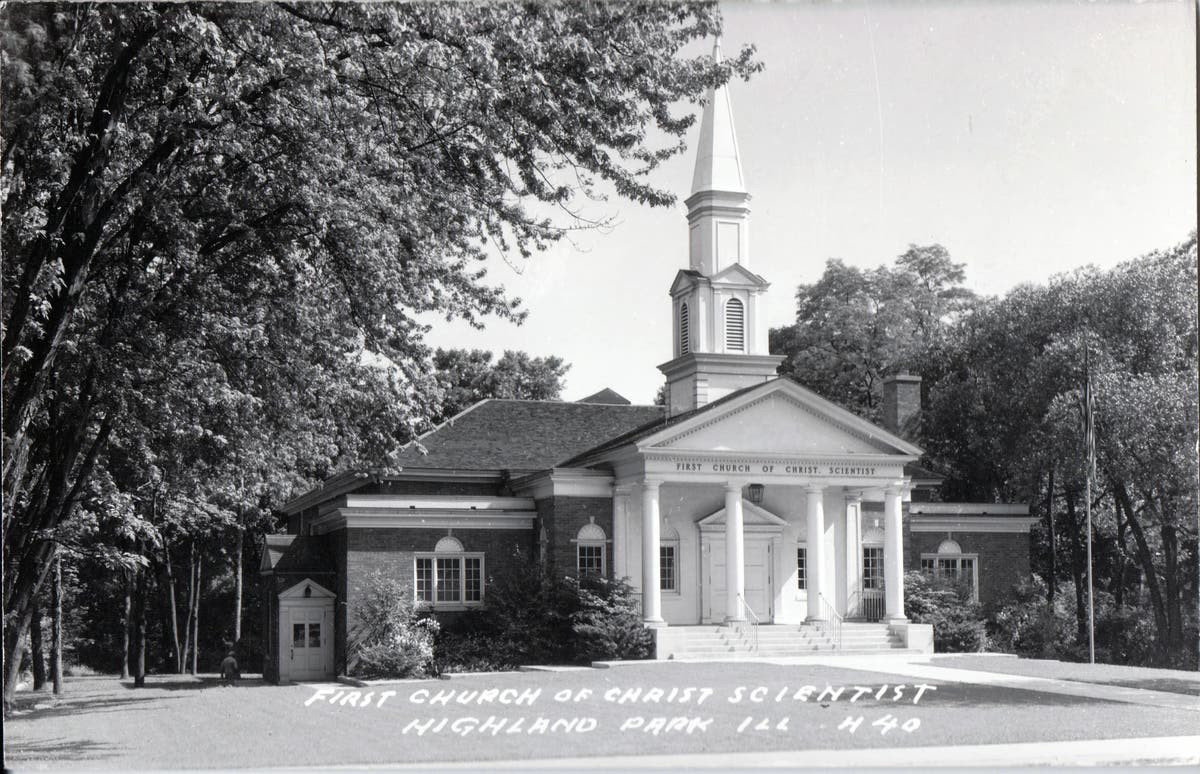
The man who "bailed out" the city by converting Highland Park's former Christian Science Church into his home wanted to be unencumbered.


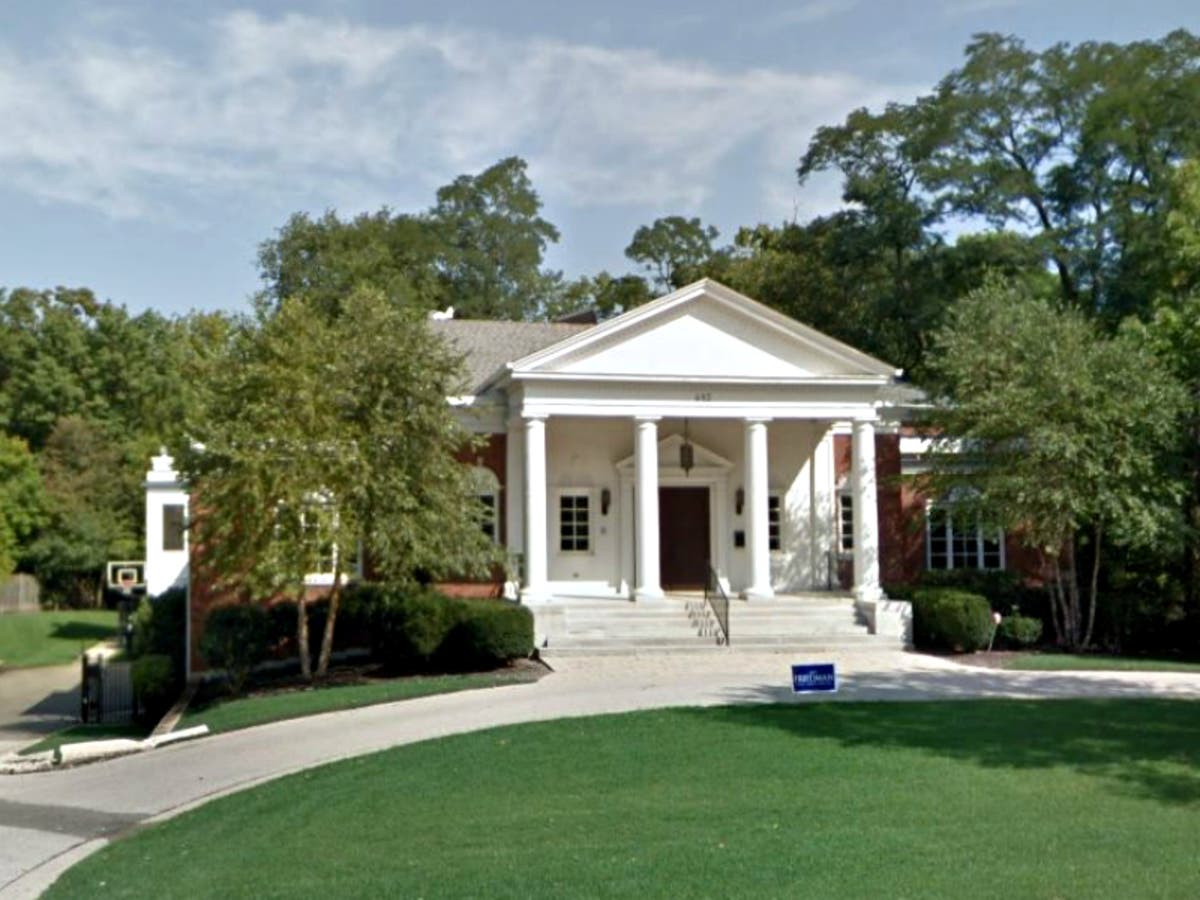
HIGHLAND PARK, IL — There was little appetite for removing the restrictive covenant that was placed on Highland Park's former Christian Science Church at the Oct. 29 meeting of the City Council's committee of the whole. Only one councilman, Michelle Holleman, was interested in granting a request from Michael Pinsel to dissolve the agreement he entered into with the city when he purchased the property in 2004.
At the time, the city was engaged in a lawsuit with its previous owner, Michael Greenberg. He had purchased from the city what was then a vacant church at 439 Hazel Ave. for $380,000 in 1989 under a previous restrictive covenant, which included a buyback clause. Greenberg was unable to develop the property in accordance with the covenant, so the city brought a lawsuit against him, according to City Attorney Steve Elrod.
"While the litigation was pending and the city was embroiled in the litigation what we call a 'shining knight' came forward in the name of Mr. Pinsel and offered to purchase the property from Mr. Greenberg and preserve it as a single building," Elrod said at the committee meeting. "He did so knowing fully what the covenants were on the property."
Find out what's happening in Highland Parkfor free with the latest updates from Patch.
Pinsel purchased the home for nearly $800,000 and signed on to a three-way development agreement with Greenberg and the city. The terms of the covenant – the only such contract the city had with any property, according to Elrod – require the facade of the home to be maintained, restrict construction on the north side of the lot across a ravine and prohibit the subdivision of the property, among other things.
The City Council would go on to overrule the Highland Park Historical Preservation Commission, which was unanimously opposed to Pinsel's plan as presented, and allow the conversion of the former church to a single-family home to proceed with some modifications in May 2004. After a renovation that cost $1 million and took nearly two years, the Chicago Sun-Times reported, Pinsel and his family moved into the home in July 2006.
Find out what's happening in Highland Parkfor free with the latest updates from Patch.
In July 2018, Pinsel requested that the deal be reconsidered in light of ongoing charges to nearby properties.
"The City Council appears to feel that significant modifications to (and potential changes in use of) adjacent residential properties are acceptable. I believe that my property shouldn't be singled out for restrictions by the City," he wrote to city staff. "This is a simple matter of fairness."(Pinsel was referencing are the pair of single-family homes in the 400 block of Laurel Avenue purchased by the city in 2016 for $1.55 million for the expansion of the adjacent library, although it now says the site will be open-space while the library considers its options. Demolition is pending a delay imposed by the historical preservation commission. Pinsel said it was on track to become a $2 million to 2.5 million parking lot "in a land of parking lots. In a world where you'll need fewer parking lots," he told Patch. "It just makes no sense, it's just bad fiscal management.")
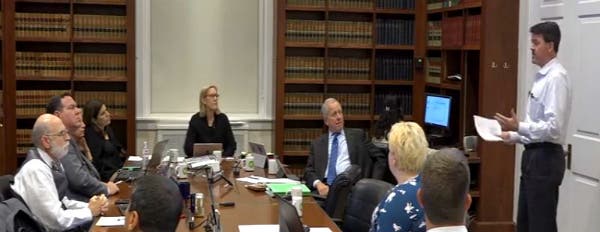
At the committee meeting to discuss his request, several councilmen and Mayor Nancy Rotering suggested they did not see what had changed since the deal was signed 14 years ago. But Pinsel said when the covenant was adopted, the property was still a church and there was a reason for a restrictive covenant to be adopted at the time.
"Apparently a lot of people wanted to make it a health club or a this or a that, and the city had a reason to think that a single-family property would be the right approach and I agree with that," Pinsel said. "Now it's a house, it's a normal residential property, in my view just like every other one in the city....I just want to be treated like any other property."
City Planner Andy Cross told the committee that, in theory, if the covenant was removed, the 1.06-acre property could be subdivided into three lots. But he said it was unlikely anything else could be built on it unless it was consolidated with adjacent parcels to the north. Any changes would still required City Council approval.
Elrod said the request may have awakened "what may have been a sleeping giant," as his research turned up additional provisions in the deal. He said a 2007 supplemental agreement relating to the addition of a fence eliminated a requirement the home's facade meet Design Review Commission specifications in exchange for Pinsel agreeing to preserve the property with Landmark Illinois or some other historic preservation group. Elrod said it appeared some provisions may not have been fulfilled. Pinsel said he could not get a historic preservation tax abatement because it would have required the remodeling to keep the church's interior intact.
The city's attorney advised councilmen they have "sole and absolute discretion" over review of a restrictive covenant, giving the city more control over the property than the underlying zoning.
"I don't want to say you can be arbitrary and capricious, because I never want to you think that you can be," Elrod said. "But unlike other actions that you must take concerning zoning where you have a standard of reasonableness, you do not have that here."
Councilman Alyssa Knobel said the restrictive covenant was an "added layer of protection for the neighborhood." She said she did not think it should be a priority for the council go to through a public process to remove it. Knobel told Pinsel she had discussed the agreement with several of his neighbors, and they wanted to keep the restrictive covenant in place.
"If we were to remove the restrictions and then you go through our public process, we will be confronted by your neighbors," Knobel said.
Holleman said there were plenty of restrictions on the property with the underlying zoning to protect the city.
"Really, what we're saying as a Council is that we're restricting the property price on this piece of land," Holleman said. "After the substantial investment and the 'white knight' approach that you took to it, I think that we should honor this decade of occupation and a beautiful job redoing the property and you should be entitled to the full sale value of it."
But Rotering pointed out four members of the Council were opposed. (Members Daniel Kaufmen and Kim Stone were absent, both both told Patch they generally agreed with the majority view at the meeting.)
"So we will say, 'thank you,'" Rotering told Pinsel, "and appreciate you being next door."
The homeowner was disappointed. He said he was a "very, very, unique buyer," as a lawyer skilled in complex contractual matters – Pinsel is partner with the Chicago-based law firm Sidley Austin specializing in property and casualty risk transfer – so he was comfortable with covenant as a condition for converting the church, but future buyers should not have to be.
"It was very good for the city that I was there, because otherwise it would still be in litigation, quite possibly, now," Pinsel said. Now it was just a private home and it should be treated like any other house, he said, taking issue with Knobel's suggestion the concerns of his neighbors should be considered.
"It seems patently unfair that my house is being singled out, in particular, when I really did a good job – for the City Council, for the city," Pinsel said. "I bailed out the City Council, and honestly it's disappointing to have people say your neighbors really ought to have input on your private house."
Get more local news delivered straight to your inbox. Sign up for free Patch newsletters and alerts.