Schools
Music, Art Link Past To Future For Students
The MeMA music program inspires creativity across artistic disciplines by exposing kids to the sights and sounds of the 1960's and 70's.


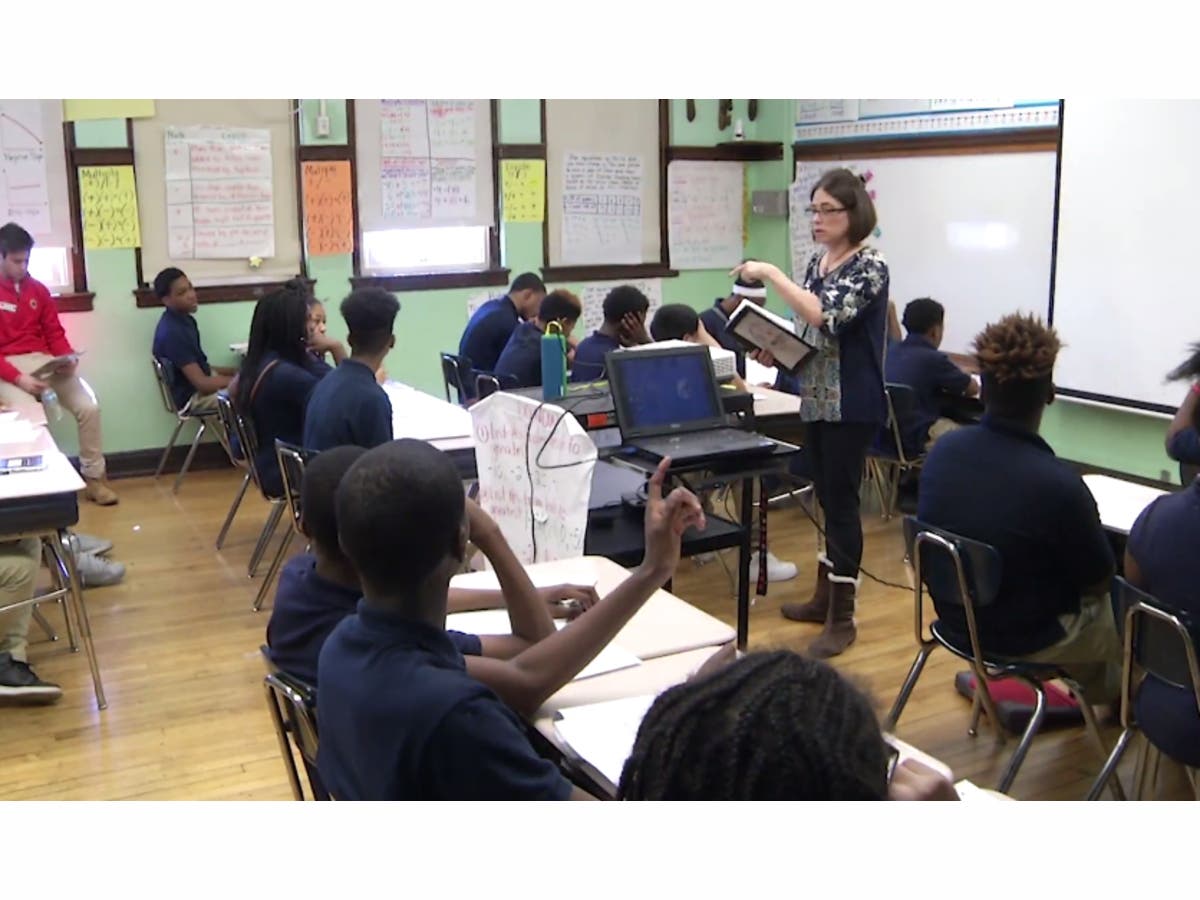


CHICAGO, IL — Even though schools are required by law to teach students about the civil rights movement, the period is oftentimes boiled down to just a single speech by Dr. Martin Luther King, Jr. from 1963. Meanwhile, many students don't connect with the material they're presented in social studies classes, with many complaining of rote memorization, inapproachable material and the inability to fully engage with learning. To counter these tendencies, one Highland Park native and music industry veteran has created a way to bring history to life, blending social studies, arts and media literacy together into a unique program that's begun expanding throughout Chicago.
Back in 2012, Jeanne Warsaw-Gazga started MeMA, which stands for Motivate and Encourage Music Appreciation. (It's named after the nickname for her mother Janine, an author and magazine editor.) It's an eight-week program that starts by exposing students to socially and politically relevant music and video clips from the 1960's and 1970's and allowing them to analyze and connect the historical issues of the era to the struggles of today's generation.
"There's no textbooks. We are teaching students about the civil rights movement and the social protests of the 60's and 70's through analyzing socially conscious music during that era," Warsaw-Gazga told Highland Park Patch. "So we're not only just opening dialog for students about this time, but we're getting students to listen to this music and analyze it." Student then make comparisons to contemporary issues of social justice in a space to speak openly about the sometimes difficult to discuss stories, issues and images eighth-graders are exposed to in 2017.
Find out what's happening in Highland Parkfor free with the latest updates from Patch.
"MeMA allows the students to talk about these things by listening and analyzing these lyrics that had a message about very similar social ills that went on during the 60's and 70's," Warsaw-Gazga said. Even students who normally don't much participate in class, whatever the reason, oftentimes light up during the MeMA program and engage with the material, she explained.
The program, which combines history, music, writing, media production and open discussions, is now headed into its sixth year at Stone Academy, a Chicago Public Schools magnet middle school in Rogers Park. Since then, it has expanded to two more schools. The MeMA music program began at Langford Academy in Englewood last year, and this coming school year it's also set to be held at Lawndale Community Elementary Academy. (Get Patch real-time email alerts for the latest news for Highland Park, Chicago — or your community. And iPhone users: Check out Patch's new app.)
Find out what's happening in Highland Parkfor free with the latest updates from Patch.
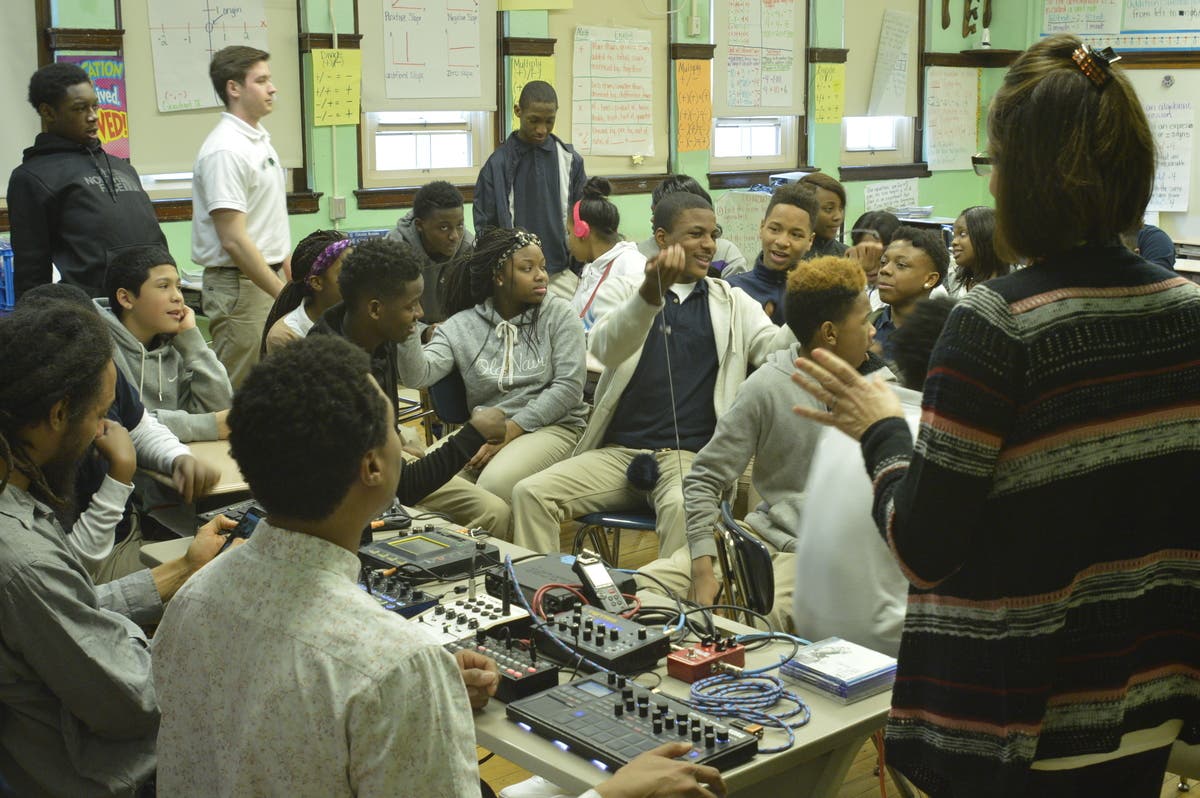
The three-day-a-week program starts with three weeks of exposure to theory and analysis, and when it's complete, students have the opportunity to have broad creative control to define their own final project.
"They get to choose any social injustice that resonates with them, whether its from ages ago or its something that's happening today, and then they create a project around it." It can be a song, or a multimedia, dramatic, or written piece, and it is always popular, Warsaw-Gazga said. "When I'm there running the program with the eight-grade students, the seventh-graders — and sometimes even the sixth-graders — will pass me up in the hall and say, 'I already known what my project is going to be for next year!'"
As the youngest of three siblings, Warsaw-Gazga's family moved out of Highland Park when her older sisters left home, and she found herself attending Wheeling High School. As one of the only Jewish students at the school, she was exposed to anti-Semitism for the first time. She said she remembers being called racist epithets, bullied and confronted with rampant cultural ignorance. Music was her path out.
"I was an absolute music freak as a teenager, it was really an outlet for me," Warsaw-Gazga said. Then, in the early 1980's she walked into a Rose Records on State Street and started talking to the store manager about music. Impressed by her knowledge, he offered her a job on the spot.
Starting from her time as a record store clerk, Warsaw-Gazga worked her way to being an import buyer for all Rose Records locations before later going on to jobs with several of the major labels as a director of marketing and promotion. Later, she worked in promotions and artists and repertoire (A&R) divisions, before getting out of the business in the late 1990's. Now she wants to help today's students engage with their creative passions combine them with social and historical consciousnesses.
"I can’t stress enough how helpful this class has been in my first year of high school," said Abu Qader, who participated in the program at Stone Academy. "While all the other freshman were having trouble understanding the new open discussions we were having in class and making connections to real life events, I was already a pro."
Top photo: Jeanne Warsaw-Gazga teaching a class of students. (Courtesy MeMA)
Get more local news delivered straight to your inbox. Sign up for free Patch newsletters and alerts.