Politics & Government
Too Many Courses Offered At Central And South: District
Officials show little interest in changing school zones. One resident calls South area "disfavored section."


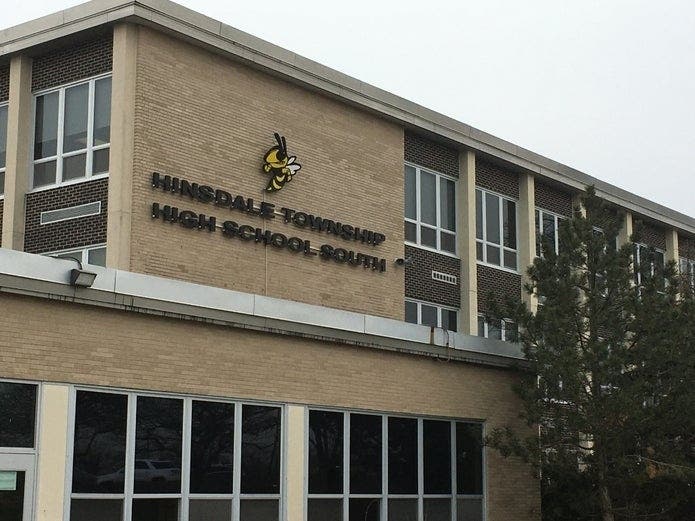
HINSDALE, IL — Enrollment at Hinsdale South High School has plunged for years. It's only half the size of Hinsdale Central, where enrollment has increased.
Some residents in the Hinsdale South zone say the dwindling student number means fewer class offerings.
But Hinsdale High School District 86 officials have declined to change the schools' attendance zones to balance enrollment. The one exception is the phased elimination of a small buffer zone where students could choose either school.
Find out what's happening in Hinsdale-Clarendon Hillsfor free with the latest updates from Patch.
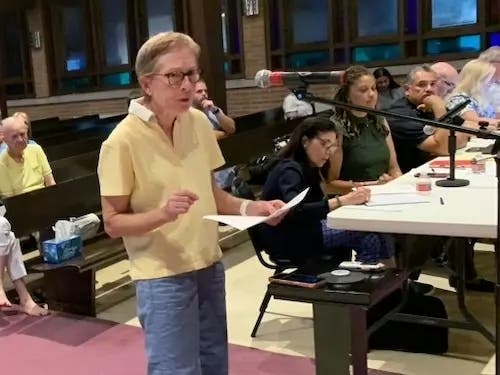
So why won't the District 86 board balance the two schools' enrollment? Hinsdale resident Joe Foley, who spoke during last week's school board meeting, may have hinted at the reason. He expressed concern the boundary issue came up again recently.
"I never thought this was going to pop up again, but it's recently been in the Patch. It hasn't been on the agenda for over three years. I would like to know what's going on with that. Schools matter, property values matter. And our kids, they matter the most," he said.
Find out what's happening in Hinsdale-Clarendon Hillsfor free with the latest updates from Patch.
Wait, property values?
Foley may have said the quiet part out loud. Central is in Hinsdale, one of the country's wealthiest towns. It is considered the school of choice. In the buffer zone, for instance, about 90 percent have selected Central historically.
One of the reasons people move to the Central zone is for the high school. If the boundary adjusts, so the thinking goes, property values will fall in former Central neighborhoods — possibly the reason for Foley's concern. He couldn't be reached for comment.
South is in Darien and draws students from that town, Willowbrook and Burr Ridge, among other areas. Except Burr Ridge, these towns have significantly lower median household incomes than Hinsdale.
In a candidate forum in February, only one of the nine school board candidates taking part — Justin Baron, a 2017 South graduate — supported revisiting District 86's attendance zones. Even candidates from the South area had no interest in a change.
School board President Kevin Camden, who lives in the South zone, did not attend the forum. In the last few weeks, Patch has sent two email inquiries to Camden about the issue. They went unreturned.
'Too many courses'
This is an issue on which Burr Ridge resident Alan Hruby will not let up. Last year, he presented a detailed case that he said showed the district failed to offer as many course opportunities for South as it did for Central, citing "insufficient enrollment." The district called Hruby's contentions a "false narrative."
In December, Hruby released a video called "The D86 Squeeze," with nearly 800 views so far. In it, he noted the district's stated goal of aligning the district curriculum by 2024. At the district's central office, Chris Covino, assistant superintendent for academics, is leading the project.
In the video, Hruby said he doubted Central residents would allow course reductions in the name of school equity.
"Dr. Covino may be doing his best to navigate the district's rocky terrain to achieve a common curriculum, but his efforts are going to crash if the school board doesn't fix enrollment imbalances. Without enrollment balancing, we will have a common curriculum in name only," Hruby said. "With South half the size of Central, there will be dozens of courses not running at South because it can't fill classes."
He continued, "The galling thing is that South families will be paying taxes to the district so that it can run these courses at Central — courses that South children can't take because they live in the smaller, disfavored section of the district."
This happens, Hruby said, because the District 86 school board caters to the special interests that don't want Central neighborhoods reassigned to South. He said South is "the only school in the district manifesting the abundant racial, cultural and socioeconomic diversity that the school district purports to prize." South residents, he said, are tired of the excuse of insufficient demand at South.
"It's not insufficient demand at South. It's insufficient enrollment at South," Hruby said.
In fall 2020, the grand total of different courses offered at Central was 213, compared with 161 at South — a deficit of 52 courses, he said.
"This is the D-86 squeeze in action," he said.
Patch asked the district's spokesman, Chris Jasculca, about Hruby's contentions. He said the issue was "too many courses."
"We continue to contend that this issue is not a product of enrollment or equity, but rather the fact that we offer too many courses at both schools," Jasculca said in an email. "Having too many courses is one of the issues we are addressing through our work on curriculum alignment."
Several courses at Central and South will not run next year because too few students were interested in taking them, he said.
'Yet to be heard'
In an interview, Covino said the district is finding courses that duplicate much of the same information. One instance, he said, was sports medicine and human physiology and anatomy. He said teachers are having discussions about redundancies in courses.
Teachers, Covino said, are more effective if they focus on one or two different courses, rather than four or five.
"We have courses in both buildings that have very similar content and outcomes. Part of our curriculum alignment process identifies those courses and unifies them under a course heading," he said. "Freedom to establish any course that they like in any building led to disparities between the buildings."
In recent years, the district has only added courses that are considered viable at both schools, Covino said.
Patch presented spokesman Jasculca's email to Hruby about the two schools having too many courses. That was a surprise to Hruby, who said he now understands District 86 wants to achieve equity by reducing curriculum size.
"I suspect that the D-86 community has yet to be heard on that choice," Hruby said.
Get more local news delivered straight to your inbox. Sign up for free Patch newsletters and alerts.