Politics & Government
Trump Adviser Contacted Illinois Operative About Clinton Emails
The late Lake Forest GOP activist Peter Smith was contacted by Michael Flynn during his search for deleted emails, the Mueller report found.


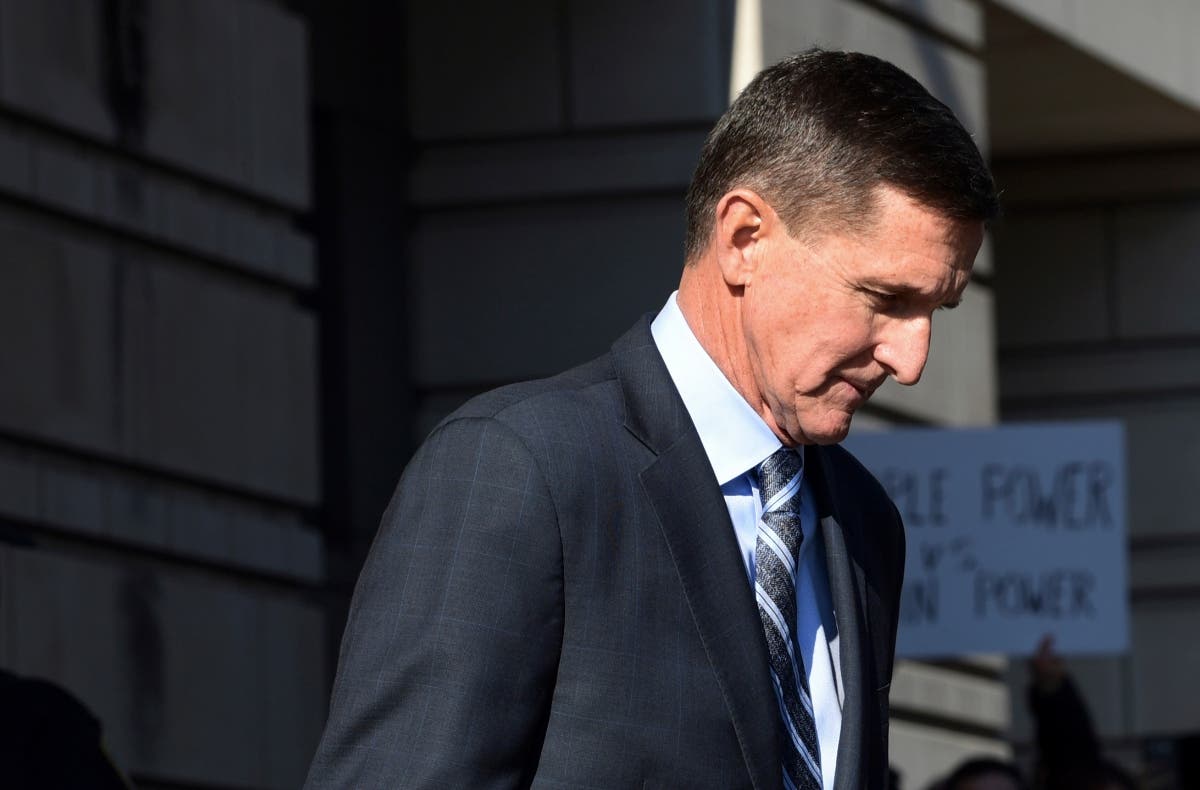
LAKE FOREST, IL — The late Lake Forest investment adviser and Republican political activist Peter Smith was contacted by Michael Flynn to track down Hilary Clinton's deleted emails, Special Counsel Robert Mueller's report revealed last week.
Smith claimed he was coordinating with the Trump campaign, in contact with hackers who had "ties and affiliations to Russia" and had access to emails deleted from Clinton's private email server, according to the report. But Smith never obtained any such emails and Mueller's investigation found no evidence he was communicating with Russian hackers.
In a section of the report entitled "Campaign Efforts to Obtain Deleted Clinton Emails," Mueller noted that then-candidate Donald Trump repeatedly asked people in his campaign to pursue Clinton's deleted emails after his July 27, 2016, statement: “Russia, if you’re listening, I hope you’re able to find the 30,000 emails that are missing. I think you will probably be rewarded mightily by our press.”
Within five hours of that statement, according to Mueller's report, a Russian intelligence service began trying to hack email addresses associated with Clinton. In written answers provided to Mueller, Trump said the he was speaking "in jest and sarcastically, as was apparent to any objective observer."
The report said Flynn, who would later become President Trump's national security adviser before pleading guilty to lying to federal agents, contacted multiple people to search for the emails, including Smith. But according to Mueller's report, Smith had already been involved in the pursuit of Clinton's elusive electronic missives for months.
In December 2015, Barbara Ledeen, a staffer for Iowa Republican and then-Senate Judiciary Committee Chairman Chuck Grassley, sent Smith a 25-page proposal for going after Clinton's emails. (Leeden's husband had co-authored a book with Flynn.) The proposal said Clinton's home-based email server was "in all likelihood, breached long ago," and called for a three-phase approach.
"The third phase consisted of checking with certain intelligence sources 'that have access through liaison work with various foreign services' to determined if any of those services had gotten to the server," according to the report. Smith declined to take part in the "initiative." His associate, John Szobocsan, told the special counsel's investigators that Smith believed it was not a viable plan. But at some point after Trump's public request, Smith "tried to locate and obtain the emails himself," according to the report, which does not specify when Flynn contacted him.
In August 2016, Smith sent an encrypted email to an undisclosed list of recipients saying he had just finished "two days of sensitive meetings here in DC with involved groups to poke and probe" on Clinton's email server. "It is clear that the Clinton's home-based, unprotected server was hacked with ease by both State-related players, and private mercenaries. Parties with varying interests, are circling to release ahead of the election [sic]," Smith wrote, according to the special counsel's report.
On Sept. 2, 2016, Smith had Szobocsan create a company called KLS Research LLC and recruited security experts and others. It raised more than $30,000 during the course of the campaign, "although Smith represented that he had raised even more money," said the report, citing grand jury testimony, financial records and an email sent by Smith.
Smith circulated a document called "Clinton Email Reconnaissance Initiative" in early September 2016 that said he was "in coordination" with the Trump campaign "to the extent permitted as an independent expenditure organization," according to Mueller's report. The document mentioned Flynn, campaign co-chairman Sam Clovis and senior advisers Kellyanne Conway and Steve Bannon. Mueller found Smith communicated with Clovis and Flynn but no evidence that any of them had "initiated or directed" his efforts to hunt for the deleted emails.
Mueller's investigation did not find any evidence that Smith ever had any meetings with Russians, despite his suggestions to the contrary. His associates told the special counsel's investigators they did not believe Smith was ever in contact with them.
Ledeen said she got a hold of a "trove" of purported deleted emails from what she described as the "dark web," according to the report. However, a technical adviser hired by Blackwater founder Erik Prince determined they were fake.
"The investigation did not establish that Smith was in contact with Russian hackers or that Smith, Ledeen or other individuals in touch with the Trump Campaign ultimately obtained the deleted Clinton emails."
Smith killed himself in Minnesota in May 2017 in a hotel room near the Mayo Clinic. In what authorities described as a suicide note, he said his health was in decline and a $5 million life insurance policy was about to expire, the Chicago Tribune reported at the time. He wrote that there was "NO FOUL PLAY WHATSOEVER."
According to his obituary, Smith had been active with the Atlantic Council, Heritage Foundation, Center for Strategic and International Studies and Brookings Institution and had been involved in fundraising for the Republican National Committee, candidate and state GOP organizations.
Szobocsan is seeking between $175,000 and $180,000 from Smith's estate in Lake County Circuit Court, the Chicago Sun-Times reported. In a court filing, Szobocsan said Smith still owed him $150,000 for research and analysis on various ventures at the time of his death and should cover at least $25,000 in legal fees for three meetings with the special counsel's office and one with the Senate Intelligence Committee. The case remains pending in Lake County probate court.
Related:
Get more local news delivered straight to your inbox. Sign up for free Patch newsletters and alerts.