Community Corner
Woman Released From Hospital After 5-Week Battle With Coronavirus
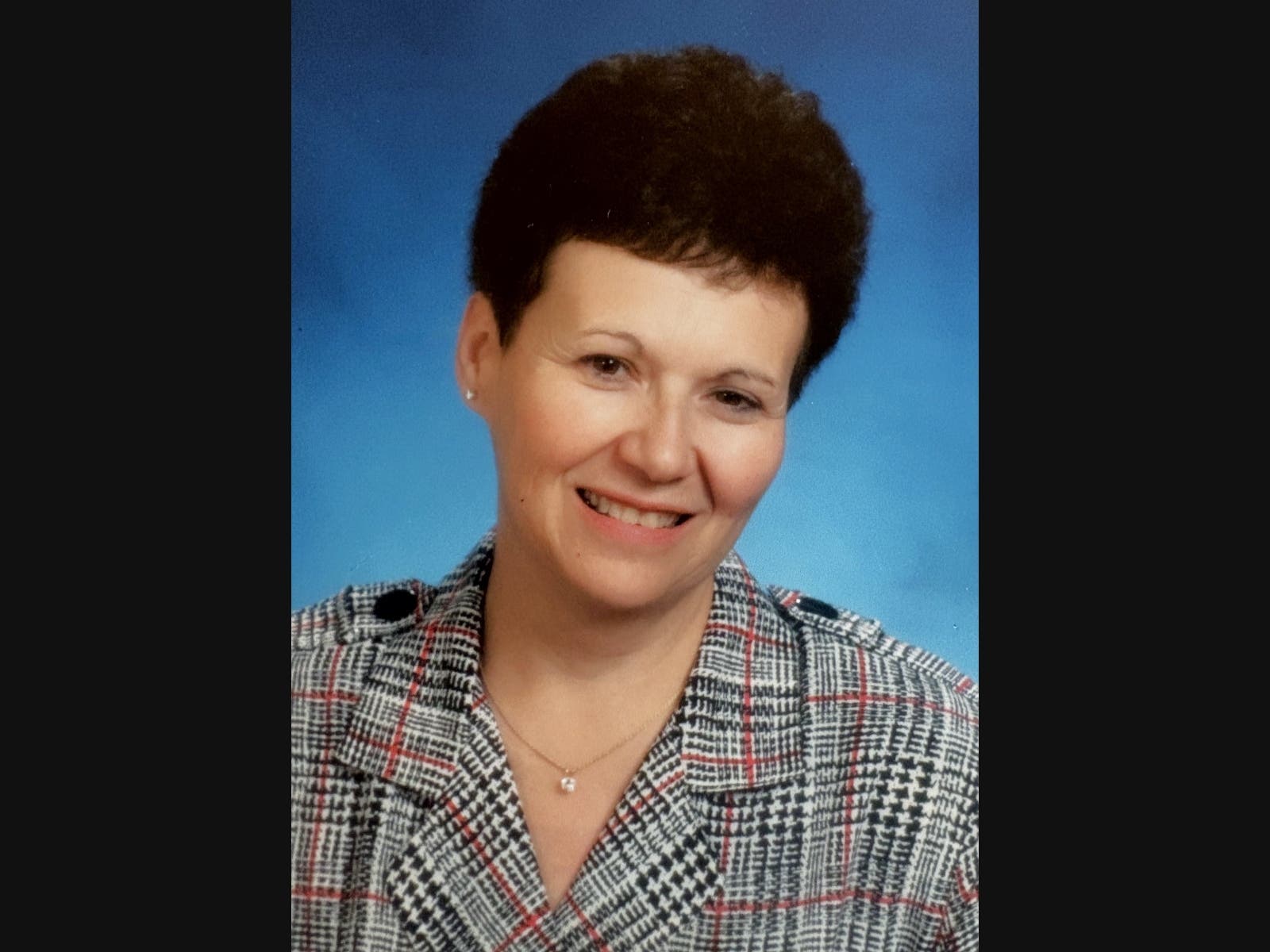
Halina Zabinski, 59, was the first coronavirus inpatient at the hospital when she was checked in in mid-March.


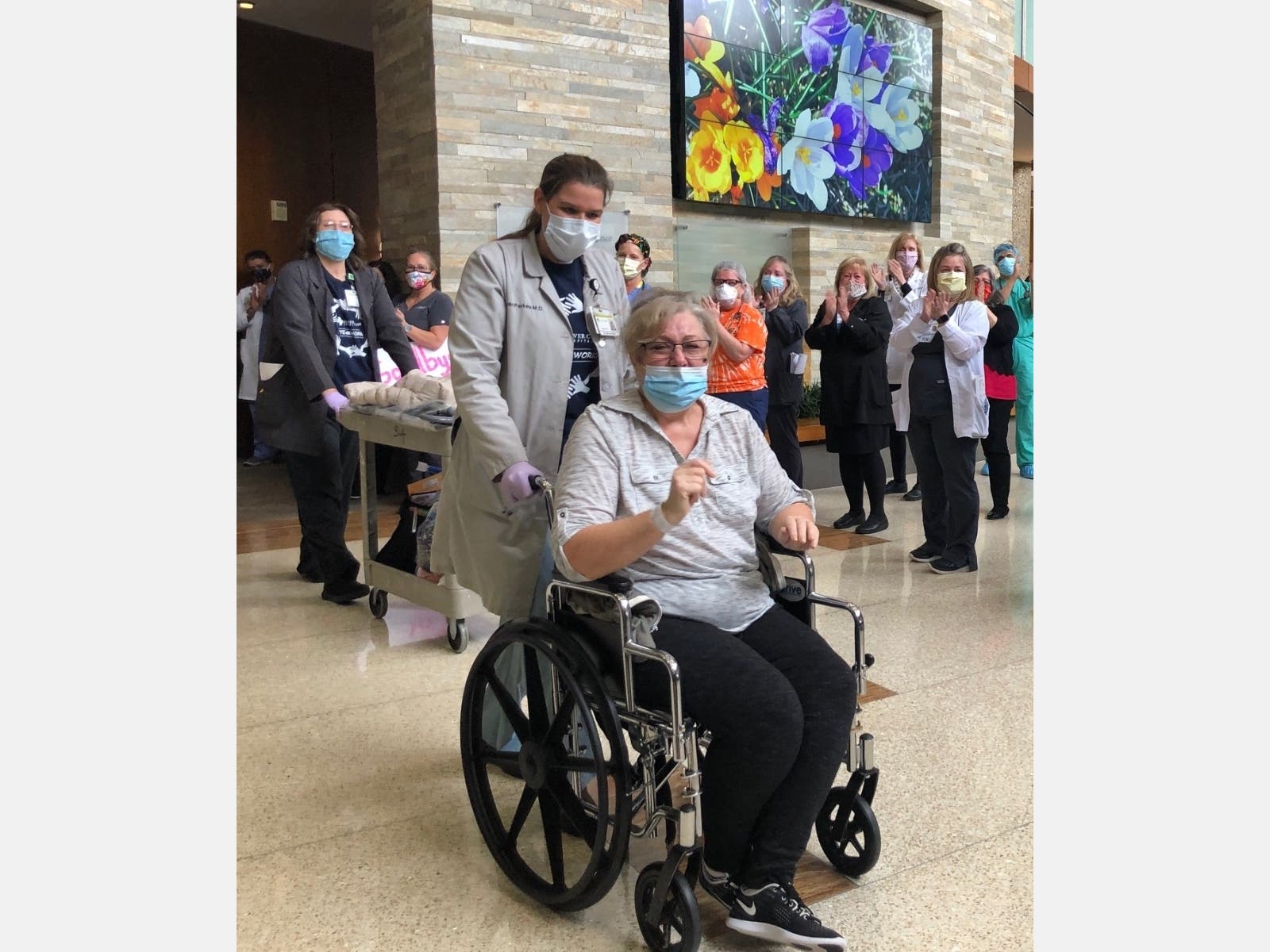

LEMONT, IL — A Lemont woman was released from Silver Cross Hospital April 24 after five weeks of battling the coronavirus. Halina Zabinski, 59, was the first coronavirus inpatient at the hospital when she was admitted in mid-March.
The hospital said Zabinski arrived at the emergency department with dangerously low oxygen levels. She was initially given a less than 1 percent chance of survival because of her critical condition.
“I have no recollection whatsoever because my oxygen levels were so low,” Zabinski explained.
Find out what's happening in Lemontfor free with the latest updates from Patch.
Within 15 minutes of her arrival at the hospital’s emergency department, she was placed on a ventilator and taken to the hospital’s intensive care unit, the hospital said. Zabinski then spent the next five weeks receiving around-the-clock care from highly skilled nurses, therapists and physicians all while battling devastating coronavirus complications that included kidney failure, heart muscle damage, acute respiratory distress syndrome and blood clots.
“Halina was terribly, critically ill,” Dr. Kristopher McDonough, a board-certified pulmonologist and critical care specialist who cared for Zabinski during most of her ICU stay, said. “She was very hard to ventilate and oxygenate. She developed all the complications.”
Find out what's happening in Lemontfor free with the latest updates from Patch.
Don't miss updates in Lemont as they are announced. Sign up for Patch news alerts and newsletters.
The hospital said the combination of complications that Zabinski and other critically ill coronavirus patients exhibit is new territory for caregivers at hospitals across the country and often requires an innovative approach to managing their care.
“Literally everything we have to do for these patients has had to be adapted,” McDonough added.
One treatment that proved particularly effective for Zabinski is called “proning,” which involves putting the patient on a special hospital bed that allows them to lie face down and improves their breathing.
“Most patients that require this type of care are proned for 16 hours a day,” he said. “Halina needed nearly 24 hours a day for several days.”
According to the hospital, this was challenging, because Zabinski also needed renal replacement therapy to treat her failing kidneys.
“It took a lot of creativity and ingenuity,” McDonough said. “It’s a really big win. Her entire care team of nurses and therapists were amazing. Her nurses didn’t leave her room; it was truly commendable.”
Josie Kee is an intensive care nurse who provided one-to-one care for Zabinski during her first two weeks at Silver Cross.
“She was definitely one of the sickest patients I’ve ever had,” Kee said. “I really didn’t think she was going to make it.”
But Kee and other members of Zabinski’s care team never gave up hope. Not only did they provide 24/7 care, they communicated regularly with Zabinski’s husband, who also spent several days at Silver Cross battling coronavirus, and her daughter Katie, a medical student. Though they couldn’t be together, Kee coordinated updates via cell phone and FaceTime.
Kee says the teamwork within her unit and across several hospital departments has been an inspiration to her.
“I couldn’t get through this without my coworkers," she said. "And Halina’s story is just so uplifting for all of us.”
Respiratory therapist Nicole Sain agrees, the hospital said. Sain cared for Zabinski during her initial stay in the ICU to ensure she was properly ventilated and sedated.
“The ventilator takes over a patient’s breathing so the body can recover,” she explained. “I saw Halina at the very beginning, and she required 100 percent oxygen, as high as you can go.”
Slowly, her oxygen levels improved enough that it was time to see if Halina could breathe without the help of the ventilator.
“It was very emotional,” Sain said in a release. “The fear was that she might not be able to maintain her airway because of the length of time she had to be ventilated.”
Dr. McDonough delivered the news to Zabinski’s family that there was a 50-50 chance she might have to be put back on the ventilator if the trial extubation failed. However, Zabinski was able to hold her own when she was taken off the ventilator, and 24 hours later, her entire care team breathed a sigh of relief when she continued to improve.
Eventually, Zabinski was stable enough to be transferred to the hospital’s sixth floor before making a final stop in the inpatient rehabilitation unit for strengthening before being discharged to her home. Physical, occupational and speech therapists play a major role in helping patients like Zabinski recover from the coronavirus by helping them regain the strength to walk, communicate clearly (especially after being on a ventilator) and take care of everyday activities like showering.
“I was born again on the day they took me off the ventilator,” Zabinski said. “And I’m so grateful to be leaving through the front door…and not the back door.”
Zabinski’s memorable hospital discharge was arranged by Andi O’Neill, ICU social worker. O’Neill was a vital intermediary between Zabinski and her family during her stay in the ICU, the hospital said.
“We were all rooting for Halina and wanted to say goodbye,” she said. “We started this journey with a lot of uncertainty, but it’s had a very happy ending!”
Zabinski’s unforgettable send-off was captured on video and posted to the hospital’s Facebook page, where it received thousands of likes, shares and comments.
“On behalf of my mother, I would just like to thank all the doctors, nurses and the rest of healthcare workers who helped save her life,” wrote Zabinski’s daughter Katie. “Without this amazing team, I am sure we would not have her in our lives today. You are all heroes and we are extremely thankful for the work you do. Thank you for constantly keeping my dad and I updated about her condition along the way. She is extremely grateful to be home, thank you for helping her beat COVID!”
“That’s why I wanted to share my story so people can see that even someone with a less than one percent chance of survival is going home," Zabinski said.
Get more local news delivered straight to your inbox. Sign up for free Patch newsletters and alerts.