Schools
Boulder Hill Elementary Makes the Grade
After two years of failing to meet No Child Left Behind standards, staff at Boulder Hill have turned the ship around, and seen significant gains in every category this year. Now, they have to keep up the momentum.

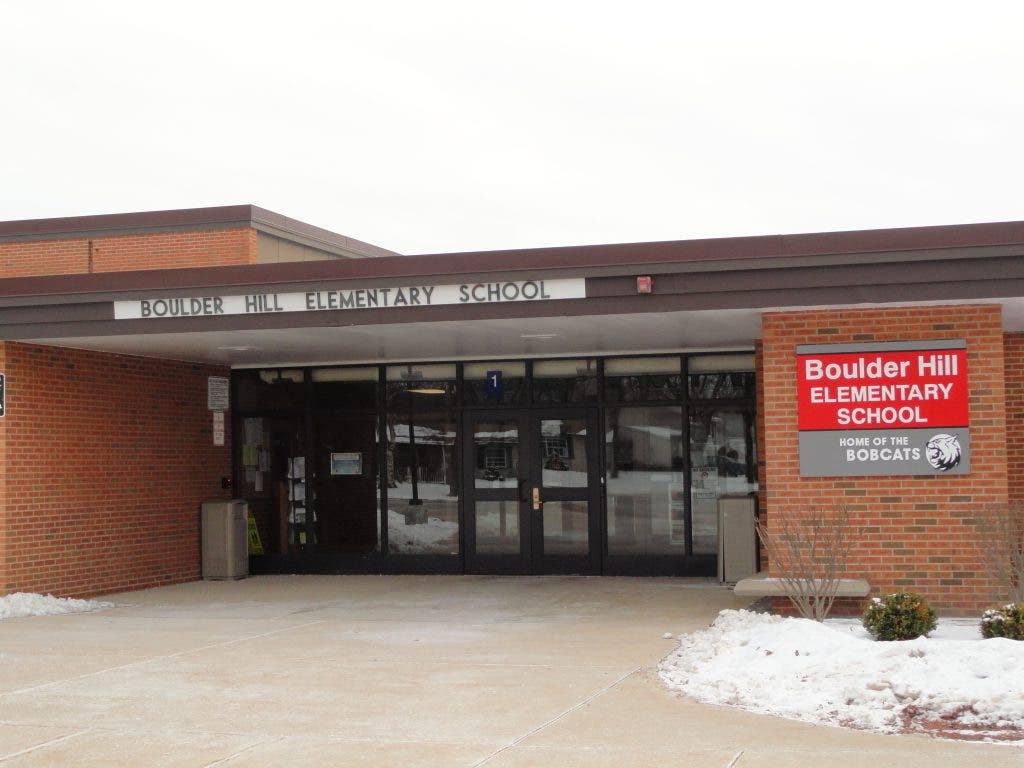

It’s the first day of school at , and Principal Jeff Schafermeyer is smiling.
Granted, that’s not unusual—his is not a grumpy job, as the hundreds of laughing kids who flooded the halls of his school last week will attest. But this year is different. This year, Schafermeyer has a story to tell.
It’s a story that began three years ago, when Boulder Hill Elementary failed to meet the ever-increasing federal No Child Left Behind standards. Two years ago, Boulder Hill slipped again, and because it receives federal funding through the Title I program, Schafermeyer was forced to offer students a choice to attend a better-performing school.
Find out what's happening in Montgomeryfor free with the latest updates from Patch.
That was a bitter pill to swallow, but it’s not where the story ends. Determined to reverse Boulder Hill’s fortunes, Schafermeyer and his staff buckled down, targeted those students who did not perform well on the previous year’s Illinois Standards Achievement Test, and instituted a number of new programs to help get back on track.
And it worked. Recently-released results from last year’s ISAT show that not only has Boulder Hill Elementary made its Adequate Yearly Progress numbers in all categories, the school has seen significant growth in every area.
Find out what's happening in Montgomeryfor free with the latest updates from Patch.
While Schafermeyer and Oswego School District staff maintain that No Child Left Behind sets an unreasonable standard, particularly as it moves into the final years of the initial program, Boulder Hill staff is proving that it can be met. Their school improvement plan, district leaders say, is a model for other schools around the state.
“We know if we can intervene early and often, students can become successful in learning,” said Marsha Hollis, assistant superintendent for teaching and learning. “Jeff and his staff showed that.”
* * * * *
No Child Left Behind was signed into law in 2001, and has as its target goal 100 percent of students in the country meeting or exceeding state standards by 2014. The program slowly ratchets up the number of students that need to meet that standard each year.
Furthermore, the program breaks up the student population into subgroups, based mainly on ethnic and economic background. And if enough of one subgroup fails to meet the standard, the entire school fails, Schafermeyer said.
That, he said, is exactly what happened at Boulder Hill Elementary, but with subgroups you may not imagine are held to the same standard as other students.
In the 2008-2009 school year, it was special education students who did not make the grade. These are students, said Assistant Principal Kathy Dineen-Hendricks, who are already identified as having learning disabilities in the areas of math and reading, the two skills the ISAT tests.
For their everyday studies, special education students at Boulder Hill develop individual progress plans, based on their disabilities and learning levels. Most special education is conducted on an individual basis, with particular goals set for each student. But the ISAT treats all students the same, and special education students must pass the same test as any other.
Hollis said this approach will not yield the results the creators of No Child Left Behind are looking for. More effective, she said, are tests given throughout the year to determine individual growth.
“The reason they are in special education is they have different learning needs,” Hollis said. “These students will never be able to take a one-day test and score at 100 percent.”
In fact, Hollis said, all of the 13 Oswego School District schools (out of 20) that did not meet progress standards for the 2010-2011 school year struggled with the special education subgroup.
* * * * *
So Schafermeyer and his staff took it as a challenge, to bring up special education reading scores during the 2009-2010 year. And they did. But as the standards were ratcheted up again, four other subgroups slipped. Special education students did not make the grade for math, while English language learners, Hispanics, and the economically disadvantaged portion of the student population missed the mark in reading.
Schafermeyer said the district’s roving English Language Learners program was housed at Boulder Hill that year, and about 27 of those students (whose families hail from Mexico, Africa, Russia, Italy and other parts of the world) usually attend other schools in the district. That accounts for some of the difficulty, he said, but not all of it.
Because Boulder Hill had missed the mandated goals for the second year, and is a Title I school, Schafermeyer had to write a letter to parents letting them know about the difficulty, and offering them the chance to bring their students to another school in the district. And because of the timing of ISAT results, he had to do so two weeks before school began last year.
“That really puts families in the spot of having to decide what’s best for their kids,” he said.
Boulder Hill was the first in the Oswego School District to be forced into giving students the option of attending another school.
* * * * *
Determined not to find themselves in the same position for a third year, Schafermeyer and his staff went to work. They teamed up with a coach from the county’s Regional Office of Education, and set up a plan to turn the school’s fortunes around.
The plan included creating a homework club that targeted students who did not make the annual progress mark the prior year. The staff brought two tutors on board to guide students through reading lessons. They invested in extensive professional development for all teachers, focusing on preparing for the ISAT.
Boulder Hill also bought what’s called a “leveled library,” a series of books designed to target specific reading levels. They implemented a new math assessment program, with teachers and volunteers working with students who struggled the prior year.
And they started a hot breakfast program, which Schafermeyer said has helped many students who may not have been getting the day’s most important meal at home.
According to Hollis, the Regional Office of Education coach called Boulder Hill’s plan one of the best she’d seen. Even though the meet-or-exceed standard rose from 77.5 percent of students to 85 percent last year, Boulder Hill Elementary clocked gains in every category.
The numbers tell the story. In reading, Boulder Hill’s special education students improved by 7.5 percent, while Hispanic students improved by 14.4 percent, and economically disadvantaged students improved by 16.8 percent.
In math, special education students improved by 13.3 percent, economically disadvantaged by 15.7 percent, and Hispanic by 17.4 percent. The school as a whole saw a 7.3 percent growth in math, and a 7.4 percent growth in reading.
“The staff worked really hard, and did a marvelous job,” said Schafermeyer, clearly proud. “Kudos to them.”
* * * * *
Boulder Hill still has one more year to go before it’s back on the No Child Left Behind good list—the school still must provide students the option of attending elsewhere for the current school year. To date, 69 students have left Boulder Hill, 48 last year and 21 this year.
And the goal is even higher this year: 92.5 percent of students must meet or exceed the state standards to make the grade.
But Schafermeyer believes his staff can do it. And beyond just the immediate goal, he said the improvements at Boulder Hill are permanent, and have made it a better school.
“It’s been said that 80 percent of schools will not make AYP next year,” Schafermeyer said. “I want to make sure we’re in the 20 percent that make it.”
Get more local news delivered straight to your inbox. Sign up for free Patch newsletters and alerts.