Health & Fitness
EEH: Clearing up confusion about COVID-19 vaccine booster shots
With many people several months out from being fully vaccinated, experts are recommending booster shots to stay protected.
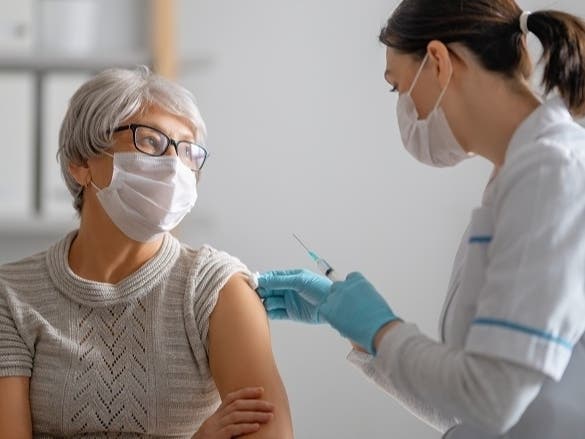
To date, 185 million people in the U.S. have been fully vaccinated against COVID-19. They received one of three vaccines: the two-dose Pfizer-BioNTech or Moderna mRNA vaccine, or the one-shot Janssen (J&J) vector vaccine. All three vaccines are protective against COVID-19.
In August 2021, research found that immunocompromised people don’t always build the same level of immunity after two mRNA vaccine doses like those with healthy immune systems do.
A third dose was added to the initial vaccination series for individuals who are moderately to severely immunocompromised. The third shot applies to the mRNA vaccines and is recommended at least four weeks (28 days) after the second dose.
Find out what's happening in Napervillefor free with the latest updates from Patch.
Now, what about a COVID-19 booster shot?
With many people several months out from being fully vaccinated, experts are recommending booster shots to stay protected. In September, the Food and Drug Administration (FDA) amended the emergency use authorization (EUA) for the Pfizer-BioNTech COVID-19 vaccine to allow for use of a single booster dose for certain adults at least six months after full vaccination with the Pfizer vaccine.
Find out what's happening in Napervillefor free with the latest updates from Patch.
What is a booster dose and why is it needed?
“The Pfizer booster dose is essentially a third vaccine dose, the same vaccine used in the first two doses,” says Jonathan Pinsky, M.D., medical director of infection control and prevention at Edward Hospital. “The booster is intended to ‘boost’ immunity, as research suggests that the level of virus-fighting antibodies starts to wane several months after getting the vaccine. Some research also suggests that with each new dose, the body makes higher quality antibodies that are better at blocking new variants.”
Who is eligible for a booster right now?
Currently, booster shots are only available for Pfizer vaccine recipients who completed their vaccination series at least 6 months ago and are:
- Age 65 and older
- Age 18+ who live in long-term care settings
- Age 18+ who have underlying medical conditions
- Age 18+ who work or live in high-risk settings
Regarding the criteria above, the Centers for Disease Control and Prevention (CDC) recommends certain adults should get a booster shot, while others may get a booster shot considering their individual risks and benefits.
The CDC states: “With the delta variant’s dominance as the circulating strain and cases of COVID-19 increasing significantly across the United States, a booster shot will help strengthen protection against severe disease in those populations who are at high-risk for exposure to COVID-19 or the complications from severe disease.”
“As more data become available, additional populations may be recommended for a booster shot,” says Dr. Pinsky. While the booster shots are only for specific groups for now, everyone age 12 and older is recommended to get vaccinated with the primary series. The COVID-19 vaccines approved and authorized in the United States continue to be effective at reducing the risk of severe disease, hospitalization and death.
What about a booster dose for the Moderna or Janssen (J&J) vaccines?
More data on the effectiveness and safety of Moderna and Janssen (J&J) booster shots are expected soon. It’s estimated that a booster shot will be needed for these products as well.
Still have questions about a COVID-19 booster shot?
If you have questions about your eligibility for an additional COVID-19 vaccine booster dose, ask your doctor.
Learn more at www.eehealth.org/coronavirus.