Health & Fitness
EEH: Overcoming barriers to in-person, virtual school
This school year doesn't look like any others before it. Everyone is in uncharted territory dealing with the pandemic.
This school year doesn’t look like any others before it. Everyone is in uncharted territory dealing with the pandemic.
Schools are grappling with new policies to prevent the spread of SARS-2-CoV, the virus that causes COVID-19, and parents are struggling with how to handle the school year.
Depending on a school’s policies and a family’s preferences, children may be attending school virtually, in-person or a combination of the two.
Find out what's happening in Napervillefor free with the latest updates from Patch.
Whatever the situation, schools, parents and kids are adjusting and adapting to get through the school year.
Here are some recommendations to work around barriers that may arise during virtual or in-person school:
Find out what's happening in Napervillefor free with the latest updates from Patch.
Virtual learning
- Loss of connection to peers. Virtual school means fewer in-person interactions. This can be very difficult for kids. Find opportunities for children to connect with other kids, either with socially distant playdates or texts/video calls.
- Lack of daily structure. Create a family schedule, including when e-learning will take place, as well as meals/snacks and breaks. It’s also very important to incorporate physical activity (“recess time”) into a child’s routine.
- Too many distractions. Try to set children up in a quiet, designated workspace that’s free from noise and other distractions — this applies to parents too, if they work from home. Set up a desk with their supplies so they have a regular place to do their work.
- Dealing with screen-time issues. Sitting in front of a screen for hours isn’t healthy — especially for kids who need to be active and social. Too much screen time leads to poor posture, obesity and poor vision. Make sure children take screen breaks throughout the day.
- Loss of support services. If children receive certain services, such as speech or occupational therapy, learning support or behavioral health services, ask the school how this support will continue during at-home learning. If a child participates in a school meal program, find out how meals will be available. Have contact information ready when technology issues arise.
In-person/hybrid learning
- Knowing when to keep a child home. Check in with children each morning for signs of illness, such as cough, runny nose, sore throat, diarrhea, headache, vomiting or body aches. If a child has a temperature of 100.4 degrees or higher, they should not go to school. Keep children home if they have had close contact with anyone infected with COVID-19.
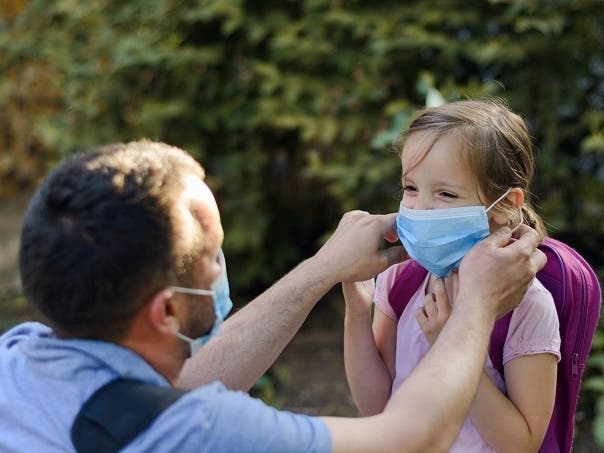
- Staying safe at school. Review precautions children should take at school, including wearing a mask, washing hands before and after eating, sneezing and coughing (along with proper hand washing techniques), keeping physical distance from other students and not sharing items (e.g., pencils, water bottles) with other students.
- Dealing with the changes. Children’s experiences at school will not be like previous school years. Children and school staff will likely be wearing masks. Students will be sitting farther apart in the classroom and won’t be able interact closely with each other like they did before. Reassure children that this is temporary and find supportive resources to help them cope with stress.
- Transitioning home. Maintain a daily routine before and after school. When children return home, make sure they wash their hands immediately.
- Coping with a COVID-19 case at school. Get familiar with the school’s plan for what happens when a positive COVID-19 case is identified. Make sure schools have parents’ emergency contact information. Plan for a possible school closure, periods of quarantine or a return to virtual learning.
It’s especially important this school year to communicate (through email or phone) with teachers and attend (most likely virtual) school meetings so parents can bring up any concerns and get their questions answered.
Regardless of whether children attend school in-person or virtually, make sure kids are up-to-date on recommended vaccines, including the flu shot. The Centers for Disease Control and Prevention states that all school-aged children should get an influenza flu vaccine every season, with rare exceptions. It is especially important this year because experts do not yet know if being sick with COVID-19 at the same time as the flu will result in more severe illness.
For more information, visit www.EEHealth.org/coronavirus.