Schools
Stagg's Say Something Campaign Keeps Kids From Being Victimized
Stagg High School in fourth year of following Sandy Hook Promise to prevent school violence by empowering students to say something.


PALOS HILLS, IL — We hope you’ve noticed over the past year that we’ve been focusing on bullying and cyberbullying, a confounding national crisis that turns youths’ lives upside down with unimaginable angst and dread, sometimes with deadly consequences. With each story, we’ve heard poignant stories from Patch readers in Illinois and others who were bullied and overcame it, but also many who continue to struggle with the damage done by bullies to their self-esteem.
Many common threads emerged in emails from our readers: Teachers and other educators have suggested everything from first-period decompression time to classroom contracts with students on how they’re expected to treat one another. But for all the readers who said schools need to do more to foster an anti-bullying culture, as many said parents should talk more with their kids about bullying and keep closer track on their social media habits.
And in a loud chorus, they said Americans need to stop wringing their hands and work at all levels to create a world safe from bullying.
Find out what's happening in Palosfor free with the latest updates from Patch.
That’s one of the purposes of National Bullying Prevention Month, observed annually during October to bring attention to the problem and involve people in Illinois and nationwide in a conversation on how to create a world safe from bullying.
Stagg Honored By Sandy Hook Promise
This past April, Stagg High School was honored by Sandy Hook Promise, an organization started by several family members whose loved ones were killed in the tragic mass shooting at Sandy Hook Elementary School on Dec. 14, 2012 the claimed the lives of 20 first-graders and 16 educators.
Find out what's happening in Palosfor free with the latest updates from Patch.
Stagg and several of its students were recognized at a weekend conference in Newtown, CT, for their student spirit, creativity and sustainability in threading the Say Something initiatives into school culture. This is the high school’s fourth year of using the SHP program, that aims to prevent gun violence, as well as other forms of violence and victimization before it happens. (SUBSCRIBE: Get Real-Time Alerts and a Daily Newsletter for Palos)
Mary Pat Carr, the head dean, says it’s something that Stagg students and staff appreciate. The SHP program empowers kids not to feel as if they are victims but gives them ways to keep themselves safe.
“We deal with older students and want them to be advocates for their own safety and students’ safety,” Carr said. “They may hear something, read something or see thing that concerns them.. We give kids’ direction on what and how and to whom to report it. Students are empowered to watch out for other kids instead of feeling like helpless bystanders.”
Carr said students regularly drop by the dean’s office, to share concerns about a friend or other student they believe is being given a hard time.
“Preventing bullying is part of school safety, which is all encompassing,” Carr said. “If I feel like I’m not safe at school, it affords out students the ability to no longer be a bystander and not know what to do. The program allows students to send an email to the dead, leave a message on the tip line, or go see their counselor.”
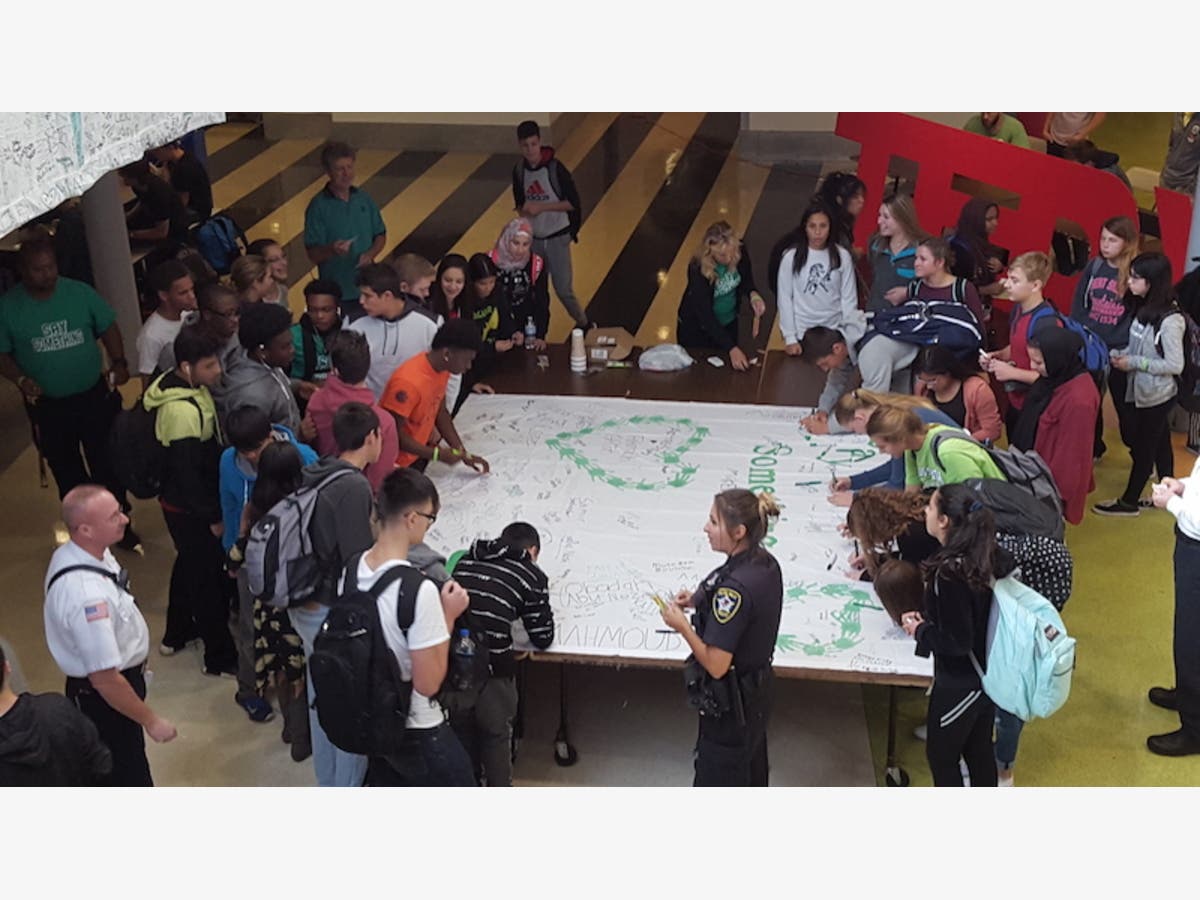
“Say Something” kick-off week at Stagg High School is Oct. 15-19, and on Oct. 18 students will sign a “I Pledge To Say Something” banner.
“It’s very impactful,” Carr said. “We’ll get over a 1,000 signatures. Our local police department passes out markers. We want kids to see the community resources behind them.”
A PUBLIC HEALTH ISSUE
Once viewed as a childhood “rite of passage” that toughened kids to handle the pressures of adulthood, bullying and its more insidious digital twin, cyberbullying, is seen by many experts as a major public health issue — on par with heart disease, cancer and diabetes — with devastating and often long-term effects like the loss of self-esteem, heightened anxiety and depression.
>>> We want to hear from you. Do you have a story to tell about bullying or cyberbullying, a suggestion about how to stem it or an event to publicize? Comment at the end of the story, or email lorraine.swanson@patch.com. You can post Bullying Prevention Month and many other events right on Patch.
Statistics vary, but an aggregate of 80 different studies on bullying suggests one in five American students between 12 and 18 is bullied at some point during their middle or high school years. Traditional bullying — name calling, public humiliation, isolation, physical violence and that sort of thing — occurs most often, with 35 percent of kids reporting they’ve been targeted in one of those ways. The studies cited by the PACER Center, which established National Bullying Prevention Month, show that 15 percent of kids surveyed report being cyberbullied.
And though it occurs less often, cyberbullying — which has resulted in a disturbing string of suicides by adolescents and teenagers — is especially hard to stop. While experts say most cyberbullied kids don’t kill themselves, the long-tailed internet makes a taunt live longer than one flung on the schoolyard. Kids can escape traditional bullying in the safety of their homes, but because social media is so intertwined with how kids communicate, they never really escape it.
READ: Bullied To Death: When Kids Kill With Words
And because cyberbullies have the stealth of anonymity, “empathy tends to fade to zero,” NoBully.org founder Nicholas Carlisle told Patch.
He was knocked around 40 or so years ago as an awkward 12-year-old. The torment persisted through high school, but as tough as it was, his experience was markedly different from the torture kids endure today, he says — and it’s not just that he was attacked in a physical as opposed to online space.
“Online, you can’t see the whites of their eyes,” Carlisle said. “If you can see someone, that’s often a break upon people’s aggression — not always, but it does seem to have some break upon crossing the line.”
The full consequences of bullying on the brain aren’t fully understood, but kids who are targeted by bullies in childhood and adolescence are at increased risk for psychological problems that can stretch into adulthood, according to experts. In the moment, bullied kids may be unable to sleep or suffer a range of stomach issues and headaches. Later on, they’re at risk for depression, anxiety, and alcohol and drug use.
Photo: Stagg students sign the "I Pledge To Say Something" banner in 2017. | Dist. 230
Get more local news delivered straight to your inbox. Sign up for free Patch newsletters and alerts.