Community Corner
Lambert: Old School Built as a Radio Station
The building that last housed Christ Lutheran Academy originally had been designed for radio broadcasts and later became a rural apartment complex.


The Inquiry
Plainfield Patch reader Brian asked about the history of the soon-to-be-demolished former building on 127th Street, between Route 59 and Naperville-Plainfield Road. began on the property Tuesday.
The site is tied to three pioneering events that played a role in the 19th Century settlement of Wheatland Township and the nationwide development of technology in the 20th Century.
Find out what's happening in Plainfieldfor free with the latest updates from Patch.
This is the second in a two-part series. To read part one, click .
The Facts
Find out what's happening in Plainfieldfor free with the latest updates from Patch.
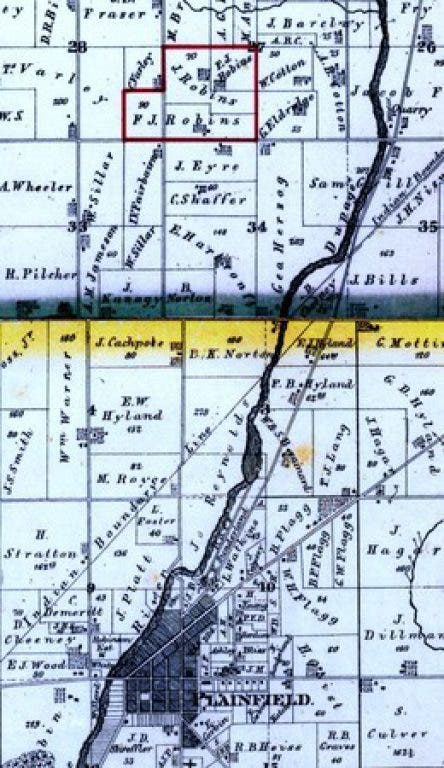
Settled by the Robins family in 1843, the site of the now-empty school building is one of the early pioneer farmsteads of Wheatland Township. In 1910, the farm was sold to the Jesse Thompson family.
The Thompsons leased a small parcel at the northern boundary of their farm for the construction of a lighted beacon and generating plant that would serve as part of the for uninterrupted transcontinental air mail delivery.
In January 1928, widowed Deborah Thompson, then 73 years old, sold the entire farm to a Buffalo, N.Y. accountant who three months later transferred the site to the Universal Wireless Communication Co. of Buffalo.
The Rush for Wireless
With the end of World War I, a new age of aviation experimentation for mail service quickly emerged. Simultaneously, radio broadcasting developed rapidly. By 1923, more than 500 independent stations across America were broadcasting locally produced programming.
As programming expanded to cover news, weather, entertainment and general information, the demand for home “wireless sets” (radios) dramatically increased.
During this time, General Electric formed the Radio Corporation of America (RCA), and—in 1921—Westinghouse established the first radio broadcast station, KDKA in Pittsburgh.
Westinghouse added three more stations in rapid succession, including KYW in Chicago. The National Broadcasting Company (NBC) was formed, followed by the Columbia Broadcasting System (CBS). Because of its geographic location, Chicago emerged as a major broadcasting center for these new “broadcast networks.”
Early radio broadcasts captivated the rural community, which was eager to receive instantaneous news, grain market results and entertainment. Likewise, major catalog merchandisers (such as Sears, Roebuck & Co.) and leading newspapers (such as the Chicago Tribune) enthusiastically sponsored programming in an effort to strengthen their ties to the rural community.
In August 1928, the Universal Wireless Communication Co. announced a plan to establish a nationwide radio network. It called for the construction of two 10,000-watt broadcast stations, one near New York City and the other in Chicago.
In 1928, Universal Wireless constructed the 2-1/2 story brick building in Wheatland Township and a relay transmission center near Frankfort.
The art deco building on 127th Street included a carved limestone entrance that identified the building’s construction date and other details.
While the broadcast building was being constructed, the original 1845 Robins farmstead—including the original, 16-foot-by-26-foot settlement house—was razed.
The Wheatland building included a broadcast studio and transmission equipment as well as a large room with a stage that was intended, presumably, for the production of live programming. The lower floor included space for the building’s mechanical systems and a garage bay. The upper floor included apartments for the on-site operators of the broadcast station.
As competition in the emerging broadcast field intensified, RCA filed suit against Universal Wireless, claiming patent infringement in January 1930. By September, Universal Wireless was forced into involuntary bankruptcy as a result of the lawsuit. The Wheatland property, along with other company assets, was conveyed to the bankruptcy trustee in May 1931.
It is unclear whether Universal Wireless ever operated the Wheatland facility. The building sat nearly vacant for several years while the bankruptcy case was settled.
Vision in the Midst of the Great Depression
In 1935, Chicagoan John Schmidt purchased the former Universal Wireless building as a surprise for his new wife, Frances.
The Schmidts farmed the site while transforming the building into their home by combining the original upper floor apartments. Three additional apartments were created and rented. The main floor of “Schmidt Hall” was rented for parties, family reunions and other social gatherings.
The Schmidts established John’s machine shop at the basement level, where many young men learned the art of welding. In the basement, John and Frances Schmidt also raised chickens.
By 1940, Frances Schmidt instituted a 4-H Club for local children; the club endured for more than 20 years. During that time, the Schmidts organized square dances and offered lessons. For many years, the couple hosted a New Year’s Eve dinner and dance at Schmidt Hall.
Beginning in the early 1960s, Frances Schmidt taught English in the Plainfield and Naperville schools.
John Schmidt died in 1967, but Frances retained the property until 1998. She died in 2002 at her sister’s Texas home.
Postlude
After Frances Schmidt died, the former broadcast center and social hall was transferred to the Lutheran High School Development Corp. Under its supervision, the building was remodeled for a high school that never achieved the imagined vision. The school disbanded in 2010.
Like the nationally recognized Illinois & Michigan Canal, the or Route 66, the innovative airway beacon system was part of a technologically innovative “postal highway.” The Universal Wireless Communication Co. building represents the burgeoning broadcast industry in its infancy.
Schmidt Hall stands as a symbol of the tenacity and vision of those individuals who pursued the American dream during the hardship of the Great Depression and the prosperous years that followed.
During National Preservation month, when Americans have been encouraged to “Discover America’s Hidden Gems,” Plainfield is losing another of its historic sites. Soon, with the blessing of local and state officials, the Universal Wireless Communication Co. building and the electric beacon generator shed will be lost to the ages as they are replaced with residential apartments.
Next week: Plainfield’s Tie to 1960s Television
Have a question about Plainfield’s history? Send your inquiries to Michael Lambert via Plainfield Patch.