Health & Fitness
What's Old is Good Again: A Paean to Used Books and the Stores that Sell Them
"Despite the emergence of Nooks, Kindles, iPads, and other cute, soulless devices, the actually-printed word will never completely go out of style."
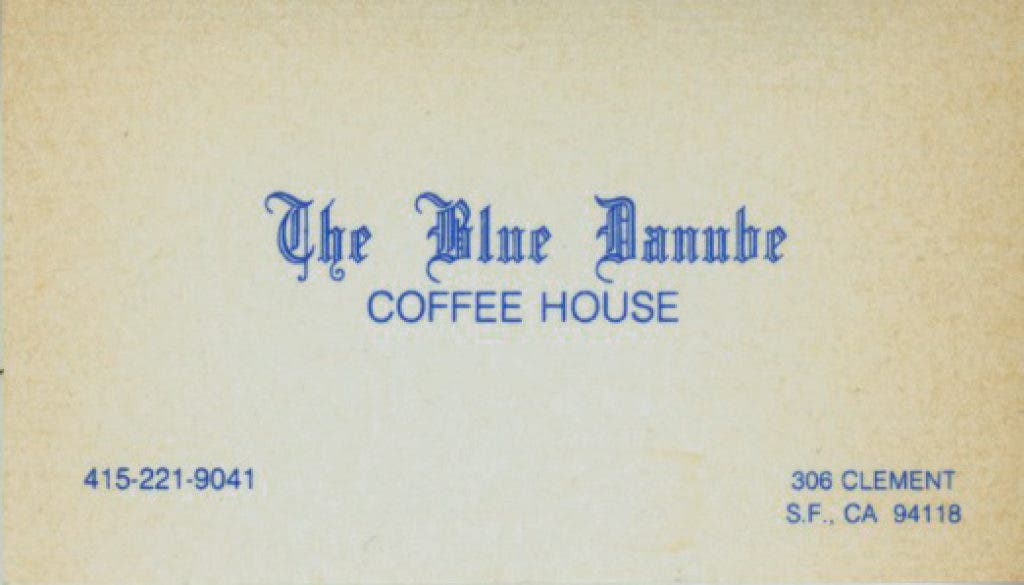
A couple of weeks ago I pulled a copy of James Joyce's Dubliners from my bookshelf with the intention of reading a short story before I went to sleep that night. Mine is a paperback copy from Penguin, a thrifty imprint that priced it at $1.95 back in 1979. I bought it at Powell's Books Store in Chicago for about $3.50 four years ago. That well-stocked shop is a favorite of mine; I buy books compulsively and almost always buy them used, for I don't have the money to spend $12 or $26 on new editions nor do I really want to patronize the big box book retailers, with their built-in Starbucks and e-readers. Used books are cheap and effective, a nerdy penny-pincher's alternative to publishers' backlogs. Plus, they allow things like this to happen: when I opened Dubliners that night and settled into the first story, "The Sisters," a card fell out of the leaves. It was a business card for The Blue Danube Coffee House in San Francisco, California. The name was printed in an Olde English-type font and the details were offset in the corners in a trusty sans serif, all rendered in royal blue. The Blue Danube Coffee House; 415-221-9041; 306 Clement, S.F., CA 94118. Whoever ordered it had chosen a fine ecru that was now browning at the edges. Understated, elegant, the card was attractively designed, making a top-notch bookmark for the last reader.
Now it was mine, for keeps. Somehow it had escaped the attention of the Powell's employee who bought the book and the previous owner who sold it, ostensibly making the trip from CA to IL only to wind up in my hands. At the moment of discovery I was under the bed covers and wearing my glasses and appropriately geeked out, pushing the glasses up my nose and bugging out my eyes as I inspected the thing. It was an unbridled display of nerdishness. I think my cat shuddered. For a while, I used the card as a bookmark of my own but then I tucked it away in a pile of movie tickets and fortune cookie fortunes, a little souvenir from the unknown café patronizer and reader of Joyce.
Used books, like other used things, come with a history. Sometimes, we are the proud inheritor of that history (the scratches on vinyl), other times we are subject to it (car troubles). I hate coming upon a page in a book and finding all sorts of obnoxious underlining—scrawling, messy, felt tip, ballpoint with little regard for the 180-degree angle. Readers' marginalia, on the other hand, is usually fascinating, as long as it keeps to itself in the margins. Some readers never mark up their books at all but leave things, like the card for The Blue Danube, between the pages. My copy of David Foster Wallace's Oblivion came with some mysterious schematics on a piece of loose-leaf paper. I've also found Post-It notes, telephone numbers, and of course library- or store-issue bookmarks. My absolute favorite remnant of ownership, however, is the reader's name on the title page or inside cover. This is the impression the reader makes on the book, the mark of identity to rival the author's. An abbreviated roll call from my collection:
Find out what's happening in St. Charlesfor free with the latest updates from Patch.
- From Nikos Kazantzakis' Saint Francis, Tharpa Rapqa
- From Christopher Marlowe's Doctor Faustus, the O. D. Wyatt High School International Baccalaureate program
- From Four Plays by Bernard Shaw, Shan Bailey, Box 113
- From Truman Capote's Other Voices, Other Rooms, the delightfully succinct Ron Bock
- From From Shakespeare to Existentialism (along with many other books in my collection), professor Jim McCurry
I feel an affinity with these people knowing that they read the exact same words I did. It's like a hand-me-down from a similarly literate stranger, more intimate than a thrift shop sweater because they likely enjoyed the artifact in the same solitude and peace that comes with the act of reading.
This rhapsodizing makes me wish that St. Charles had a used book store. The Goodwill on Randall Road has quite a selection of books (I found an excellent edition of Vanity Fair there for 85 cents), but does not compare to the mustiness and coziness of places like Powell's and Myopic Books and The Gallery Bookstore, all in Chicago. About ten years ago, Geneva had a great shop on State Street called Wrinkled Pages, run by Cathy Kolecki, mother of my good friend Danielle. Although I was only in there once or twice, I miss it—being the reader I am today, I would probably stop there weekly if it was still around. St. Charles is lucky to have Town House, which sells current listings, but a used books store would be an excellent complement to it. It could be a gathering place—Myopic, on Milwaukee Avenue in Chicago, hosts chess nights and poetry readings and features an art gallery and cuddly cat. It has distinguished itself as a thriving destination for lit teachers, bespectacled hipsters, people wanting to unload old books, and cheapies alike. In Galesburg, IL, where I went to school, the local bookshop features complimentary coffee from the coffee house down the street which in turn displays a shelf of used books for sale. I could imagine a similar arrangement between a bookstore here and, say, Arcedium Coffee House on 1st Street.
Find out what's happening in St. Charlesfor free with the latest updates from Patch.
Despite the emergence of Nooks, Kindles, iPads, and other cute, soulless devices, the actually-printed word will never completely go out of style. Note that vinyl record sales are on the rise—it's a matter of quality and permanence. E-readers tout "convenience"—or at least they prey on our devotion to the concept—but they simply cannot match the book, an item that you can lend, resell, flip through, bookmark, underline, dog-ear, and treasure. I look forward to keeping my copy of Dubliners for a long time, until someone I know "must" read "Araby" or it winds up in the give away pile. For this reason I call on all area entrepreneurs to please consider the used books business: give me a place to spend my hard-earned cash on something I can cherish. Don't let the digital media giants sterilize the art of reading, too.