Schools
This Classroom Has No Desks and Encourages Storytelling
Teacher's Goal is to find a More Effective Way to Teach Languages


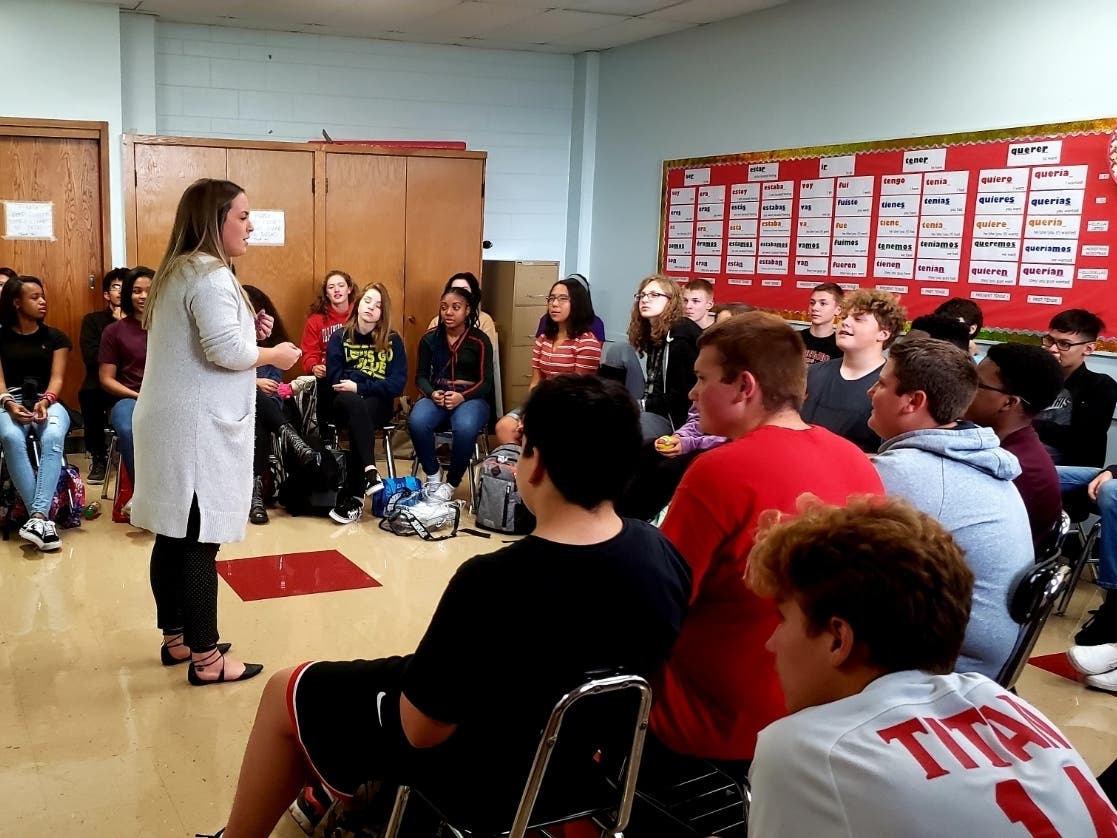
Tinley Park High School Spanish Teacher Alli Jebens wanted to find a more effective way to teach languages at her school. Her strategy, which has already received positive feedback from many of her students, began by removing all of the desks from her classroom.
“What I was doing wasn’t working,” says Jebens. “I knew I needed to find a more effective way to teach the language.”
Jebens reached out to her colleague Alicia Butryn who was attempting a learning technique called Teaching Proficiency through Reading and Storytelling (TPRS) at Bremen High School. Fascinated by the idea of teaching in a classroom with no desks, Jebens attended a two day TPRS conference in October of 2018 and then a week-long TPRS workshop this summer.
Find out what's happening in Tinley Parkfor free with the latest updates from Patch.
.jpg)
“Within the first few days of the workshop I was already reading, writing, speaking, and understanding German at a basic level,” she says. “I knew immediately that I wanted my students to feel as confident as I did while learning languages through the workshop.”
Jebens has applied the TPRS technique to all of her Spanish classes for the 2019-2020 school year. She teaches Spanish at multiple levels and has freshmen, sophomores, juniors, and seniors in her classes. Regardless of age or levels of advancement, Jebens says the technique can be applied for anyone trying to learn any language.
Find out what's happening in Tinley Parkfor free with the latest updates from Patch.
Instead of focusing on teaching vocabulary terms, charts, or worksheets from a book, Jebens explains that TPRS puts an emphasis on storytelling. Every two weeks, Jebens offers a sentence to her class which will kick off a new story. Students then help her build the story throughout the next weeks with keywords and terms that she keeps posted at the front of the room. Based on the learning level of each class, stories will become more detailed and advanced as the students work.
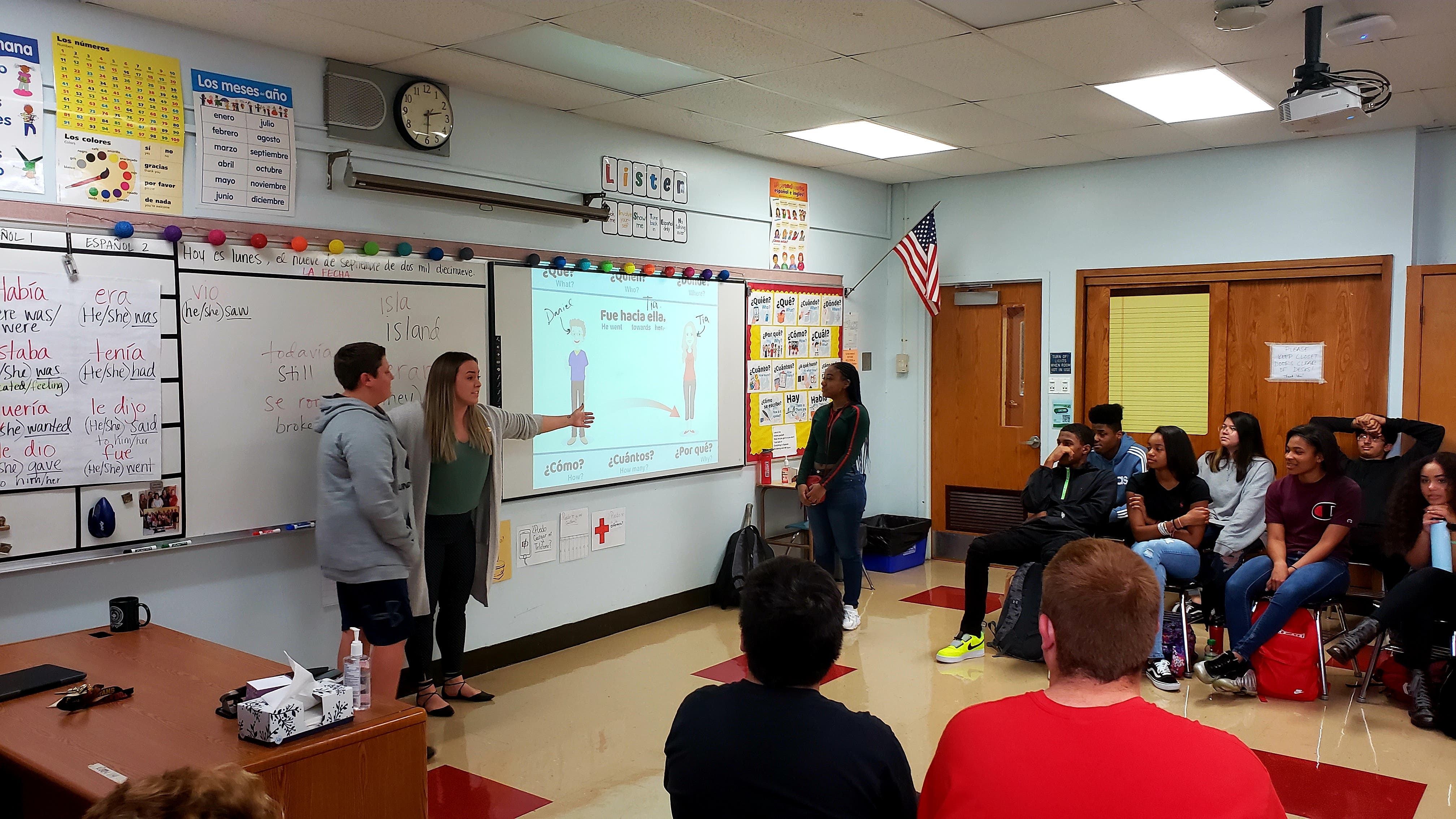
Jebens explains the key to the TPRS technique is to build confidence in students by asking questions, speaking slowly, and utilizing lots of hand gestures associated with keywords.
To explain how the classroom functions, Jebens provides an example. She starts with the sentence, “Había una chica (there was a girl).” Jebens then proceeds to ask her class very basic questions in Spanish to continue building the story. Such as, where is the girl from? What does the girl like to do? How old is the girl? Etc. When Jebens asks questions she encourages student participation and feedback. She even has hand signals for many keywords and terms to help with memorization.
For example, when Jebens asks students a question with the word “dónde” or where, students raise their hand to their forehead and pretend like they are searching for where something or someone is. Similarly, when Jebens asks a question with the word “por qué” or why, students will respond by putting their hands up in a 'Y' formation as is if asking a question.
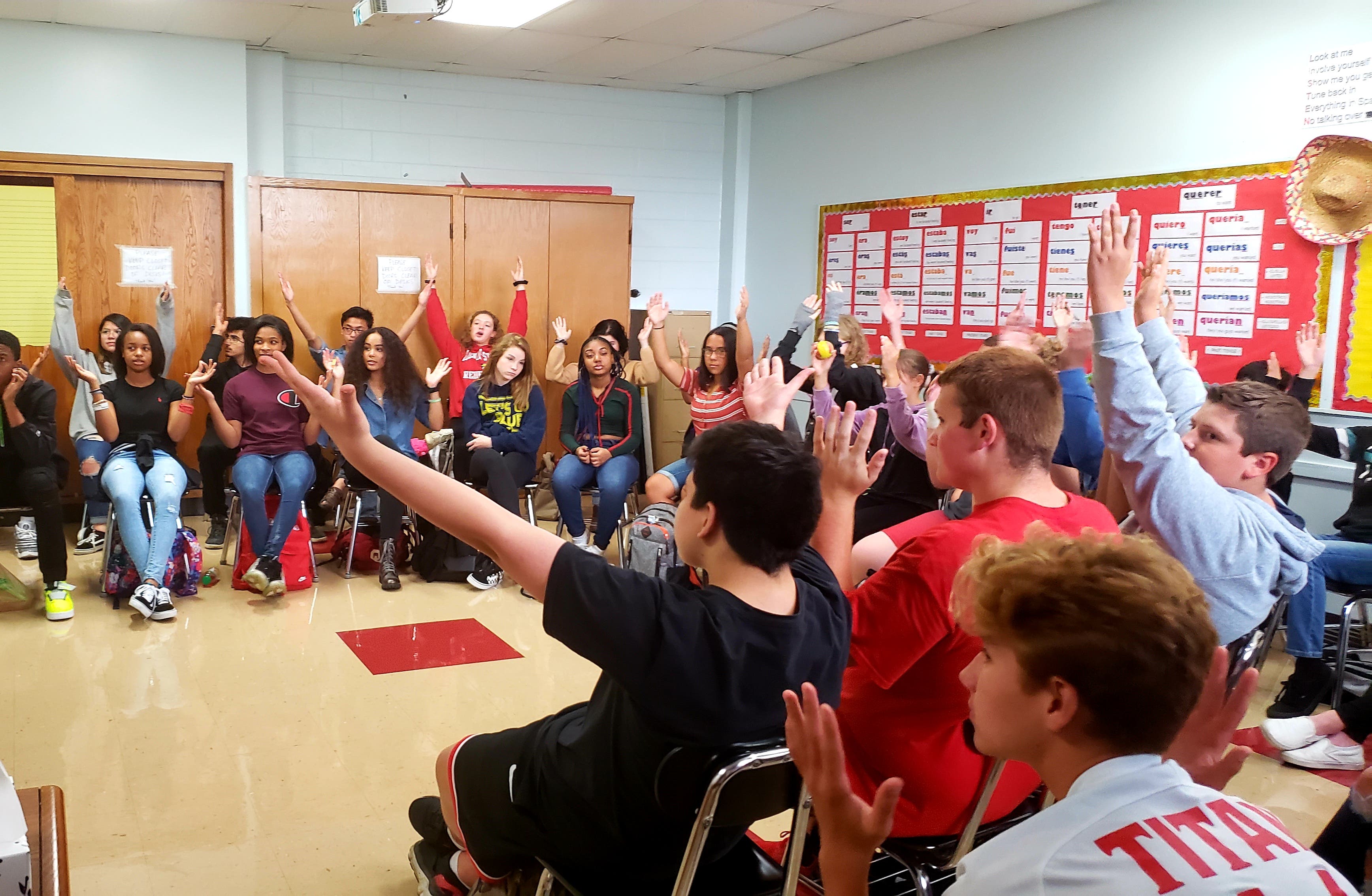
“It makes learning fun,” says Jebens. “Stories can be goofy because the students ultimately come up with them, but when it comes down to it they’re still learning. It just makes the class more enjoyable for everyone involved.”
Jebens also explains that repetition is key when it comes to the TPRS teaching style. She leads activities in her class which encourages repetition of the story and key words. Activities include volleyball or “popcorn translations” of the story, acting out the story, and listening activities where students draw out the story. When students participate in writing activities, Jebens hands out clipboards for student use.
Because 90 percent of Jeben’s classes are taught in Spanish, Jebens has applied hand gestures for students to use during the class. Students can then signal when they need Jebens to stop, slow down, or repeat anything she has said without feeling embarrassed.
“I’m placing an emphasis on building confidence in my classes through this technique,” she says. “The class encourages students to feel comfortable, participate at their own pace, and familiarize themselves with speaking the language on a regular basis.”
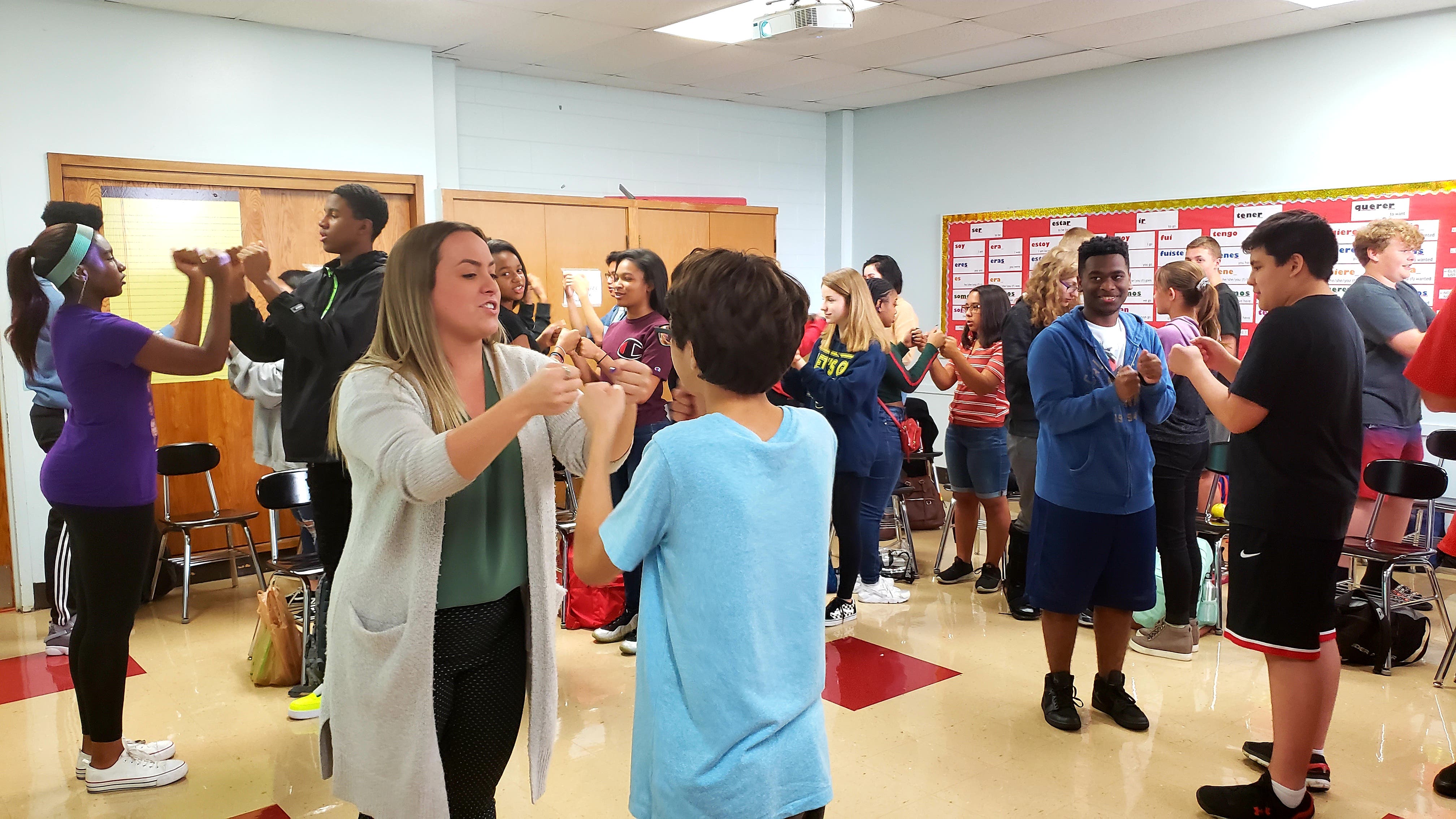
Jebens also engages students through "brain breaks." Because learning a new language can be overwhelming and includes a lot of information at once, Jebens likes to give her students an educational break every eight minutes. At this time, a small beeping will alert students that it is time for a break. Students will rise to their feet and participate in quick games lead by Jebens in Spanish. Jebens explains that her brain breaks allow students to release some of their energy and then get back to focusing on the story.
“There was definitely some hesitancy at first,”she admits. “But students are buying into it (TPRS) more and more as they get use to the classroom style and ultimately realize it’s more fun than learning from a textbook.”
Jebens doesn’t even assign seats for the students. She explains that she wants her students to sit by their friends and peers they are comfortable with. This way, students are more willing to have fun and participate.
When asked if Jebens plans to continue teaching Spanish using the TPRS method in the future, she said, "Yes, I hope this is how I can teach language for the rest of my career."