Community Corner
Students Learn From Award-Winning Conservation Biologist
Award-winning behavioural ecologist and conservation biologist Dr. Kate Evans speaks with honor biology students at Tinley Park High School


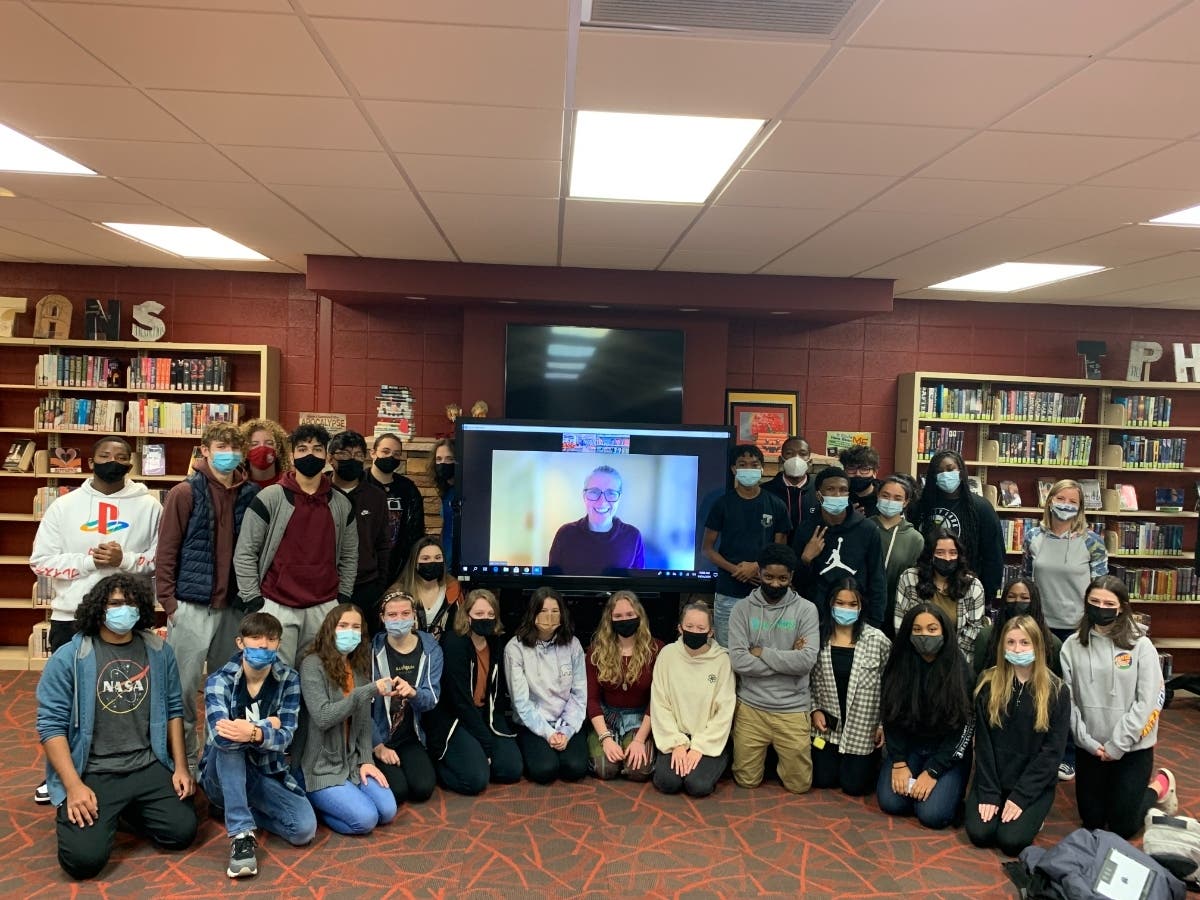
Students in Mrs. Kelly Deutsche's Honors Biology Classes at Tinley Park High School had the opportunity to hear from Dr. Kate Evans also known as Elephant Kate, the Founder and Director of Elephants for Africa on November 24, 2021.
During the presentation, Evans discussed her background as well as the objectives, challenges, and progress made by the elephant conservation program.
"There were some new topics that she discussed that we hadn't considered in our prior learning," said Deutsche. "Mostly that elephant conservation needs to be driven by local community members to be successful and sustainable."
Find out what's happening in Tinley Parkfor free with the latest updates from Patch.
Elephants for Africa is unique in that it is co-operated with farmers who work the land that is in direct competition with elephant grazing/browsing activity. With the local residents, the conservationists develop unique land use plans that allow for more peaceful coexistence between humans and elephants returning to the area, then the farmers enact and carry out the land use plans themselves. As a result of the program, elephant populations in Botswana have rebounded and the local agricultural economy hasn't been negatively affected.
Evans also shared various stories about dangerous encounters with elephants and other wild animals during her work in Africa as well as some of the land-use segregation strategies being utilized by the conservation program. For example, the program makes "bricks" out of elephant dung and chili peppers and then burns them in the middle of the farm fields to keep elephants out of the crops and within their own designated boundaries.
Find out what's happening in Tinley Parkfor free with the latest updates from Patch.
The presentation was especially relevant to Honors Biology students as they focus on African Ecology during Unit 1.
Currently, students have learned about animals and plants and how they cohabitate in ecological communities in Africa. Students are also learning about the threats that some of the populations are facing, and about the census and other genetic information that researchers collect in order to track and monitor these threatened populations.
Deutsche learned about Evans through the Illinois Science Teachers Association (ISTA) who shared information about their cooperation with the "Skype a Scientist" organization.
Students shared that Evans was "funnier and more relatable than they thought she would be." Students also expressed that they found Evans' background to be interesting. Notably, that she grew up all over the world, attended a boarding school in the UK for high school, currently lives in Sweden, and has been successful in earning a Ph.D. by the time she turned 30 in spite of being diagnosed with a learning disorder.