Arts & Entertainment
'Trail of Two Cities' Reveals Winnetka-Glencoe Link
For the two towns, the old Green Bay Trail started it all in being the Route 66 of the North Shore.


Today, when we think of trails—winding through Illinois prairie grass, lake shore bluffs and wooded hills—our aim is usually for fun not necessity.
Hikers in colorful shorts and thick-laced boots, cyclist offering a passing smile, a mother strolling her toddler through charming solitude—all fitting images for the , which runs 18 miles from Wilmette to Lake Bluff and was first established in 1968 by a committee of North Shore municipalities, according to Winnetka: The Biography of a Village, by Caroline Harnsberger.
Read more:
Find out what's happening in Winnetka-Glencoefor free with the latest updates from Patch.
As time would have it, the trail has been a popular destination for North Shore residents since its creation; while its namesake, hundreds of years older, vanished from public memory with the advent of trains and designated roads—the foundations of small town America.
The 'old' Green Bay Trail, as one might call it, came into existence in a natural state: Illinois without Chicago. The landscape at that time was covered in Midwestern marshes, sloughs and prairie plains, once home to the Pottawatomie and Illinois tribes.
Find out what's happening in Winnetka-Glencoefor free with the latest updates from Patch.
It was mentioned as far back as the late 18th century, when it was used as an Indian trail by those and other Native American tribes.
With the building of Fort Dearborn, Chicago, and Fort Howard in Green Bay, WI, Congress established the old trail as a postal road in 1832, linking the two destinations, 500 miles apart, together. The first postal workers in Illinois were soon hired, and over time 100 would loose their lives to the elements, according to Images of America: Winnetka, by ArLynn Leiber Presser.
On their winter treks up and down the old trail, each carried a pair of pistols, a mountaineer rifle, a sheaf knife and a roll-out bed. They lived off the land and died from its frostbite, wolves and vengeful Native Americans.
The North Shore was, no doubt, hostile back then, wholly unlike the governed suburbia it is today. Evidence of Native American battles, including the Black Hawk War, which took place from 1831-1832, could be found in what used to be the Skokie marshland, which easily flooded and was covered with sinkholes.
Shortly after the war, Pottawatomie, Chippewa and Ottawa tribes were, by and large, forced west of the Mississippi River when they signed the Treaty of Chicago in 1833.
With one crippling blow, Native Americans lost their land and the area lost its hostile label. Settlers, sights on the trail, would soon move in and erase their footsteps.
'The Era of the Tavern'
If you ever a chance, take a look at a map of Winnetka showing the original Green Bay Trail.
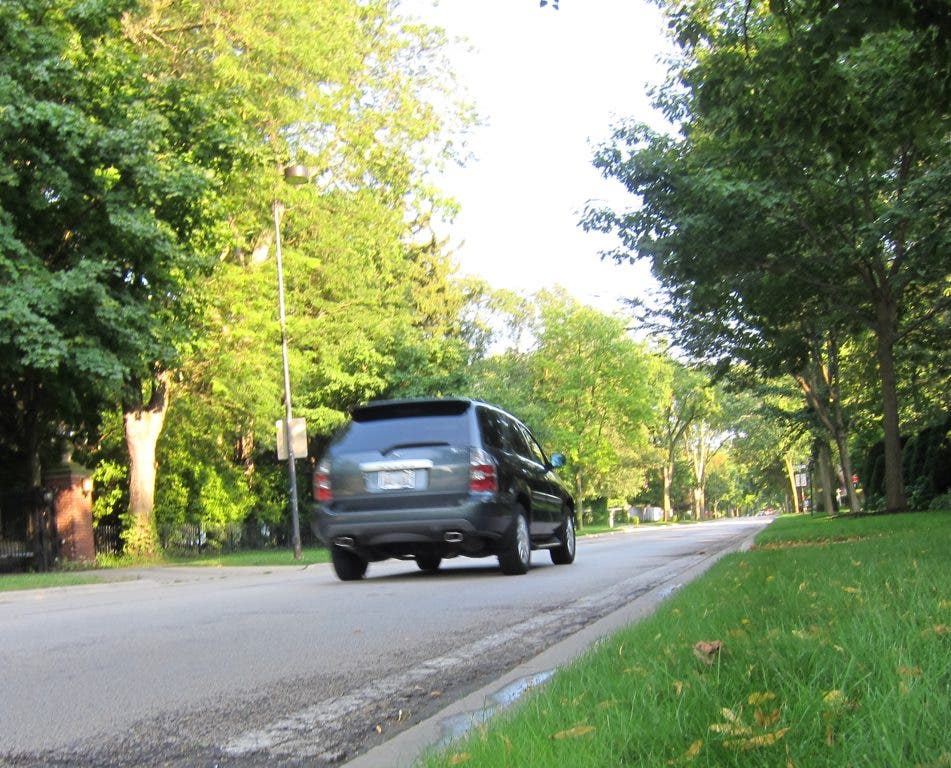
You'll notice it runs the length of several roads that didn't exist until the turn of the 19th century. Starting from the north, it took Old Green Bay Road, curved around the ravines, crossed Tower Road then headed straight down Sheridan Road, according the film Winnetka Story: The History of Winnetka & The North Shore.
Once it reached Maple Street, the old trail split into two branches--one following Sheridan Road on the southeast and the other eventually becoming Ridge Avenue on the southwest—heading for Chicago.
In present-day Glencoe, the old trail ran southeast to the LaPier House, where in the late 1830s, settler Anson Taylor and his family built a home, which they turned into an inn for stagecoach travelers.
One day, as the story goes, a man was given three ticket prices for a ride from the house to Chicago. He chose the cheapest of the three, seeing no obvious difference in the accommodations of the stagecoach.
“After urging his horses with no resolve,” wrote Caroline T. Harnsberger in her book Winnetka: The Biography of a Village, “the driver turned to the passengers and bellowed, 'First class passengers, sit still; second class passengers, get out and walk; third class passengers, get out and push!' ”
The house operated for roughly 50 years, until it burned down in 1893 at the hand of the last resident's daughter, who later said she had been evicted by “some real estate shark.”
Meet the Pattersons
In 1836 the Patterson family moved from Vermont to present-day Winnetka and built the Wayside Inn, a one-and-a-half story log cabin, according to Presser. It survived in the area until 1847.
This was a lucrative time for taverns along the old trail. The same year the Patterson family migrated to the North Shore, the federal government designated the widened routes from Milwaukee to Chicago for stagecoach travel.
“We usually found taverns about 15 miles apart,” wrote one traveler. “They're all built off logs and strongly indicate the haste that is the pervading spirit of Illinois.”
Some said of Patterson's inn that it served the best whiskey along the trail. As time went on, and the necessities of each settlement increased, people decided to stay. They'd traveled far enough.
Read more:
The Road to Progress
As Chicago grew, so did the surrounding settlements. Eventually, they became villages as people built homes.
With the creation of the North Shore Line railroad in 1855, people no longer depended on the stagecoach to get to Chicago. In turn, Chicagoans saw the modern marvel of the iron horse as a way out of the crime, corruption and pollution in the city.
Following the railroad, the population of Winnetka jumped from 100 in 1850 to about 500 in 1869, the year of its incorporation. Glencoe, also incorporated that year, had a population of 569 by 1890, nearly five-times more than during its infancy.
The growth of many villages in the North Shore lived or died by the train line. If they weren't granted a stop in their village, according to The History of Winnetka & The North Shore film, people would eventually move to more practical towns.
And though the train line didn't entirely trump the old trail, roads eventually did.
Slowly but surely, though its geography stayed relatively the same, the old trail was paved over.
By 1963 the North Shore Line was abandoned, but the tracks remained as useful as the path carved out by the old trail. In 1965, the villages of Glencoe, Winnetka, Wilmette and Kenilworth formed a committee to cleanup the right-of-way, and by 1968 they had raised $27,000 to do so.
Naming it the Green Bay Trail, with elegant signs that declare each town as hikers and cyclists pass by, is a reminder of what once was and how the past is never too far from home.
For a vivid telling of Winnetka's history, you may purchase the film "Winnetka Story: The History of Winnetka & The North Shore," for $19.95 at the Winnetka Historical Society, 411 Linden St., or at Phototronics photo shop, 740 Elm St. You may also order the DVD online at www.winnetkastory.com.