Health & Fitness
First US Case of Zika Spread Through Sex By Man with No Symptoms
The Centers for Disease Control says a Maryland man contracted Zika overseas then infected his sex partner without showing symptoms.


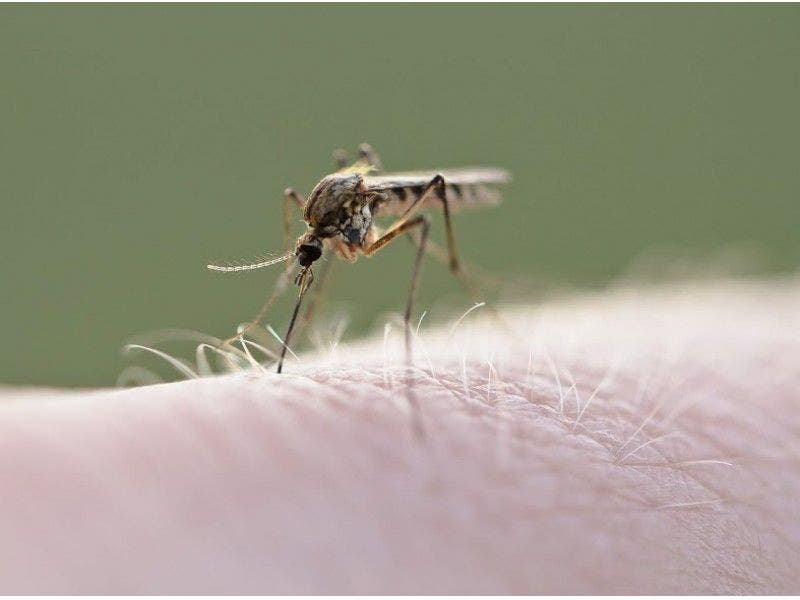
The first U.S. case of person-to-person transmission of the Zika virus when the infected person showed no signs of illness has been confirmed in a Maryland man, say health officials.
The unidentified Maryland man was bitten by mosquitoes during a visit to the Dominican Republic, but he never had a rash, fever or joint pain, all symptoms of the mosquito-borne illness. The ailment typically goes away within a week, but some cases may require hospitalization.
While the man never became ill, a woman he had sex with was treated by a doctor for a rash and fever in June. The woman was not pregnant, health officials said, and the couple did not use condoms.
Find out what's happening in Annapolisfor free with the latest updates from Patch.
The U.S. Centers for Disease Control and Prevention has confirmed that the Zika virus is responsible for causing severe defects in unborn children, including microcephaly, which leaves babies with abnormally small heads and often with brains that do not develop properly.
So far, small sections of Miami are the only sites where Americans are being infected by mosquitoes carrying the virus. Intensive spraying efforts were launched to kill the mosquitoes, and residents were encouraged to wear long sleeves and spray to ward off the bugs.
Find out what's happening in Annapolisfor free with the latest updates from Patch.
Click here to view the full map of cases in the United States from the CDC.
In total there are 2,517 confirmed cases of the Zika virus in the United States as of Aug. 24; 584 of those cases are among pregnant women.
Pregnant women are highly discouraged from traveling to Zika-infected areas (Central and South America and the Caribbean), say medical officials.
The CDC recommends women who are pregnant or are considering becoming pregnant postpone travel to Zika-affected areas.
The March of Dimes is also “working tirelessly to provide information to make sure people, especially pregnant women or women who are trying to get pregnant, are protected from the mosquito-borne virus,” spokeswoman Laura Gordillo told Patch.
Dr. Lindsay Maggio, a March of Dimes volunteer and assistant professor at the University of South Florida’s Morsani College of Medicine, offered her top tips for expectant mothers and those hoping to become pregnant:
- Avoid traveling to areas of ongoing active transmission, if possible.
Protect yourself against mosquito bites. This includes:
- Using an EPA-approved mosquito repellent is safe to use as long as the use instructions are followed. Products containing DEET, picardin and oil of lemon eucalyptus are safe to use in pregnant women.
- Keeping your skin covered with long sleeves as much as possible and use permetherin treated clothing to prevent bites.
Protect your home against mosquitoes. This includes:
- Using air conditioning, however, when necessary use bed netting, even permethrin treated netting.
- Repair any broken screens, cracks, holes and areas where mosquitoes can enter your home.
- Empty any standing water in and around the home, as this is the breeding ground for mosquitoes.
Prevent sexual transmission: “If your partner has traveled or was living in an area of active ongoing transmission, either abstain from sexual intercourse, or consistently and correctly use a condom.”
More information is available on the March of Dimes website.
Tips from Maryland’s Bug Guy blog to avoid mosquito bites:
- Apply mosquito repellent to exposed skin before you go outdoors. He recommends any brand that contains up to 30 percent DEET.
- Place a small fan on your patio if you eat outdoors. The light breeze created by the fan will greatly reduce the number of mosquitoes flying and biting.
- Eliminate standing water by cleaning your gutters, dumping your birdbath twice a week, turning over your wheelbarrow, emptying the wading pool, and getting rid of water-filled containers.
- Add a soil microbe known as Bacillus thuringiensis israelensis, a.k.a. Bti, to an aquatic water garden or standing water on your property that could breed mosquitoes. The microbe comes in doughnut-shaped tablets that can be placed in water to kill mosquito larvae.
The CDC offers these tips to prevent the spread of the disease:
- Wear long-sleeved shirts and long pants.
- Stay in places with air conditioning and window and door screens to keep mosquitoes outside.
- Take steps to control mosquitoes inside and outside your home.
- Sleep under a mosquito bed net if you are overseas or outside and are not able to protect yourself from mosquito bites.
- Use Environmental Protection Agency (EPA)-registered insect repellents with one of the following active ingredients: DEET, picaridin, IR3535, oil of lemon eucalyptus or para-menthane-diol.
- To prevent the spread of sexually transmitted Zika, condoms should be used properly.
"We do not know how long the virus can stay in the semen of men who have had Zika, and how long the virus can be spread through sex," the CDC says.
— Patch Editor Sherri Lonon contributed to this story.
Image via Shutterstock
Get more local news delivered straight to your inbox. Sign up for free Patch newsletters and alerts.