Politics & Government
Second Bay Bridge Gets Hogan Push
While the Chesapeake Bay Bridge should be able to handle traffic for 50 more years, traffic is becoming too backlogged, says the governor.


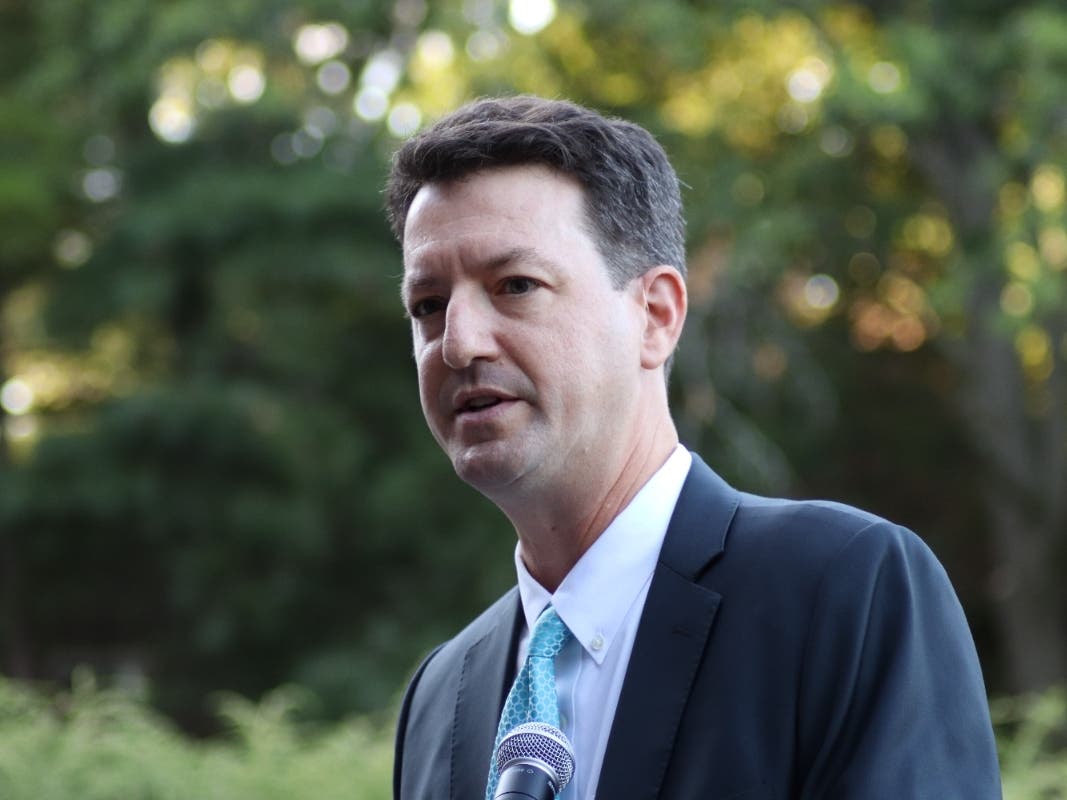
ANNAPOLIS, MD — Imagine a weekend drive to Maryland’s Eastern Shore during the summer that doesn’t include miles of traffic at a virtual standstill. On Tuesday, Gov. Larry Hogan ordered a study to explore options for a second Chesapeake Bay crossing as way to improve life for farmers, vacationers, business owners and residents.
The Maryland Transportation Authority will begin a $5 million study this fall, the first step in identifying options for a new Chesapeake Bay crossing, and exploring financing. It could take 48 months to complete the study, Hogan said at a press conference with the iconic Bay Bridge in the background.
“Marylanders from all across the state depend on being able to cross the Chesapeake Bay. … It’s no secret that traffic backs up along Route 50 on peak hours and during the summer months,” Hogan said.
Find out what's happening in Annapolisfor free with the latest updates from Patch.
On a typical summer Sunday, 96,000 vehicles cross the bridge; by 2040 the traffic count could increase by 30 percent, he said.
Last year, state analysis determined the existing Bay Bridge spans would last through 2065. By 2040, daily backups in the eastbound direction could extend 13 miles in the summer, with 14-mile backups in the westbound lanes, the governor said.
Find out what's happening in Annapolisfor free with the latest updates from Patch.
The state analysis of the Bay Bridge shows that the vital structure is good for another 50 years of use with regular maintenance and repairs.
Upkeep will preserve the existing structures of the William Preston Lane Jr. Memorial Bridge in fair or better condition through 2065, according to the Maryland Transportation Authority.
The MDTA says the life cycle study noted deck and superstructure replacement, painting, and cable replacement are among the likely projects needed to preserve the bridge.
By 2065, the eastbound structure will be 113 years old and the westbound structure will be 92 years old.
The state report says that beyond 2065, it is likely that major rehabilitation projects would be required to keep the bridge usable. Such renovation would require extensive short‐term and/or long‐term lane closures.
Get more local news delivered straight to your inbox. Sign up for free Patch newsletters and alerts.