Weather
Heat Advisory Issued For Maryland
Dangerous heat is in the forecast for Maryland on Sunday, July 1, according to the National Weather Service. It may continue until mid week.


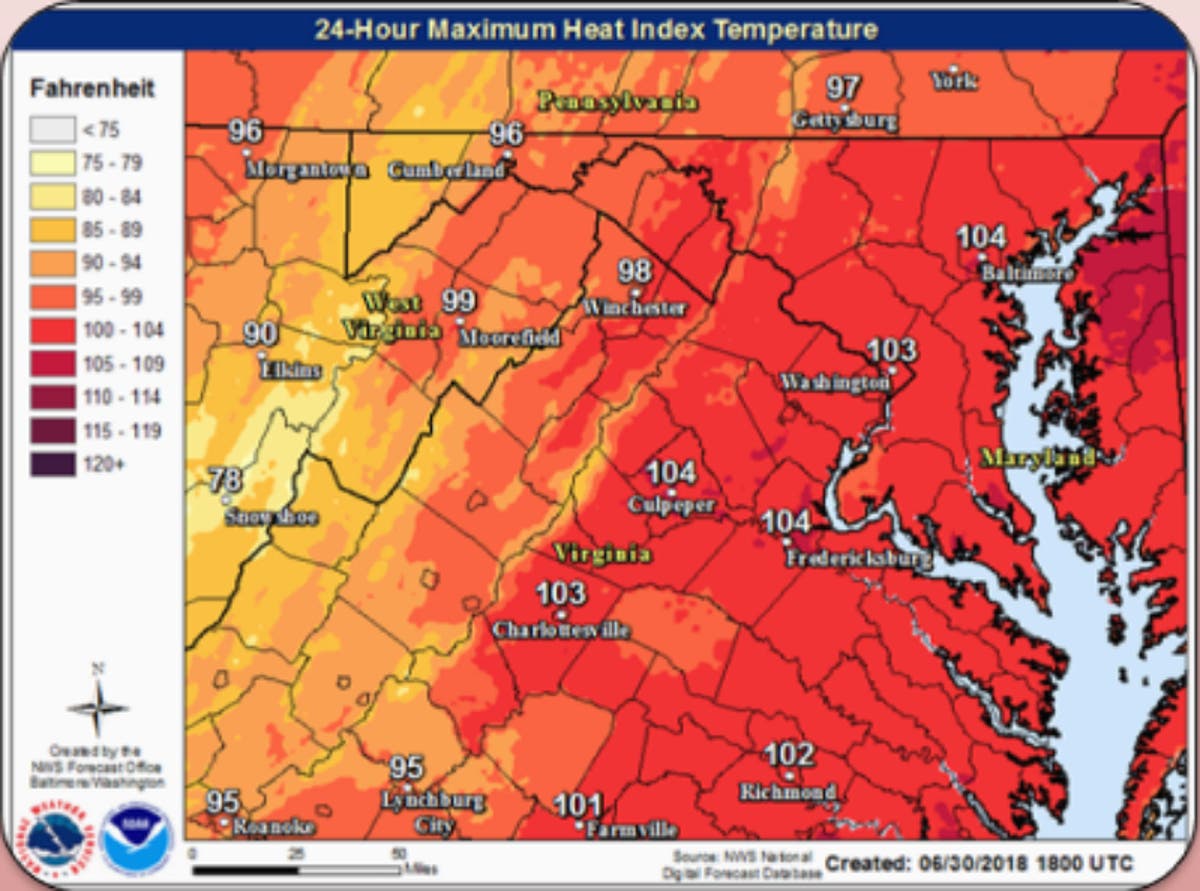
BALTIMORE, MD — The heat is not going away this weekend, according to the forecast. A heat advisory has been issued for Sunday, July 1, spanning much of Maryland.
Temperatures will feel like 105 degrees and "significant heat may continue through at least Monday," the National Weather Service said in a statement.
A heat advisory means that heat and high humidity will combine to create a situation in which heat-related illnesses could occur. To avoid becoming ill, people should reschedule strenuous activities to the early morning or evening; drink water; and wear loose, light-fitting clothing. People working outside should take frequent breaks in shade or air-conditioning.
Find out what's happening in Baltimorefor free with the latest updates from Patch.
The heat advisory is in effect from noon to 8 p.m. on Sunday, July 1 for central Maryland.
Temperatures during the advisory period will be in the mid to upper 90s, weather officials say, but they will feel like 105 degrees. Dewpoints will be near 70.
Find out what's happening in Baltimorefor free with the latest updates from Patch.
The heat advisory applies to Anne Arundel, Baltimore, Calvert, Carroll, Charles, Frederick, Harford, Howard, Montgomery, Prince George's and St. Mary's counties as well as Baltimore City and the District of Columbia.
On the Eastern Shore, the following are under a heat advisory from 8 a.m. to 10 p.m. on Sunday, July 1: Caroline, Cecil, Kent, Queen Anne's and Talbot counties.
Weather officials said that "several days of dangerously hot weather" begins Sunday and may continue into the middle of the week.
In Ocean City, authorities said heat indices will be 100 to 104 degrees Sunday and approximately 105 Monday afternoon. The "feels-like" temperature of 105 degrees could persist for two to five hours Monday afternoon; a heat advisory may be required, weather officials said.
"Anyone planning to be outdoors during the midday and afternoon hours over the weekend into early next week should wear sunscreen, and stay hydrated by drinking plenty of water, and other non-alcoholic beverages," the weather service advised. Older adults and people in poor health are particularly at risk of heat-related illness.
How To Stay Safe In The Heat
Heat stroke, the most serious heat-related illness, can be fatal if not treated immediately.
It occurs when the body's temperature rises rapidly and the sweating mechanism fails, leading to overheating without a way to cool down.
Symptoms include confusion; slurred speech; seizures; hot, dry skin or extreme sweating; altered mental status; very high body temperature; and loss of consciousness/coma. If someone exhibits signs of heat-related illness, move the person to a cool, shaded area and call 911.
Here are several ways to stay safe during the heat advisory period:
- Lighten up. Wear lightweight, light-colored clothing. Light colors reflect away some of the sun's energy. It is also a good idea to wear hats or to use an umbrella.
- Drink water. Carry water or juice with you and drink continuously even if you don't feel thirsty. Avoid alcohol and caffeine, which dehydrate the body. Avoid salt tablets unless directed by a physician.
- Eat small meals and eat more often. Avoid high-protein foods, which increase metabolic heat.
- Slow down. Avoid strenuous activity. If you must do strenuous activity, do it during the coolest part of the day, which is usually in the morning between 4 and 7 a.m.
- Stay inside. If air-conditioning is not available, go to the lowest floor out of the sunshine. Remember that electric fans do not cool; they simply circulate the air.
- Be a good neighbor. During heat waves, check in on elderly residents in your neighborhood and those who do not have air conditioning.
Graphic courtesy of the National Weather Service.
Get more local news delivered straight to your inbox. Sign up for free Patch newsletters and alerts.