Traffic & Transit
7 Freeways To Avoid In MD Suburbs On 'Terrible Traffic Tuesday'
With school starting summer is over for most Marylanders. Here's the roads where congestion will build this fall, according to AAA.


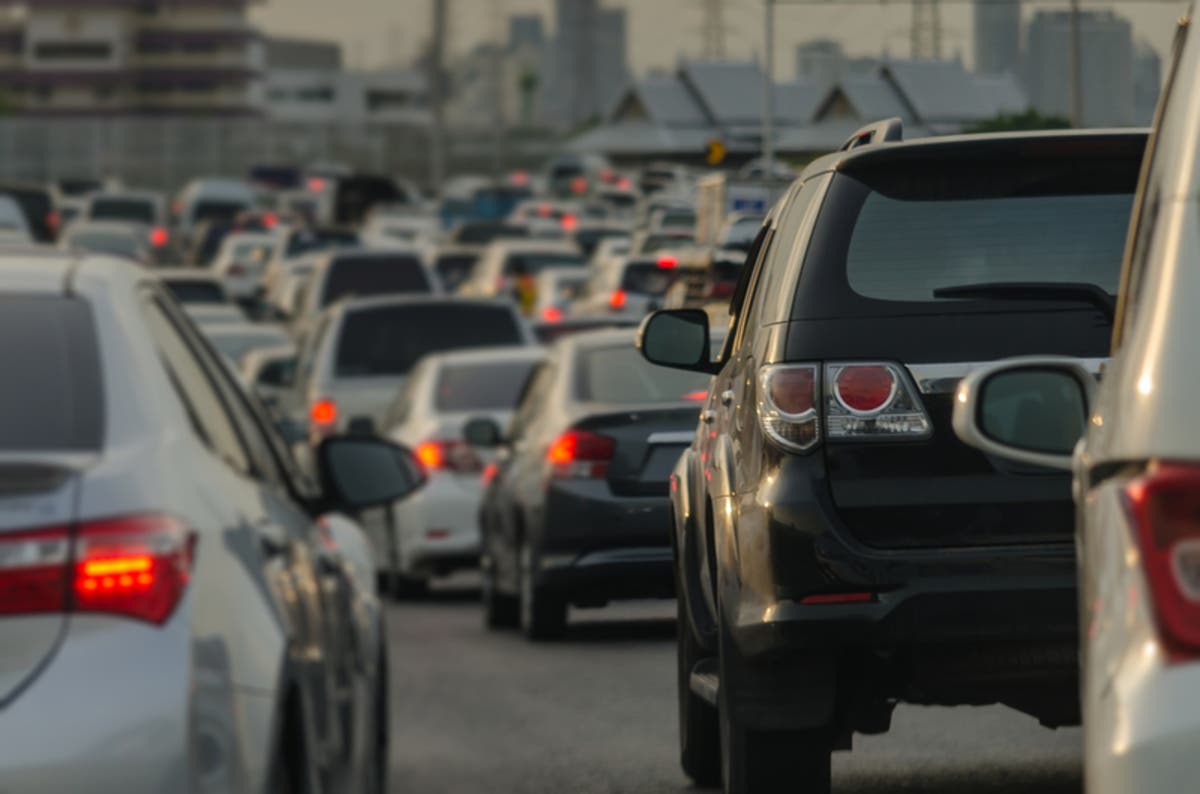
WASHINGTON, DC — For practical purposes, summer is over and traffic gridlock returns to the Washington, DC, region today as more commuters head to work and school. Sept. 4 is the start of school in Maryland and the cold slap of reality after a summer respite as a 15 percent increase in average time wasted sitting in traffic delays kicks in, says AAA Mid-Atlantic.
The day after Labor Day, dubbed “Terrible Traffic Tuesday,” happens as Washington area residents and drivers "once again experience the hell that is Washington metro area traffic," says spokesman John Townsend. Travel times and congestion delays become even worse in October. Interstate 95 in Virginia and Maryland and US-50 in Maryland also see more slowdowns, but these are tied to travelers and late summer or beach traffic, experts say.
Previous years have shown a 20-25 percent increase in traffic delays for the period after Labor Day, the agency says. This holds true, in particular, for seven major freeways in the region every year, according to data from the Center for Advanced Transportation Technology Laboratory at the University of Maryland and the Metropolitan Area Transportation Operations Coordination.
Find out what's happening in Bethesda-Chevy Chasefor free with the latest updates from Patch.
The worst backups typically are on these routes:
- I-270 in Maryland from Capital Beltway (I-495) to I-70
- I-66 from Potomac River (DC) to US-17
- I-395 from the Springfield Interchange or the “Mixing Bowl” (I-495) to the Third Street Tunnel
- Virginia State Route 267 from I-66 to the Leesburg Bypass
- Capital Beltway counterclockwise (Outer Loop)
- Capital Beltway clockwise (Inner Loop)
- I-295 (including I-695) from I-495 to the Third Street Tunnel
(For more news like this, find your local Patch here. If you have an iPhone, click here to get the free Patch iPhone app; download the free Patch Android app here. And like Patch on Facebook!)
Find out what's happening in Bethesda-Chevy Chasefor free with the latest updates from Patch.
“With summer in the rearview mirror, congestion delays will mount and travel times will diminish regionally with each passing day,” Townsend of AAA Mid-Atlantic said in a news release. “Terrible Tuesday signals the return of 60 percent of area commuters driving to work alone at least three days a week, and the return of 1.9 million vehicle trips per workday in Washington, D.C., which tops the list of gridlock-plagued cities.”
The day after Labor Day marks the beginning of an annual surge in traffic overloads on area freeways and arteries with peak traffic congestion coming in October.
Busy freeways can become gridlocked when bad weather or a crash happens during the height of rush hour, said Taran Hutchinson, of MATOC. While schools in Maryland begin after Labor Day — most on Sept. 4 — public schools in Northern Virginia opened a week ago and Washington, D.C.’s schools opened two weeks ago. "Inevitably, with more commuters utilizing the transportation network during morning and afternoon rush, capacity issues are all but certain," Hutchinson said in a press release. "The reality is, we cannot all occupy the same fixed space at the same time."
Starting in September, “up to 20 or 30 percent of morning traffic can be generated by parents driving their children to school,” according to the Safe Routes to School National Partnership. “In 2009, American families drove 30 billion miles and made 6.5 billion vehicle trips to take their children to and from schools, representing 10-14 percent of traffic on the road during the morning commute.”
Image via Shutterstock
Get more local news delivered straight to your inbox. Sign up for free Patch newsletters and alerts.