Politics & Government
Cuba Releases MD Man After 5 Years in Prison
Aid worker Alan Gross of Bethesda, accused of spying in the Communist country, has been freed in a prisoner exchange.


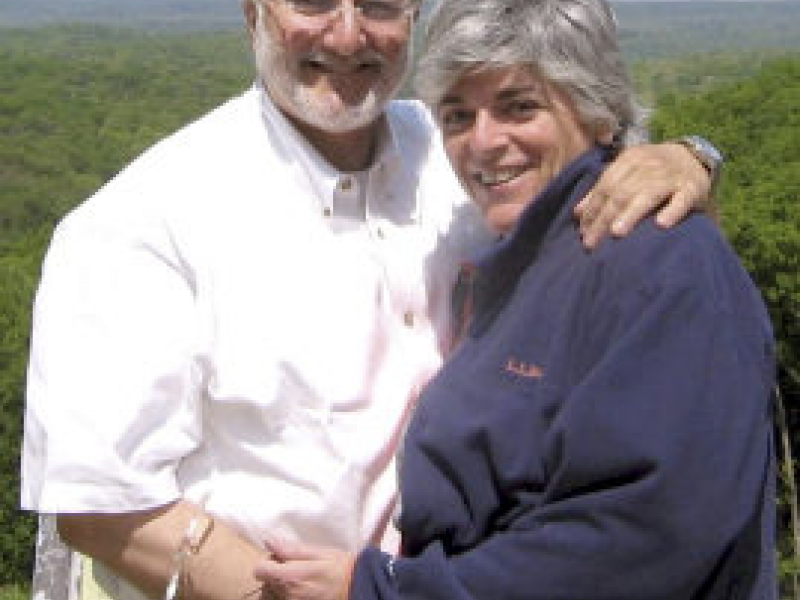
Bethesda resident Alan Gross, an aid worker imprisoned in Cuba since 2009 for allegations of spying, is en route to the United States, according to national media reports.
ABC News reports Gross’ release was arranged in a humanitarian prisoner exchange to be announced by President Obama Wednesday morning at the White House. The agreement was reached following more than a year of secret back channel talks at the highest levels of both governments.
The network says Gross is on a plane flying to Washington, D.C.
Find out what's happening in Bethesda-Chevy Chasefor free with the latest updates from Patch.
Gross’ attorney described him as nearly toothless, barely able to walk because of arthritis and blind in one eye. He has been kept in a small room at a military hospital 24 hours a day with two other Cuban political prisoners.
ABC News says Gross has refused medical and dental care or outside privileges, and had promised a hunger strike if not released by the end of this year.
Find out what's happening in Bethesda-Chevy Chasefor free with the latest updates from Patch.
To secure Gross’ release, ABC News says the United States will release three Cuban agents convicted of spying on anti-Castro groups in Miami.
Gross, 65, has been in prison in Cuba since December 2009 after he went to the island nation as a subcontractor for the United States Agency for International Development (USAID). He was sentenced to 15 years in prison for bringing computer equipment to Cuba illegally, part of a program to bring Internet connectivity to the country’s Jewish population.
In those five years, Gross has lost his mother, the vision in his right eye and 100 pounds, according to a letter to President Barack Obama signed by 300 rabbis earlier this year.
In November 2012, Gross and his wife, Judy Gross, filed a lawsuit against the U.S. government and the contractor, Development Alternatives, based out of Bethesda. On Friday, a federal appeals court in Washington upheld the decision of the district court that the U.S. government was not liable since the incident took place outside the country, Reuters reported.
Background on Time in Cuba
Gross, a contractor for the U.S. Agency for International Development, was arrested in Cuba in December 2009 for distributing Internet and communications materials on behalf of the agency.
In April of this year he staged a brief hunger strike to protest both his imprisonment by Cuba and U.S. inaction on his case, Patch earlier reported. His mother, Evelyn Gross, 92, had persuaded her son to end the campaign.
An Associated Press story carried by NBC News says that Evelyn Gross died of lung cancer in November in Plano, Texas. Her son was not allowed to return for her funeral despite the urging of U.S. officials. Alan Gross called his mother regularly from prison, the AP reports, and he had previously asked to visit his ill mother before she died. Gross promised to return to prison in Cuba if he were allowed to visit his mother, but Cuban officials refused.
Maryland’s Congressional delegation has highlighted the issue over the past five years, from bringing congressional resolutions to the floor to directly speaking with Cuban President Raul Castro. But despite these efforts, Gross remained in prison as his health deteriorated, his case entangled in the larger U.S-Cuba debate.
The difficult nature of the Gross case was highlighted in November 2014 when Sen. Jeff Flake, R-Ariz., and Sen. Tom Udall, D-N.M., visited Cuba and met with Gross. They were unable to secure his release.
Congress Criticizes Aid Program
A U.S. government plan to create a Twitter-like platform in Cuba was dumb and may have endangered Gross’ life and others around the world, Sen. Patrick Leahy, a Vermont Democrat, said at a Congressional hearing in April.
The USAID social media program was intended to popularize a Cuban version of Twitter known as ZunZuneo among youths to spark political conversations and dissent. Its existence from 2010 to 2012 was revealed earlier this year by the Associated Press.
The social media platform was built through secret shell companies and financed through foreign banks, according to the Associated Press. Cuban users were not aware of the tool’s connection to the U.S. government until this spring.
Leahy called the Twitter program “cockamamie” and “dumb in its inception.”
Gross’s lawyer, Scott Gilbert, said USAID’s actions have put his client at greater risk.
“Once Alan was arrested, it is shocking that USAID would imperil his safety even further by running a covert operation in Cuba,” said Gilbert in April 2014. “USAID has made one absurdly bad decision after another. Running this program is contrary to everything we have been told by high-level representatives of the Obama Administration about USAID’s activities in Cuba.”
Gross is serving his fifth year of a 15-year sentence, which, given his age and poor health, Leahy called “basically a death sentence.”
Since his detainment, Gross has lost more than 110 pounds, said Gilbert. He is kept in a small cell with the lights on at all times with two other prisoners for 23 hours a day.
Gross was made aware of the risks he was taking in Cuba before departing on the mission, said Chief of USAID Rajiv Shah in testimony before Congress in April 2014.
»Imprisoned USAID contractor Alan Gross of Bethesda with his wife, Judy Gross. Photo special to Patch
Get more local news delivered straight to your inbox. Sign up for free Patch newsletters and alerts.