Home & Garden
Hurricane Joaquin Made Simple: 5 Things To Know
Joaquin was upgraded to a hurricane Wednesday morning. With forecasts of a U.S. landfall, here are some things to know about Hurricanes.


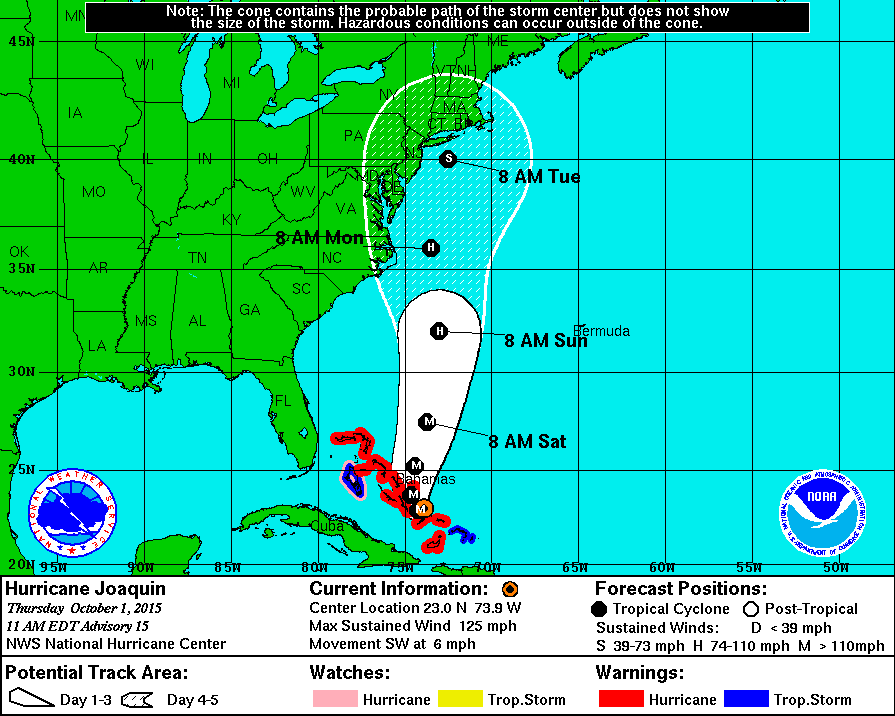
While making its way through The Bahamas, Tropical Storm Joaquin was upgraded to a category-three hurricane Thursday morning by the National Weather Service.
All kinds of predictions have the storm taking all kinds of path, but what we know is the East Coast needs to keep a key eye on this thing.
Right now, forecasts have Joaquin making landfall in the United States as a category-one hurricane on Monday.
Find out what's happening in Bethesda-Chevy Chasefor free with the latest updates from Patch.
With that in mind, here are five things you should know about Joaquin and hurricanes.
How hurricanes are classified.
Find out what's happening in Bethesda-Chevy Chasefor free with the latest updates from Patch.
Hurricanes are graded on what is called the Saffir-Simpson Hurricane Wind Scale. There are five categories, with category-one storms being the weakest and category-five storms being catastrophic. Wednesday morning, Hurricane Joaquin had maximum sustained winds of 75 miles per hour, just one mile per hour over the minimum necessary to be any kind of hurricane but it was expected to strengthen. As of Thursday at 11 a.m., with maximum sustained winds of 125 miles per hour, Joaquin is now considered a category-three hurricane.
Hurricanes can be extremely difficult to predict.
By now, almost every major weather outlet, along with the National Weather Service, has predicted Hurricane Joaquin will make landfall somewhere along the East Coast of the United States. Weather predictions aren’t perfect, though, especially when it comes to hurricanes. Factors affecting the path and strength of a hurricane can vary from straightforward to extremely complicated. For simple storms prediction models are consistent and often accurate, but for complex storms — like Joaquin — prediction models can be all over the place.
If a hurricane doesn’t hit land it can still greatly affect the weather.
Even if predictions that Hurricane Joaquin will touch the East Coast of the United State don’t come true, nearby areas will feel the effects of the storm. “Regardless of the ultimate outcome of Joaquin’s path, portions of the East Coast will still see multiple impacts from the evolving large-scale weather pattern, including flooding rainfall, gusty winds, high surf, beach erosion and some coastal flooding,” reported The Weather Channel.
The Atlantic hurricane season is nearing its end.
This year the season began in July, with tropical storm Ana. Between Ana and Joaquin, there have been eight other named storms. In August, the Weather Channel predicted there would be 10 total named storms this season, which lasts through the end of November. Kate, in 1985, was latest U.S. landfall ever recorded, just a week before Thanksgiving. Coincidentally, the next storm in the 2015 season will be named Kate.
Being prepared can be life-saving.
Hurricanes are no joke. Even a low-strength storm can be life-threatening and cause serious property damage if people aren’t prepared properly. Make a plans before a hurricane hits, know where to go in case of evacuation, gather emergency supplies and know what to do if a hurricane watch or warning is declared for your area. With current forecasts for Joaquin predicting the storm to start moving north on Friday, and make landfall with the United States on Monday, now is the time people should start planning for the storm.
Get more local news delivered straight to your inbox. Sign up for free Patch newsletters and alerts.