Sports
Part III: The Point's Gary Kendall, Baysox Manager
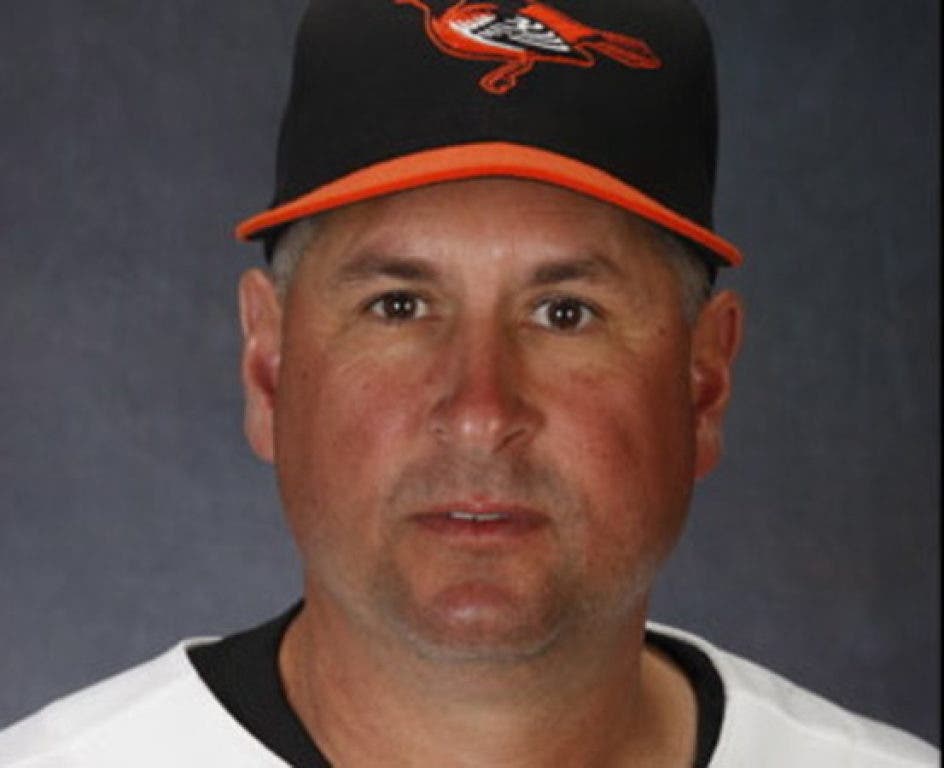
Gary Kendall, who played ball on Sparrows Point's state finalist squad in 1981, has been a coach in the Orioles' system for 12 years. Currently, he's led the Double-A Bowie Baysox to 57-48 record.
Patch: What are the secrets to evaluating players?
GK: It's what they have inside of them that's the most important thing. As far as evaluatiing players and talent, I don't know if I'm the best or the worst.
I just try to be honest in what I see. You try to teach guys, and when you're coaching them on the field, you're telling them what the scouts expect to see. Because I've scouted baseball players for numerous years.
Find out what's happening in Dundalkfor free with the latest updates from Patch.
You're trying to tell them what the scouts are looking at. A lot of times, you go out on the field and a player is playing for the Bowie Baysox, which, by extension, is for the Baltimore Orioles.
So they're sitting in the stands scouting him. You don't want to give a bad showing to those guys, which is why you want to hustle after every ball and play the game the right way.
Find out what's happening in Dundalkfor free with the latest updates from Patch.
You want to show that you know where to throw the ball, because you're playing for the right to wear a jersey every time you go out there. You're playing for your job every time that you go out there.
Patch: Which prospects are you high on?
GK: As far as prospects, that changes a lot. There are guys who are favored in the organization because of their talent level. We have a center fielder, Xavier Avery, who is a good-looking prospect.
I'm not saying anything about his prospect level or whether I think that he's going to be a super star. Who knows? That depends on his development. He can run and he's got some instincts for the game.
Xavier's on the radar for the Orioles. So is our first baseman, Joe Mahoney, who is a power-hitting first baseman who has been hurt most of the year, but now, we've got him back.
Those two guys are guys that certainly have drawn the attention of our organization. That doesn't mean that other ballplayers on our team can't turn themselves into prospects.
Patch: How difficult is it to demote a player?
GK: It's the worst part of the job and the worst part of the game and the hardest thing to do in baseball. To send a player down or to demote a player, you know, sometimes a player needs it.
Sometimes, it's best for the player. Nobody wants to get sent down, but it's not the end of the world. The hardest thing is to release a player. It's very hard. It's the worst day.
You know that unless there's an injury maybe at another level that at the end of that ballgame, when I call my farm director, that I may have to release a player.
When you release a ballplayer, you not only release that player, but you release his family and all that he brings to the table. A lot of times, I will get to meet the wives, the girlfriends, the families.
I've really gotten to know them. That's a very hard thing. You're talking about 17 or 18 years of everything that they've ever dreamed of, and it's coming to an end with this organization.
What I always urge is that if a player wants to continue playing, that he maintains that desire to keep playing. One thing that's available is these independent leagues.
We've placed kids into those independent leagues, and some of them have gone on to other opportunities because we've done that. But that's still very emotional. I usually have my coaching staff in there with me.
So, if you put yourself in their shoes, you know, then we can get pretty emotional because we care deeply for the kid. Nobody likes failure and nobody likes to hear that it's the end of the road.
If it's a guy who is not throwing strikes or the guy that's not hitting, there's usually been a lot of time spent with that player to try to get him to turn it around. So there's a trust bond There.
It's something that I had to do a lot at the lower level, but thank God, I have not had to do it this year. I had to do it a lot at the lower levels at Aberdeen and Bluefield. But it's never personal or a bitter thing.
It's never that they're a flop. We appreciate everything that they've put into it and the hours and time and effort. If you don't have any sensitivity then you're in the wrong business.
Patch: Overall, how have you enjoyed being a member of the Baltimore Orioles' organization?
GK: Well, it's been a lot of fun being in this organization. I think that some things are going to change, that we have the right people in place, and that some players are on their way.
I like to be a part of that, but you never know what's going to happen. You never know what's going to happen tomorrow, so all that you can do is to be thankful for what you have today.
You just keep working hard and you keep working with the players, but we're very fortunate with what the Baltimore Orioles have. If you look at our roster, our organization has developed a lot of players. The future looks bright.