Community Corner
Live vs. Artificial Christmas Trees: Does it Matter to the Environment?
The debate over whether it is more environmentally-friendly to use a live Christmas tree rather than an artificial tree is not as simple as it it would seem.
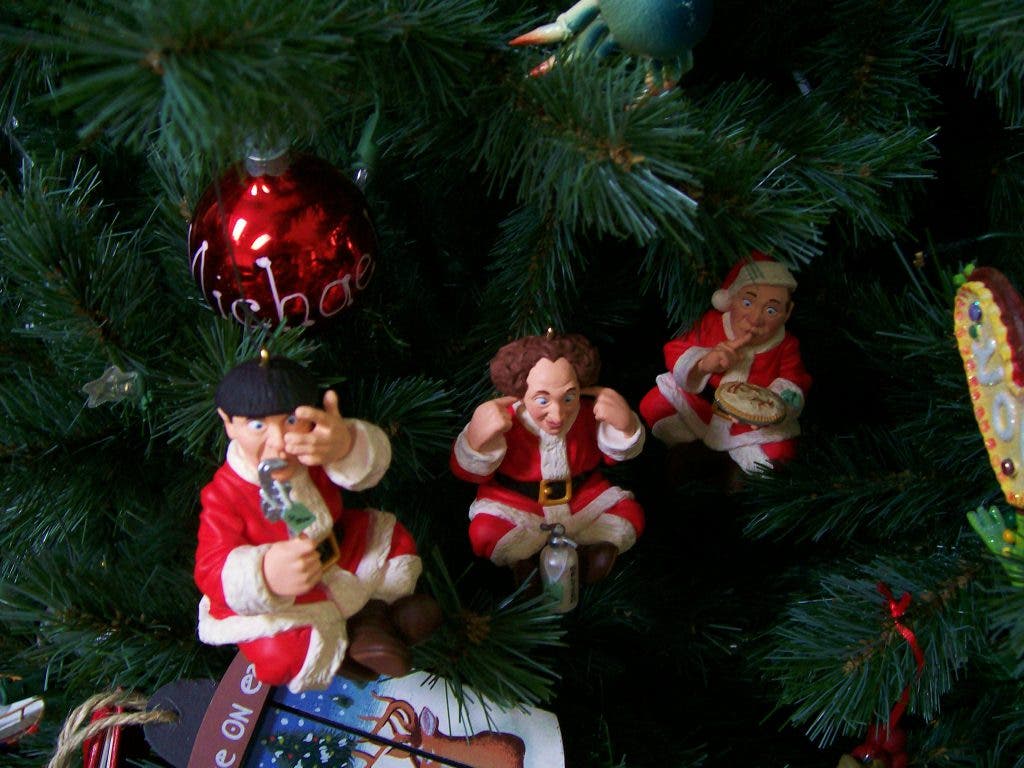


Two weeks ago, I thought I had a great idea for a seasonal article. I decided I would weigh in on the real versus artificial Christmas tree debate that occurs every year. As I researched the topic, I quickly came to the conclusion that finding a clear cut answer would not be an easy task.
The information that I initially read from the Maryland Christmas Tree Association concerning artificial trees was negative, which I expected since this is an association of Christmas tree growers and not manufacturers. Their main reasons for not buying an artificial tree are that most of the artificial trees sold in this country are manufactured in China, using less than eco-friendly PVC plastic and traveling a great distance before arriving at retail outlets in this country. While I agree with their rationale, I wondered if growing Christmas trees on farms in this country had any negative effects on the environment.
According to the National Christmas Tree Association Inc., the top tree-producing states are Oregon, North Carolina, Michigan, Pennsylvania, Wisconsin and Washington. That means that many farm-grown Christmas trees have to travel quite a distance to reach the market.
Find out what's happening in Edgewater-Davidsonvillefor free with the latest updates from Patch.
Consider, too, that it takes the average Christmas tree seven years of growing time before it is ready for harvest. That is seven years of fertilizing, pruning and applying pesticides or herbicides. The trees then need to be harvested, bundled and trucked to markets around the country.
What impact does this growing and delivery operation have upon the environment? Are we to assume that producing live trees is better for the environment than manufacturing and distributing artificial trees?
Find out what's happening in Edgewater-Davidsonvillefor free with the latest updates from Patch.
I found what appears to be an objective, third party evaluation of using real versus artificial Christmas trees. The American Christmas Tree Association, which represents artificial and live tree retailers, sponsored a study that concluded producing both types of trees has about the same impact on the environment.
The study took into account a number of factors such as how long an artificial tree is owned, disposal methods for trees, and how far the trees travel to market ultimately influences the effects that real and artificial trees have upon the environment.
The study concludes that the choice between buying a real or artificial tree comes down to a matter of personal preference and not whether one type of tree is better for the environment than the other.
Personally, I enjoyed having a live Christmas tree in our home. For years our family would make a trip to a tree farm, cut a tree, and bring it home where we would set up the tree in the center of our train garden. Even though the kids grew up and are on their own, I still put up the Christmas tree in the center of the train garden with one exception—the tree is now artificial.
The decision to use an artificial tree in our home had nothing to do with convenience, saving money or environmental awareness. We use an artificial tree because I am allergic to the mold spores that live on trees and any other live greens that are used for decorating indoors. While I miss the experience of going to the farm each year to cut a tree and the scent of a fresh Douglas fir in the house, I also value not being sick at Christmas.
There is no clear winner in the debate over using a live Christmas tree as opposed to an artificial tree.