Community Corner
School Days from Times Gone By
A look back at the history of schools in Essex-Middle River, which dates back 160 years.
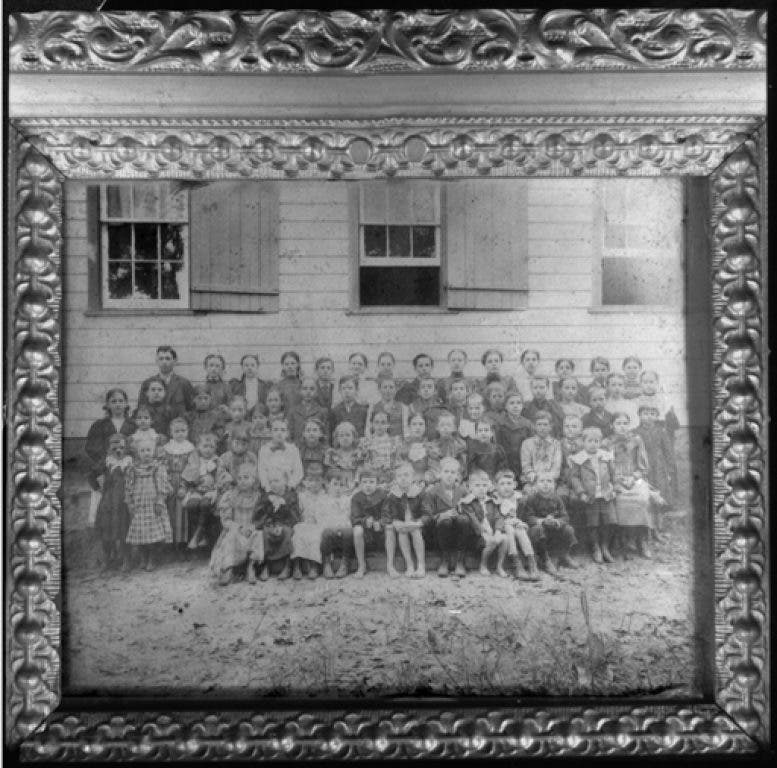

The town of Essex was founded in 1909. By 1913 the population had grown sufficiently enough to warrant a school for the education of its youth.
The very first schoolhouse in Essex was opened in January of that year in the former offices of the Taylor Land Co. located at the corner of Taylor and Eastern avenues.
Twenty-eight students were enrolled. In 1915, the school was moved into the basement of the Essex Methodist Church. The school moved again in 1918 into a Bungalow located on Dorsey Avenue (which now houses the Essex Senior Center). As a side note, in the 1950’s the Dorsey Avenue building became the site of the first campus of the Essex Community College.
Find out what's happening in Essex-Middle Riverfor free with the latest updates from Patch.
In 1925, the Essex School was moved to its present location on Mace Avenue That brick building served until the late 1990’s when it was replaced with a more modern facility. The doorway arch to the school was preserved and stands as a monument to the community.
Our Lady of Mount Carmel Church also saw the need for early education, and began an elementary school at the parish in the 1930’s.
Find out what's happening in Essex-Middle Riverfor free with the latest updates from Patch.
Both of these schools continue a fine tradition or educating our youth even today.
Even with their proud histories, these institutions were not the first locations of education in what was to become the Essex-Middle River community. That distinction would most likely go to the Back River School located on the Back River Neck peninsula.
In 1850, a civil engineer by the name of J. C. Sydney was commissioned to draw a map of Baltimore City and Baltimore County. His map clearly delineates the location of the Back River School at the site of the present day Cheery Day Nursery.
A two-roomed building, the school taught grades 1 thru 7. Students would in some cases walk up to 5 miles to attend classes. Water was retrieved from a spring located behind the school, and students were charged with gathering wood used to heat the building in the wintertime. Two privies were located outside. Inkberries were crushed for ink and paper was sparingly allocated. The building served until 1920, when it was destroyed by fire.
Stories of how the fire began vary.
In one case, it is said that a young man started the fire in retaliation for bad grades. Another tale speaks of a boy they called Indian who started the fire on one of the doors to gain entrance to retrieve his coat and books. Unfortunately, the fire went out of control and the school was lost.
An exact duplicate of the original school was constructed on the same site. One fine morning in 1923, during an outdoor activity in which the American Flag was honored, one student by the name of Evelyn Nadolny wondered why the schoolhouse did not have a flagpole. At that time, the students held the flag in their hands. Evelyn took her concerns home to her father who just happened to work at the Alex Brown property near present day Essex Skypark.
Mr. Nadolny received permission to cut down a tree and have it shaped into a flagpole that was installed in front of the schoolhouse.
The 1920 building served until population increases demanded that a new larger school be built. In 1943, the new modern brick Back River Elementary School was constructed a few hundred feet south of the two-room schoolhouse. The old flagpole was moved to a place in front of the new building.
The old schoolhouse was used from time to time as an annex to the new school and sadly, as a sign of the times a segregated school for African Americans in the area.
In the 1960’s, the old schoolhouse was sold to a private owner and converted into the Cheery Day Nursery, which it remains to this day.
The new brick schoolhouse served until 1983 when the declining enrollment forced the county to close it. The interior walls were removed and the building was used as a storage warehouse for voting machines, with a small portion reserved for recreational purposes. Eventually the Board of Elections switched to a new computerized voting system and the warehouse was no longer needed.
At that time, the Department of Recreation and Parks assumed control of the entire building for recreation. Unfortunately, the building was allowed to become in such disrepair that it was deemed it would be more cost efficient to demolish the building and construct a new metal Community Center at the site. The school that had served the community for more than 130 years was gone forever.
Next week we will look at two more religious institutions that have been in our community for more than 100 years. Keep reading Patch.com