Health & Fitness
Love, Life and Death in Munch's Artwork
A visit to Munch artwork exhibit and tribute at the National Gallery of Art. "The Scream", "Madonna" and "Vampire" are on display in this expressionistic and symbolic exhibit.

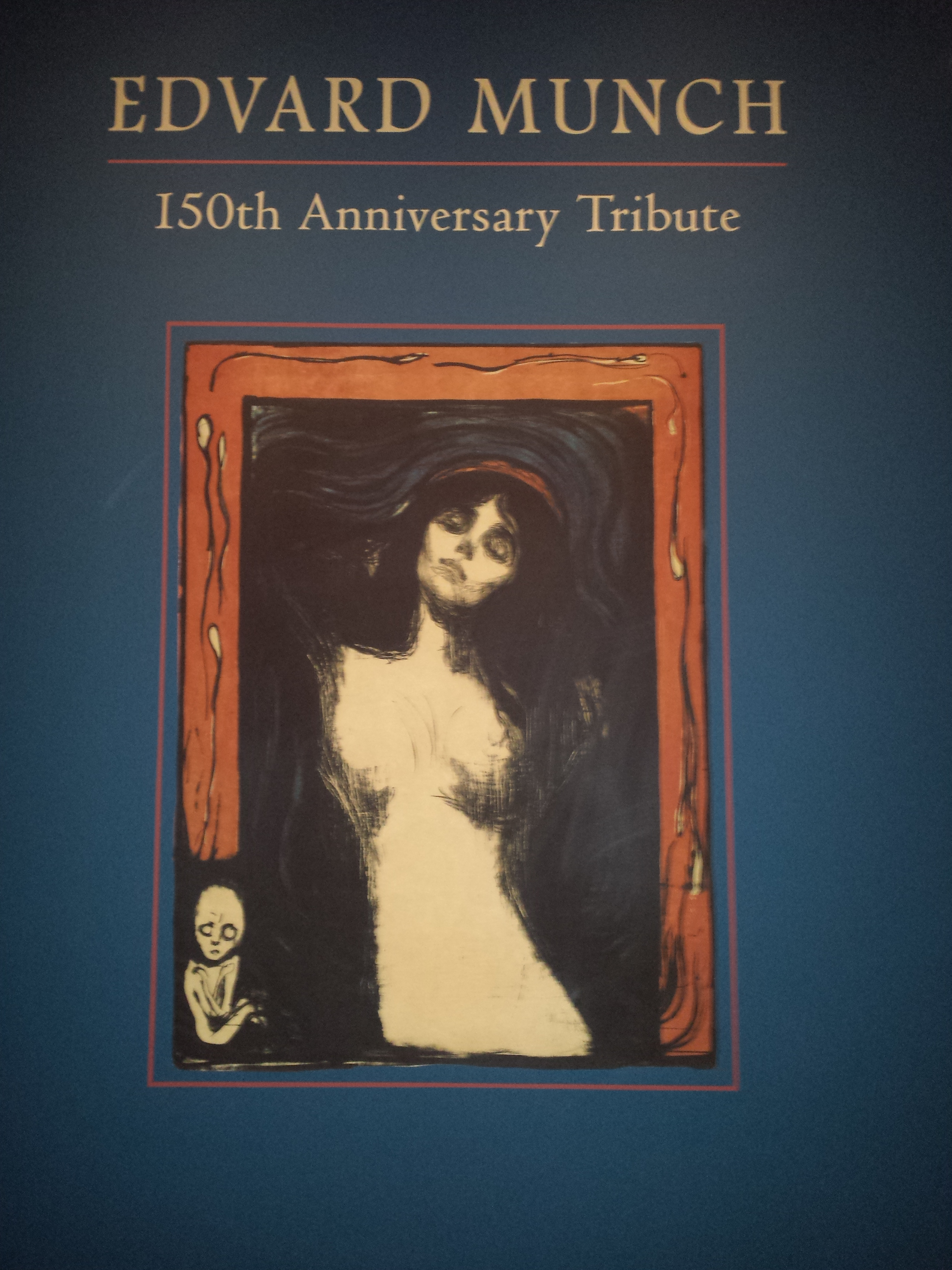
When entering the gallery room at the West Ground floor of the National Gallery of Art, Washington, D.C. to view the Norwegian Artist Edvard Munch's (1863–1944) exhibit “A 150th Anniversary Tribute”, the eyes quickly search for “The Scream”. “The Scream” is the artwork that Munch is most famous for. Upon viewing the exhibit, one feels that scream, that very strong and loud visual scream that made the world stop and ponder, what happened? What happened to Munch to make him scream so loud. Well, many things happened, his childhood happened, his life happened, his gain and loss of love happened. Munch had said this in regards to “The Scream”: "for several years I was almost mad… You know my picture, 'The Scream?' I was stretched to the limit—nature was screaming in my blood… After that I gave up hope ever of being able to love again”. So, one can see and start feeling that the exhibit is not only screaming visually, it has passion, love, sadness (a good amount of it), wisdom, grief (a good amount of it), life, spirituality and last but not least death. The exhibit consists of 20 Prints made from lithograph and woodcuts, some in color and other in black and white. The themes that Munch's touches are always deep and strong (a bit too strong for the faint-hearted). One walks in the room and the first print you see is titled “Puberty” followed by “The Sick Child” then “Vampire” which was originally named “Love and Pain” then “The Kiss” and then comes a huge a print of “Madonna” which is the star of the show.
This Munch exhibit awakens emotions and feelings of utmost intensity such as desire, love, jealousy, sadness, anguish, fear, anger, youth, aging and one slowly starts entering the world of Munch. This is Munch's genius that he can through his artwork transmit these feelings intensely and without embellishment to the viewer within seconds. Hence, one is transported to Munch's world of expression and feelings through his strong use of symbolism. One ponders upon seeing “The Sick Child” (Dry-point on Cream Paper made in 1894) what happened in this piece, it looks so sad. In this etching, Munch represents the tragic death of his beloved older sister Sophie to tuberculosis at the age of 15. The death of his sister and also mother from whom he got his artistic talent had a huge effect on Munch's melancholic life and artwork.
I also find myself drawn to his “Madonna” a beautiful almost dream like naked woman with a suggestive halo around the head. “Madonna” combines the world of eroticism and spirituality in almost a controversial, mysterious and hunting way. It is intriguing since the woman is surrounded by a sperm like border and a skeletal embryo with the look of utmost fear in his eyes. All these details and symbolism make this piece ghostly and draws in a connection to love, life and death.
Find out what's happening in Gaithersburgfor free with the latest updates from Patch.
I look at Munch's work and can't help but feel bad for him, then later and without even noticing the feeling is transmitted to falling in love with his work. And with this, one starts feeling the power of Munch that he manages to draw you in with his choice of subject matter. He is skillful in making you look carefully at his interesting work that even after you leave the exhibit, you still talk and create a conversation about the artwork you saw. Now that is effective!
A must see for those who are into printmaking, expressionism, symbolism, and matters of the heart artwork.
Find out what's happening in Gaithersburgfor free with the latest updates from Patch.
The exhibit “Edvard Munch: A 150th Anniversary Tribute” is till July 28, 2013 at the National Gallery of Art, Washington DC, West Building Ground Floor.
Vian Shamounki Borchert is an artist and art instructor. To know more about her work visit:
Facebook: Vian Borchert Fine Arts
Twitter: ViansArtCorner