Health & Fitness
A Muslim woman scientist gives advice to young Muslim girls about careers in STEM
Muslim women who wear head coverings are often perceived as uneducated and backward. This is far from the truth. Dr. Shanaz Tejani-Butt talks about her faith and her career in science.
With Islam in the spotlight everywhere many non-Muslims have the notion that it is a religion which advocates oppression of women. A Muslim woman seen with her head covered is considered to be uneducated and backward. This is nothing but a myth. It is true that many Muslim countries do not guarantee the rights that Prophet Muhammad (peace be upon him) conferred upon women more than fourteen hundred years ago, but one cannot attribute the wrong actions of the followers to the religion itself.
Muslim women have contributed their expertise in the field of science in the past as well as in the present. Here in the USA there are outstanding Muslim women who have been successful in various disciplines of science. One such woman is Dr. Shanaz Tejani-Butt, Professor of Pharmacology and Toxicology, Associate Dean for the College of Graduate Studies and Associate Director of Research at the University of the Sciences in Philadelphia. The following is a transcript of an interview with Dr. Tejani-Butt.
Shahina Bashir: How did you get interested in the pursuit of a career in science?
Find out what's happening in Germantownfor free with the latest updates from Patch.
Dr. Shanaz Tejani-Butt: I attended all-girls English Convent School in Bombay and in 9th grade I was moved into an all science and math curriculum. When I completed my high school, I was allowed to skip the first year of college because of my grades. I completed my BS degree with a double major in Microbiology and Chemistry. When I completed my MS degree in Organic Chemistry, the University of Bombay awarded me with a Gold Medal and other awards. I came to USA on a scholarship and graduated with a PhD degree in Medicinal Chemistry from the Medical College of Virginia.
Shahina Bashir: There are many scientists who believe that science and religion are incompatible and many who hold such beliefs turn to atheism or agnosticism. What is your opinion about compatibility between Islam and science?
Find out what's happening in Germantownfor free with the latest updates from Patch.
Dr. Shanaz Tejani-Butt: The topics of religion and science have always interested me. As a neuroscientist, I am always questioning the role of the brain in religious thought, beliefs and practices. For example, are there specific parts of the brain responsible for religious thoughts? Is there a religious neurochemical in the brain? Is religion a part of our genetic makeup? Is religion an inherited trait? Will scientists ever isolate the religion gene? These are difficult questions to answer or research, and because we have not yet found the answers, it does not mean that religion is false as some scientists would like us to believe.
I believe that science and religion stem from a single source of Truth. Since it is not possible for something to be scientifically false and religiously true or scientifically true and religiously false, I do not perceive any contradictions between science and religion. Those that exist appear to be man-made and stem from our ignorance, arrogance, political agendas and deep rooted cultures and traditions. We take pride in our higher intelligence and reasoning powers. But we forget that these abilities and powers were not discovered or invented by us, but were given to us by our creator; just as we were given night and day, clouds and rain, mountains and trees and the air we breathe and water we drink.
While different camps will continue to debate the relationship between science and religion, it is not necessary to choose one camp or the other. As Justice Oliver W. Holmes Jr. said, “Science makes major contributions to minor needs. Religion, however works on the things that matter the most.”Thus we should use scientific knowledge to complement our religious wisdom and in this way, better our lives, both morally and spiritually.
Shahina Bashir: Can you give an example from your field of research how it has strengthened your belief in God?
Dr. Shanaz Tejani-Butt: One area that strengthens belief is the link between prayer and healing. We all have experienced how closely science and religion align themselves when it comes to faith and healing. It is God rather than science which provides us with the wonderment that follows the birth of a new born baby. The Pew foundation released a study that concluded that spiritual people are twice as happy as non-spiritual people. High religiosity also predicts a lower risk of depression, lower suicide rates, lower risk of substance abuse, higher self-esteem, and more satisfaction with life.
Shahina Bashir: You are the current president of the Ahmadi Women Science Association (AWSA). What was the idea behind creating this association? What is the goal of AWSA?
Dr. Shanaz Tejani-Butt: I was fortunate to be elected as the founding president of the Ahmadi Women Science Association (AWSA). Our overarching goal is to build awareness and mentor interested women in choosing appropriate science subjects at different levels of their education and to pursue a career in the sciences. AWSA also aims to support talented women scientists to become leaders in their fields of specialization and train women towards new areas of innovative research, development and technology.
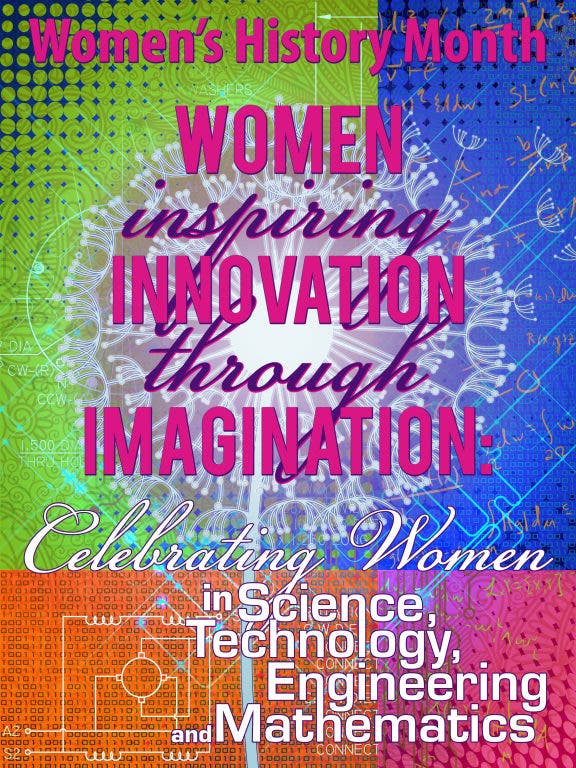
Shahina Bashir: As this is the Women’s History Month and the theme is: Women Inspiring Innovation Through Imagination: Celebrating Women in Science, Technology, Engineering and Mathematics, what advice would you give our young girls to encourage them in the field of science, technology, engineering, and mathematics?
Dr. Shanaz Tejani-Butt: There are several misconceptions about the skills and aptitude needed for STEM including gender and workplace biases and a growing concern as to why so few women go on to pursue a career in STEM.
My advice is to pursue a career in STEM if you have the aptitude for it. Find out if you like these fields and whether you are good at them. Use your time wisely in high school and college to explore the areas that you can excel in and make a lifetime career out of what you enjoy and are good at.
Develop a strong mentoring and networking group with other women in similar situation so that you can support and learn from one another. Also, seek out a few mentors who can provide you with guidance and advice. Your mentor does not have to be a faculty member. A graduate student, a senior undergraduate student, or even a family friend, are all good options. If you want to find out whether a career in STEM is the right choice for you, then get involved in research projects early on in your career. Seek out opportunities during the semester or even in the summer with professors or internships in industry. When you reach your senior year, decide if you want to get a job, or do an internship to gain more experience or pursue further studies through graduate school. No matter what you decide, always remain a lifelong learner and a useful contributor to the wellbeing of the society.
Shahina Bashir: Thank you so much Dr. Tejani-Butt for taking the time out to share your thoughts.
Dr. Shanaz Tejani-Butt: Thank you.