Schools
Good Characters Fill Oakwood Elementary
The school is the only one in Maryland among 50 finalists for the National School of Character Award.
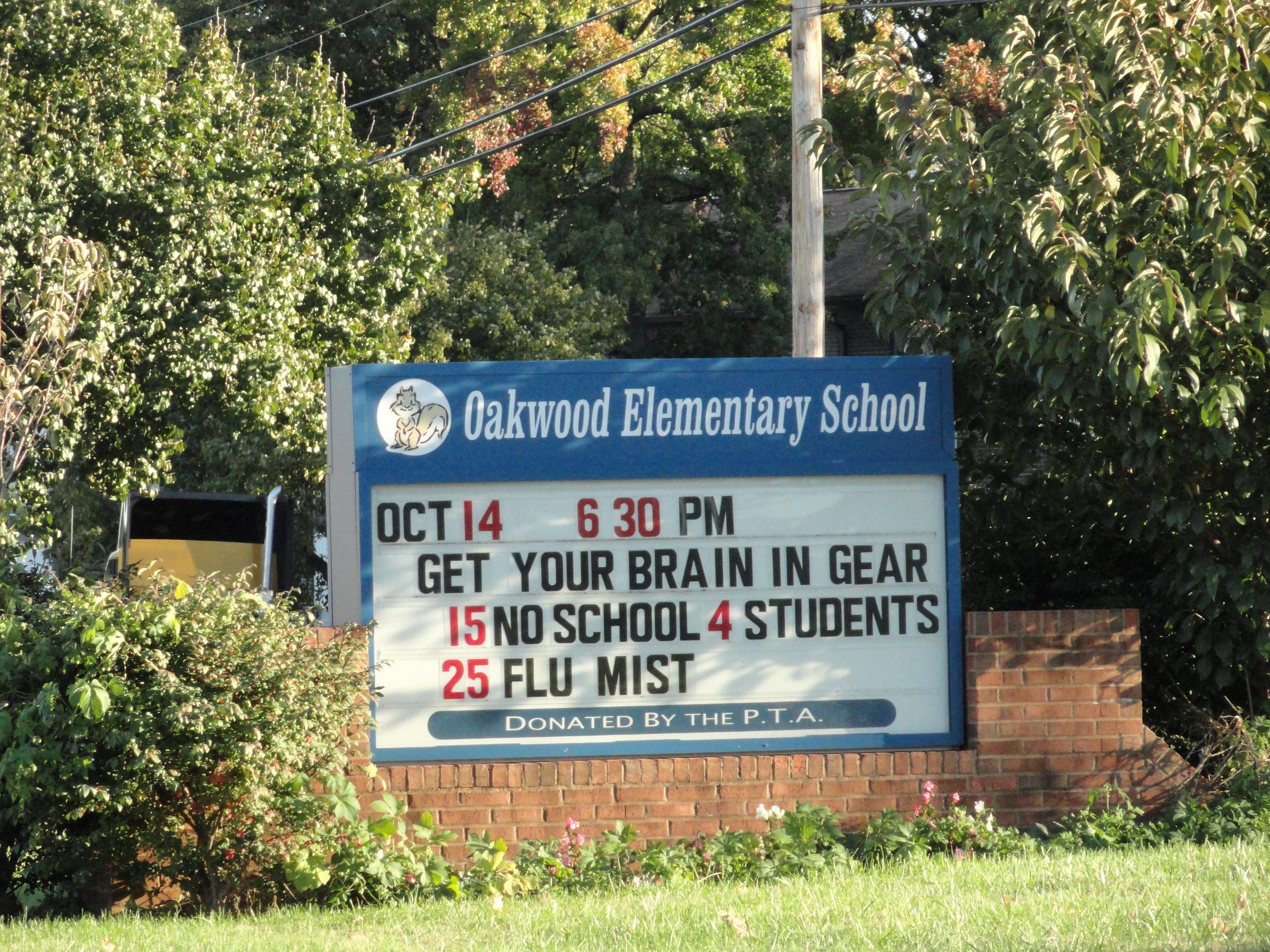


Character education is at the heart of everything at .
Students recite the Oakwood Pledge to be better in their studies, respectful to their teachers and classmates and show good character traits at all times.
Students can nominate their peers who have demonstrated what they believe is evidence of good character by filling out a paper fish, which are posted in the hall.
Find out what's happening in Glen Burniefor free with the latest updates from Patch.
Teachers work with students on a positive attribute each month—March's is courage, for example—and whenever a student shows qualities consistent with that attribute, the teacher posts his or her name on a paper acorn.
The school does numerous acts of charity throughout the year, including collecting pajamas for Kami's Jammies, a nonprofit that donates pajamas to sick children in the hospital, as well as collecting ink cartridges and cell phones for recycling during the science fair. Next month, students will make sandwiches for Elizabeth's House in Laurel, which helps feed the needy.
Find out what's happening in Glen Burniefor free with the latest updates from Patch.
All these efforts and activities are reasons why the school was named as a finalist for the National School of Character Award from the Character Education Partnership. The only Maryland school, Oakwood already has the state designation and is one of 50 finalists. The winner will be honored at the National Forum on Character Education in October.
"I was thrilled. It was a shock. I would have been thrilled with just the state recognition," said guidance counselor Carolyn Hill, who wrote the application for the award and helps with activities for how teachers can implement character education into their lessons.
"We believe it's important to have kids who develop into good people. It was a shock to be named as a finalist for nationals. Whether we win or not, we'll get feedback we can use to improve our character education. We welcome that," she said.
Oakwood already does a lot in that effort, which has not gone unnoticed by newcomers to the school, including interim Principal Robert Kanach, who took over for Principal Nancy Knouse after her retirement Feb. 1.
Kanach said he saw evidence of character education on his first day when students came to hug him and say they were glad he would be their principal. As an interim principal veteran, serving stints at other schools, he said this was different because students sometimes try to push their boundaries with a new educator.
"These kids were so welcoming to me," he said. "Here, they say, 'Welcome, Mr. Kanach.' A couple hugged me."
A couple days ago, Kanach said he saw from his office a couple students starting to argue on the playground and thought he would have to intervene. But he didn't because another student stepped in and calmed everyone down.
Kanach said he also believes the character education will help with academics because students will be able to focus better if they're not worried about their classmates exhibiting poor behavior.
The effort already has had an impact on disciplinary referrals to the principal's office, said Hall, who has worked at Oakwood since 2005 and began the program with Knouse not long after her arrival.
In the 2003-2004 school year, Oakwood had 175 referrals to the principal's office, Hall said. In the 2008-2009 school year, there were 18 referrals.
"It's been a journey. It's not something you can start overnight. We had a committee. It's in our school improvement plan," she said. "The students, for the most part, are kind to each other. They look for the positive. It's very purposeful. It's infused in the day."
That means in the lessons, too. If students read a story in which a character exhibits good behavior, they discuss why the behavior should be emulated, for example, Hall said.
Teachers and students alike are on board with the program.
"The children are very nice to each other and very caring towards each other. They feel it's very natural to help someone in their academic work," said Martha Fox, who has taught fourth grade at Oakwood for three years. "I guess the point I'm trying to make is they do these things without being told. They worry about each other. When we have incidents, which isn't often, they work it out and don't carry grudges."
Kindergarten teacher Amanda Strevig, whose son is in prekindergarten at the school, said she has seen a difference in both her son and students. They seem to love nominating their peers for fish the best, she said.
"Instead of tattling on each other, they say, 'Can I have a fish?'" she said. "The younger kids have really embraced it."
And not just the youngest students, either. Kaylee Downs, a fourth-grader, said she nominated her friend for a fish without her knowledge when they both helped clean up a broken box of crayons another student spilled and left discarded last month. Her friend, in turn, nominated her for a fish without her knowledge.
Nominating and receiving fish provoke different reactions, Kaylee said.
"When you write one, you have to do it like you want to do it," she said. "When you get one, you hear your name on the announcements, and you're not expecting it."
Not only do students hear their name and good deed on the announcements, but the class with the most fish each month gets an opportunity to perform another good deed, such as reading to younger students, Hall said.
Students who receive acorns get coupons from Chik-fil-A—representatives from the restaurant provide the character traits the teachers look for in students each month.
But for some students, just the recognition seems to be enough.
"I think it's really good how we do the acorns and fishies," Kaylee said. "The fishies show how everyone can be kind. The acorns have a different word and how we can show it once we've learned it."