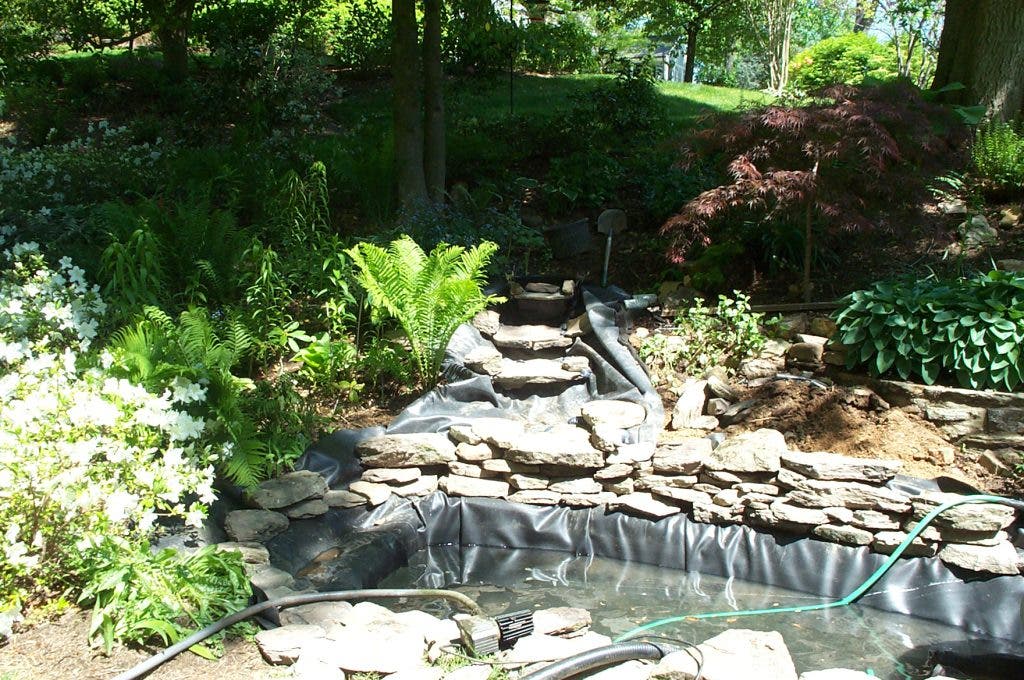
Designing and installing a pond or water feature can be one of the most exciting and rewarding undertakings that a gardener can accomplish. The sight and sound of water in the garden makes a garden complete, and can give you years of enjoyment. It also can provide a habitat for birds and other wildlife. But choosing the proper location, determining the necessary amount of sunlight, and proper care and maintenance can impact how enjoyable that experience can be and help you avoid problems in the future.
Sunlight
Find out what's happening in Hunt Valley-Cockeysvillefor free with the latest updates from Patch.
If you want a pond that bustles with the activity of fish, frogs, and lots of colorful water plants, you need at least six hours of sunlight a day. I have a pond located in part shade under a large tree and one in full sun, and the difference is like night and day. The one in full sun has blooming water lilies and lotus flowers and many frogs and fish. The one in part shade has water lilies that struggle to survive and never flowers, but is full of frogs. I still enjoy the shady pond, but it is much more quiet than the sunny lively one.
Find out what's happening in Hunt Valley-Cockeysvillefor free with the latest updates from Patch.
Location
You want to be able to enjoy the pond from your house, either by viewing it from your windows, or stepping out only a short distance. I can view my sunny pond from my first floor bedroom window to see what is blooming, but I have to walk a short distance to my shady one. I have set a bench by each pond so that I can sit and enjoy the sounds of the waterfall and croaking frogs.
Maintenance and Care
I have a pump and re-circulating pump in each pond to keep them clean and aerated. Each pump has a pre-filter attached to the pump that I pull out of the pond and rinse clean with a hose once a week, except during winter. I pull out the leaves and debris with a net when I can, but a lot just sink to the bottom and create an environment for the plants and animals that live there. To avoid having too many leaves fall into the pond in the fall, I place netting over the top of the rebar spanning the pond so that the net doesn't sag into the pond with the weight of the leaf litter. Once that layer builds up too much on the bottom, I drain and clean the pond, probably once every five years. I don't have to feed the fish as they eat the algae and tadpoles that emerge in the spring.
Landscaping
What you plant around the pond affects the pond significantly. When I installed my shady pond 20 years ago, it was in a flat open area. I planted a weeping beech next to it as I envisioned a tree gently arching over the pond, and giving it some shade. The weeping beech has matured into a 30 to 40 foot tree that does arch over the water, but almost completely shades it. I recommend that you go with smaller trees such as Japanese Maples that grow slowly and keep to a manageable size.
I placed potted water plants, like marsh marigold in the pond to give the wildlife some shelter. The fish nibble on the roots and use them as nurseries for their young to hide in. Water lilies and water lotus are potted up at the nursery and you can just drop them in the pond to sink to the bottom. The pads of the water lilies will grow and stretch up to rest on the surface of the water. If your pond has a shelf built underneath the water you can set some colorful marginal water plants on it such as dramatic papyrus or iris.