

After a long, cold winter, I eagerly await the first signs of spring in my garden.
I don't normally think about the garden blooming during the winter but I did find several plants showing signs of life despite the patches of snow on the ground. The foliage of daffodils and miniature iris is poking up through the mulch, and the wooly catkins of the pussy willow have started to peep out. It seems these harbingers of spring are much more precious now than later in the season when everything explodes at once.
To have a big variety of early spring flowers, I turn to the spring ephemerals. These are late winter/early spring bloomers that have a very short life cycle of six to eight weeks–transitory and quickly fading. They shoot up, triggered by warming soil temperatures, bloom, go to seed and then quickly die out. If you have a woodland garden on your property, you can add these to your plantings while making sure you have something that comes up later to fill in the vacant spots once they die.
Find out what's happening in Hunt Valley-Cockeysvillefor free with the latest updates from Patch.
Here are a few of my favorites:
Find out what's happening in Hunt Valley-Cockeysvillefor free with the latest updates from Patch.
If people are visiting my garden when these are in bloom, they invariably stop in their tracks and ask me what kind of flowers they are and where they can get them. The bluebells start out with apple-green foliage topped with pink flushed buds that open into spectacular sky-blue, bell-shaped flowers in clusters. The flowers last several weeks, held on stalks about 18 inches high, and are a sight to behold. They make great flowers for naturalizing a deciduous woodland and are available at most good nurseries. They should be planted in the spring. Take care when digging in the garden later in the summer so you don't unearth hidden roots.
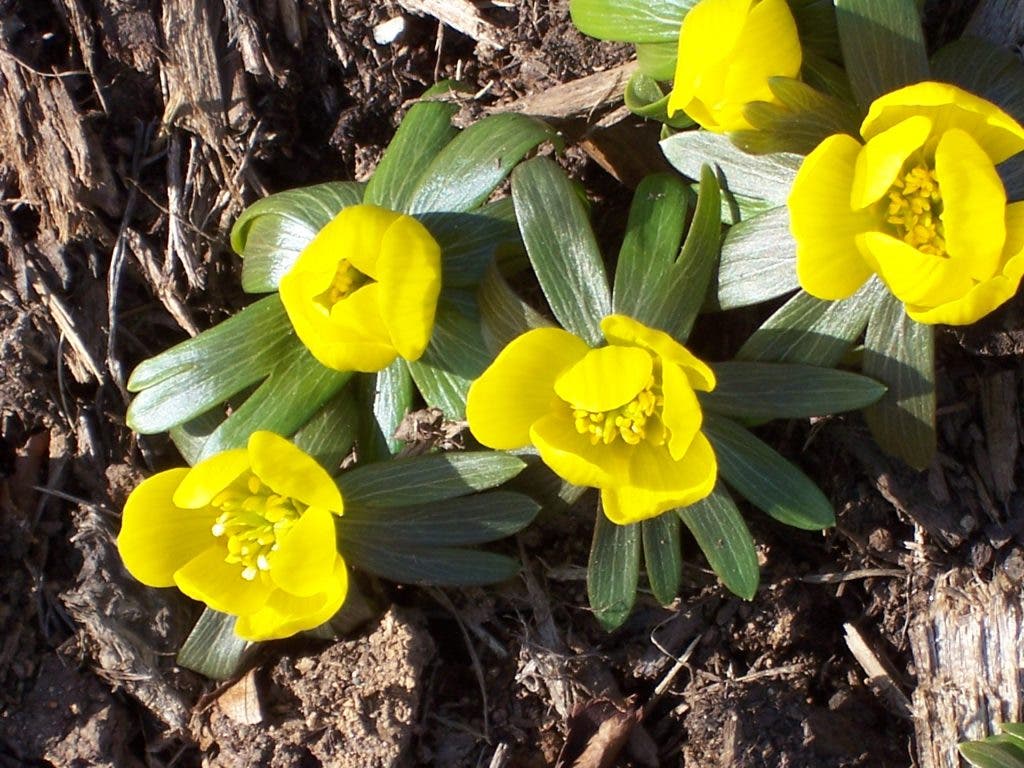
Always the first flower to appear for me in my garden and very easy to propagate, the winter aconite has a cheerful yellow six-petaled flower with a ruff of green foliage held up on a stalk 6 to 8 inches tall.
To establish the aconites, plant some of the tiny tubers a couple inches deep in the fall. The tubers are very hit-or-miss in emerging and blooming. But once you have a few established, they will drop lots of seed, which will germinate all around the mother plant. Lift these up, separate them into clumps and plant them to increase your stock. Within five years, you can look forward to having your own carpet blooming in February. Honey bees love these when the weather warms up and literally cover them when they are in full bloom.
Another staple of spring in my garden are snowdrops, which look like three drops of milk hanging from a stem. Like the aconite, this is also a small bulb, which emerges around the same time. Snowdrops are great at naturalizing and easy to transplant from an established stand. They will self-seed and send out bulb offsets. Use them under trees and shrubs, along woodland paths and in rock gardens in sun-dappled shade. Snowdrops will last a lifetime and are worth the initial investment.