Arts & Entertainment
Here's the Buzzzz on a Sticky Harvest
A local beekeeper shares her sweetest secrets on harvesting honey.


July and August are prime months for harvesting the nectar that the bees have been collecting for the last four months. I just checked my frames of honey that are in my "supers," which are wooden boxes with honeycomb frames stacked in them sideways. The frames are double-sided pieces of wax honeycomb that the bees deposit their collected nectar into after first gathering it from numerous flowers.
The nectar is gathered by the female bee and stored in her special "bee stomach," and taken to the hive and transferred by mouth to a worker bee that mixes the nectar with bee enzymes. By fanning her wings, the bee will evaporate most of the water from the nectar which is composed of 80 percent water to turn it into that familiar sticky treat called honey. The bee will then cap the honey with a covering of wax to preserve it.
The end result of this amazing process is a liquid sweetener that resist molds, fungi and bacteria, and lasts for years without refrigeration. Honey is the ultimate health food and contains enzymes, vitamins, minerals and antioxidants. A single worker bee will produce one-twelth of a teaspoon of honey during her lifetime of four to five weeks. Since a hive can hold up to 60,000 bees, you do the math.
Find out what's happening in Hunt Valley-Cockeysvillefor free with the latest updates from Patch.
Once July rolls around, I get geared up to extract from my hives. First, I smoke the hive and remove the frames of honey and try to get rid of any bees still clinging to the combs. Then, I use a heated honey knife that will slice the wax caps off of the frames.
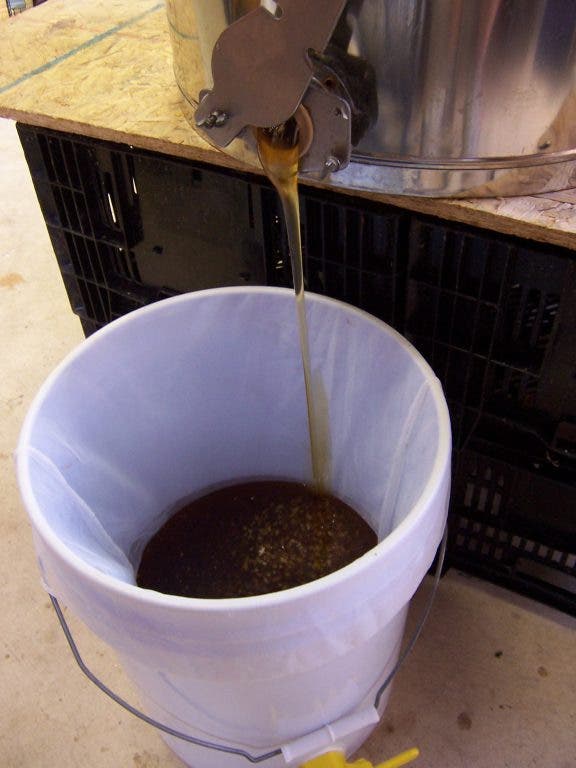
To actually remove the honey from the combs, I place the frames in a honey extractor which looks like a large metal trash can with racks inside that the frames slot into. By turning on the motor it spins the honey racks around so fast that the honey sprays out of the frames and drips down the sides of the extractor. I place a bucket underneath a valve at the bottom that is open to let the honey drip into a strainer that removes all bee parts and debris.
Find out what's happening in Hunt Valley-Cockeysvillefor free with the latest updates from Patch.
I make sure the air bubbles disappear by letting the honey sit for a couple of days and then bottle it up in containers and add my label, and it is ready to use or give away. The bottling is my favorite part of bee keeping as it is the culmination of a lot of hard work by both the bees and myself.
I have to be careful to only extract excess honey that the bees bring in. They need enough honey to survive the winter until next spring to start the process all over again. I have harvested up to 120 pounds of honey from one hive in a good year when the weather cooperates, and as little as 20 pounds when the weather is too cold and rainy for bees to fly. This year looks like a 20 pound year because we had a cold wet spring followed by extreme heat. But like a farmer, a beekeeper is at the whim of the weather and you look forward to next year!