Community Corner
Part 1: An Introduction to Rain Barrels
Learn how rain barrels help the environment and save you money.
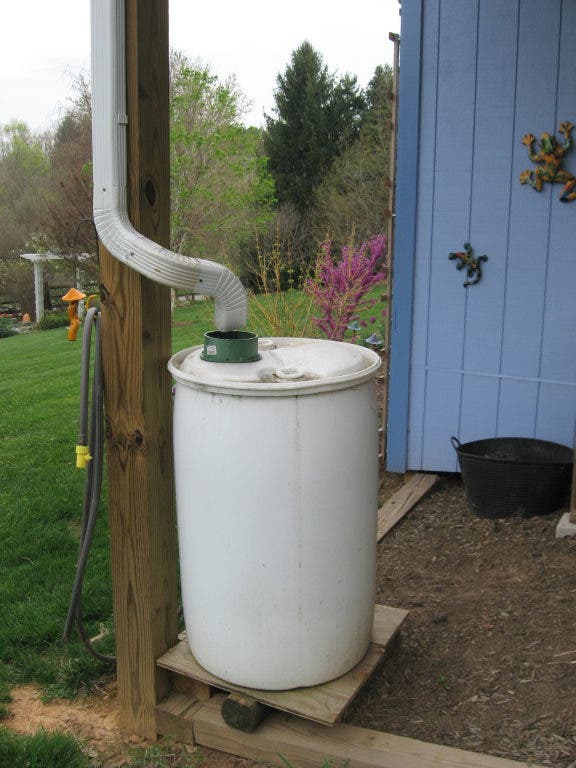


Driving around town, I’ve noticed that more and more rain barrels, containers positioned under drainpipes that collect rainwater from roofs, are popping up next to houses. Some are very plain and utilitarian, while others have been decorated to complement the home.
You can fill a 60-gallon rain barrel in a matter of minutes during a good rainstorm. All the water off your roof would otherwise be diverted into the main sewage drains and enter the Chesapeake Bay.
Water from your rain barrel can be used for washing your car, watering outdoor plants and filling your pool. This is a lot of savings on your water bill and is an easy way to help protect the Chesapeake Bay. Your rain barrel is your contribution to reducing ground water usage, reducing Bay-killing storm water runoff and helping rainwater replenish the groundwater supply.
Find out what's happening in Hunt Valley-Cockeysvillefor free with the latest updates from Patch.
Ready-made rain barrels can be purchased at big box stores, local nurseries and on line. Blue Water Baltimore conducts 2-hour workshops for a nominal fee that includes all materials and instructions to make and take home a rain barrel. If you have enough people interested in participating in your neighborhood, the organization will even bring the workshop to you.
I used old discarded barrels from bottling plant in Hampden to make my own. I painted and decorated them with newts and lizards to make it more attractive.
Find out what's happening in Hunt Valley-Cockeysvillefor free with the latest updates from Patch.
Rain barrels work on gravity and must be raised up from the ground to work properly. Four concrete blocks laid into a square covered with a slab of bluestone works fine and makes it more attractive. You can also hook together several rain barrels to increase your holding capacity. If you are worried about breeding mosquitoes, you can throw in some mosquito dunks, which are a natural pesticide sold at nurseries to kill any hatching larvae.
Always install an overflow pipe to take away excess water so you don't flood the foundation of your house. Also keep it covered so that animals and children don't fall in. Check the barrel after a major rainstorm to make sure that no debris is clogging it up. It is always a good idea to rinse it out once a year to clean out any scum that builds up. You can keep it hooked up all winter with the valve open so that any water drains out.
Once you have your rain barrels hooked up and your neighbors catch sight of them, you will see your neighbors install their own in a very short time. Part 2 will cover the basics of constructing and installing your own rain barrel.