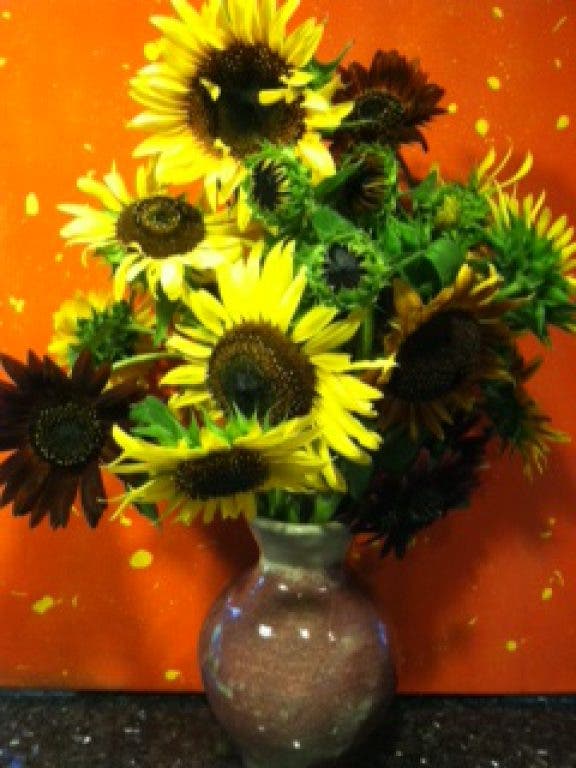

Sunflowers are the king of the sunny garden and attract butterflies, birds and bees.
The flowers are always facing the sun and come in a variety of sizes and colors from small minis to the huge mammoth blooms measuring almost three feet across.
Hybridizers have developed a dazzling array of colors from lime green to a striking dark burgundy color. Every year I try new varieties but I my favorite is the Italian White Sunflower. It has lemon-yellow petals and a deep chocolate center on a multi-branched plant.
Find out what's happening in Hunt Valley-Cockeysvillefor free with the latest updates from Patch.
The seeds need to be planted about one inch deep in loamy soil at a sunny location. Once the shoots appear, you should thin them out to be about a foot apart so that the growing plants don't crowd each other. Sunflowers grow very fast so it's still not too late to plant some now and have them bloom in the fall.
Once they start to unfurl their leaves and show color, the show begins. Every pollinator from miles around such as bumble bees and other native bees will visit the flower heads but honey bees are the principle pollinator of sunflowers. Seeds will only form if pollinators visit the heads. The typical sunflower will bloom for about 18 days but the seed heavy head will remain for months until every seed has been plucked out by visiting birds, mainly gold finches.
Find out what's happening in Hunt Valley-Cockeysvillefor free with the latest updates from Patch.
I like to pick them at all stages and arrange them in a heavy sturdy vase as the flowers can be hefty and tip over smaller vases. When the heads are full of seeds, I cut them off and lay them on my patio and watch the birds have a feast. I reserve some of the heads and set them out during the winter in the snow and watch the birds swarm the heads and remove the seeds.